“The Speciality”

(Note: We’ve covered this sort of thing before here and here.)

“Traditional” “herbalists” are still very much “a thing” in South Africa. I have to presume that this is the case, because I keep seeing leaflets advertising their services all over town. So I deduce that, much like 419 scams, people must actually be going to these “doctors”, because otherwise, these adverts would stop.
And while you might think that people are “somewhat foolish” to spend their money on some leaves that purport to give them amazing abilities in the sack or at the blackjack table, just remember that several (or more) of you go to a pointy-towered building every week in order to sing songs to an invisible sky fairy.

Each to their own.

Look. Every herbalist can bring back lost lover. That’s basic stuff. BOOOR-INNGGGG! (And, in addition, I “lost” her for a reason.)
But, as the Tall Accountant pointed out in the cooking smell-laden air at Hudson’s in Claremont last night, Dr Nassib is taking things to a whole new level with his “>>RESULTS GUARANTEED” “THE SPECIALITY” package:

_20150828_085735

Wow. Let’s just run through those items included in the “The Speciality”, shall we?

1. Get the power to be invisible

Bang. There’s no messing around with Dr N. He’s straight in with the big hits right at the top. Invisibility – an ability only previously seen (pun intended) in the Klingon’s cloaking device and Harry Potter’s… er… cloaking device. I have no idea if this is cloak-related, but just think what you could do with the power of invis… Oi! Get out of that changing room. Now! Now!!

2. Get the ability to fly like a bird

I see three options here: Either it’s very, very briefly, or it’s with some sort of mechanical assistance (like an Airbus A380-800), or he’s thinking of an ostrich.

3. Do you know that you can be in two places at the same time?

Woah! Stand sit back, Stephen Hawking. This is next-level quantum physics, alternative string theory universe stuff right here. How useful would this ability be in today’s busy, modern world?
Can I let you into a secret, dear readers? I’m actually in two places at the same time right now. (It’s just that in one of them, I’m invisible.)

4. Get the power to control the public (this is special for politicians and musicians

Ooh. It’s all gone a bit 1984. Some libertarians would argue that there’s too much of this going on already with our repeatedly, surprisingly successful, ruling party’s election results. This makes me thing that maybe JZ has been consulting with Dr Nassib, and makes me very sure that we need to keep our good doctor and “musician” and “would be politician” Steve Hofmeyr a long way apart. Seriously distant. For everyone’s safety and well-being.

4a. The power to close brackets

Not really. I made that one up.

5. Get all the magical powers that you need

Wait. ALL of them? But if I get all of the magical powers I need, why would I ever need to come back to you.

Only Have Three Wishes This Is The Genie Loophole! - CollegeHumor Post - Google Chrome 2015-08-28 095452 AM.bmp

Aren’t you killing your market here? If I can make myself be invisible, fly, control the public or close brackets, I won’t need you any more, will I? This is an own goal of note.

6. Get the “Ndagu Ritual” to make you rich

I checked this out and found out that Ndagu is a Kenyan thing, and since they’re all massively rich up there, I can actually completely believe this one.

7. Get the “Bahat-Gaflah Ritual”to make you lucky in gambling (casino / lotto)

Look, there’s more to life than money, and regular readers will know of my penchant for all things Norwegian 80s Synthpop. Thus, I was delighted to win (with Dr Nassib’s assistance) a novelty prize at Grand West last night – an a-ha bath flag. I’ve been needing a bath flag for a long time, so this worked out really well for me.
Perhaps Dr Nassib should point out that when using the Bahat-Gaflah Ritual, you will only win stuff that is an anagram of ‘Bahat-Gaflah’, though.
It may be best to leave this one then, unless you actually want A Bag Half Hat or La Hah Bat Fag (I think it’s a sort of French perfume).

The Epilogue:
I began this post with the intention of taking down Dr Nassib and his seemingly phoney business. But as I have investigated the claims he made in his missive, I have realised that perhaps “The Speciality” package is maybe worth a shot. If even one of the promised results comes to fruition, you are, in some way, set for life.

And I do love my bath flag.
QsOTD

Quotes Of The Day – yes – plural. Like London buses, these things.

First off, some succinctly put insight into the world of the fad diet and the public reaction to it:

Nutrition is a complex minefield of information with plenty of vested interests playing their part. There is also a lot of legacy popular thinking around (read: stuff people just accept without any critical thinking).

That’s Joe Botha, speaking sense at Memeburn. Sadly, immediately thereafter, he does rather ruin it all by detailing his “lose weight quick” plan based on the enforced dietary timetable of our distant ancestors. (Save your time and bandwidth.) But, in typical Tim style, I’m going to take those lines (and only those lines) that suit my agenda and quote them here.

And then this from Australia’s Galileo Movement on Stellenbosch University’s latest breakthrough in renewable energy:

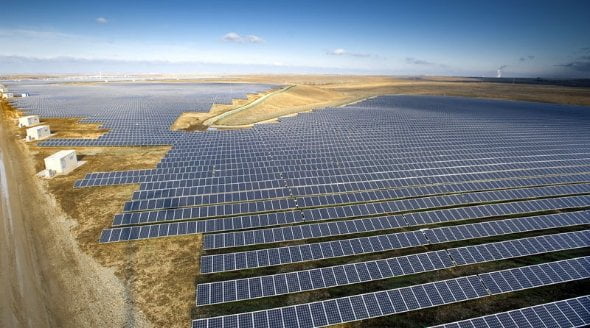
The industrialisation of our landscape for inefficient power production.

And yes, this is exactly the issue with solar and wind power right now. I know we need to make the switch away from fossil fuels, I completely accept that. But right now, there are simply no viable renewable alternatives out there:

The issue is the inefficiency of these technologies. And exactly how much space and how much of our environment do we really want to give up to this “inefficient power production”? Yes, SA has a lot of spare space, but that’s a good thing. It doesn’t mean that we need to fill it with solar panels and wind turbines.

aeg-power-solutions

And we’d need to, if we were to come anywhere close to solving our well-documented long term power shortages. That Stellenbosch project needs a mirror surface area of 220m² (never mind the space in between and around them, nor the same for the tower in the middle) to provide electricity for “about” 30 houses. But not at night, obviously.

Simply not good enough.

I’m not blaming the science or the scientists here. They’re doing their best. They’re progressing, developing, and they’ll get there. But renewable energy remains expensive:

The researchers have calculated Germany’s rapid switch to renewable energy sources like wind and solar is adding another €28 billion a year to the electricity bills of consumers and businesses.

And inefficient:

What happens at night?
As there is no light at night, no energy will be produced. The PV plant will import electricity from the utility to keep operations on site going.

Ooops. The simple fact is that we’re just not there yet.
And that’s why we can’t (and shouldn’t) be making the switch right now.

If only there were some clean, efficient, proven method of producing electricity that we could use.

UK retail innovation

…and why it might or might not work in SA.

Recent visits to the UK have left me irritated that my homeland has chosen to move on and develop – especially in the technology arena – since I’ve been away. How very dare they?
Trains, buses, pubs and restaurants all have free wifi. You can use NFC to find your way around shopping centres, or log in to your local bus stop to get a live map of where your bus is and when it’s going to arrive.
Google Now works! (well, sometimes)
And then there’s the shopping stuff.

First up, the online ordering stuff. It just makes sense. There’s no reason why it shouldn’t work here either, and I don’t quite understand why more stores don’t offer it. If Takealot can manage, why can’t other places? Maybe it’s a critical mass thing, because the shops in the UK have had to adapt or die, so they’ve all pushed their online option hard. When you order online from your supermarket, you get what you asked for, and you get it when you asked for it. If you’ve ever used our local system, you’re probably not using it any more, because those two things don’t happen and it’s a disaster.
But if you’re missing the opportunity to impulse buy, then there’s always ‘click and collect’ – the hybrid of traditional and online shopping – whereby you order on the net and then go and pick up your shopping at the local store. This saves you the delivery fee and means you don’t have to be at home to receive your goods. You can also decide if you need another 4 pack of Murphy’s when you go to collect your groceries (spoiler: you do).
All of this means that fewer people are actually in the supermarkets, and it’s so actually a much less stressful experience when you do go along.

It’s not just food and drink, either. All the major clothing stores offer the same services, so you can shop online and either get it delivered or pick it up at your local store. And if stuff doesn’t fit, you stick a big returns label (supplied) on the bag and drop it off at your local post office. Simples. It’s no fuss, because if it was fuss, people wouldn’t do it, just like you’re not doing it with PicknPay right now.

If you actually want to go to the supermarket and walk around the aisles, in some stores, you can wander round with a barcode scanner and Scan As You Shop. This means that you can pretend to have a raygun and shoot aliens (although you may be charged for items you didn’t actually get if you hit them inadvertently while pretending to be Flash Gordon).
And then there’s the option to scan your own stuff at the end of the shop. Apparently, the phrase “Unexpected item in the bagging area” has been voted one of the most irritating things in the UK, and is being phased out. And it’s not always straightforward either:

Shoppers are stealing more than £1.6 billion worth of items from supermarkets every year as frustration with self service tills leads to theft, a survey found. One in five people admit pilfering items at the checkout, but the results suggest people steal regularly once they realise they can get away with it – the majority admitting they first took goods because they couldn’t work the machines.

But for foreign visitors (especially those with kids), scanning your own shopping is actually quite fun. And if you don’t have kids, it can actually be quite quick as well.
Sadly, it would never work in SA though, as passing zebras would constantly trigger the barcode readers.

And finally, contactless payment. Like us here in SA, the UK has long had chip and PIN payment, but there, you do everything yourself. (To explain to anyone not in SA, generally, we hand our cards to the cashier and they put it in the machine for us.) (We also have attendants who fill up our cars with petrol, and fairly regularly, someone at the entrance barrier to car parks to press the button and hand us the ticket.) (Yes, I know.) But contactless payment is the one where you just wave your card over the machine and it takes the money off your account.

_20150818_094824Now, my SA card (it’s the exciting accountant coloured one on the right) has this facility too, but I’ve yet to find anywhere to use it here. Whereas in the UK, it’s everywhere and it’s all too easy to wave and spend without even thinking about it. And yes, I suppose that there are some security worries with this system, but wow, it’s so damn quick and you suddenly realise just how much impact having to enter your PIN has on making you understand that you are spending money.

This certainly isn’t a OMG – Look How Much Better The UK Is Than SA post, but the integration of technology into the retail process has definitely made it better for the consumers over there and they are way ahead of us in this area. The good news is that hopefully, the best bits of these advances will trickle down to South Africa – there’s actually no reason why these ideas wouldn’t work here – and we can all live happily in the future together.

The Lusikisiki Speedbump Conundrum

A couple of weeks ago, I had the pleasure of driving through some of the Eastern Cape: specifically the region formerly known as the Transkei. It was an eye opener of note – the roads crowded with children, goats, dogs, donkeys and potholes. Most of the journey was through the unique rural landscape, but we also travelled through the towns of Bizana, Flagstaff and Lusiksiki. The former two were busy, bustling and dirty; the latter – a hilltop settlement developed from a military camp established in 1894 – was more notable for its huge number of apparently unnecessary road calming measures.

No driver particularly likes speedbumps, but I think that the majority of us can understand the need for them in certain places: near schools, pedestrian areas etc. What I didn’t quite understand was the need for 79 (seventy-nine) of them (and 31 rumble strips) on the R61, in and around Lusikisiki. The majority (though not all, as keen mathematicians will note) of the speedbumps were arranged in groups of 6, perhaps 50 cm apart. Having watched minibus taxis repeatedly slowing to a near standstill to traverse these devilish sets, I can attest to the fact that they are a particularly effective way of slowing vehicular traffic down.

But, as I mentioned, slowing it down for no apparent reason whatsoever. Even when you leave the town and are heading back out onto the roads snaking south towards Port St Johns – the speed limit back up to 80kph, there’s yet another lot – in the middle of nowhere. It was almost as if they’d been put there for the sake of putting them there – or because someone needed to be paid for something tangible. Look, I’m not suggesting that the local municipality is in any way corrupt, but it’s kind of tough to work out what other reason there could be for so much utterly pointless work being done when the whole area is so severely impoverished.

Hmm.

I was reminded of this anecdote:

Some years ago the mayor of a small rural town in the Eastern Cape visited his friend, the mayor of a similar town in Zimbabwe.
When he saw the palatial mansion belonging to the Zimbabwean mayor, he wondered aloud how on earth he could afford such a house.
The Zimbabwean replied: “You see that bridge over there? The government gave us a grant to construct a two-lane bridge, but by building a single lane bridge with traffic lights at either end, I could build this place.”
The following year the Zimbabwean mayor visited the Eastern Cape town. He was simply amazed at the Eastern Cape mayor’s house: gold taps, marble floors, diamond doorknobs; it was marvellous.
When he asked how he’d raised the money to build this incredible house, the Eastern Cape mayor said: “You see that bridge over there?”
The Zimbabwean replied: “No.”

Indeed. There’s no new bridge in Lusikisiki, but there are speedbumps for Africa… and beyond.

SA in The Guardian

Some reading for you.

Three stories about South Africa have recently made it into The Guardian and then from there, into my sphere of knowledge. None of it is particularly good news, as we are wont to expect from the British press, but equally, none of them are the non-stories we saw before the World Cup, (c.f.  this and this) which we didn’t bribe anyone $10,000,000 to stage.

First up, the “Cape Town’s Death Industry” story, detailing how much of the black population living here in the Mother City doesn’t want to be here once it has died (the population, not the city), and the lucrative business in arranging funerals back in the Eastern Cape for those living – or rather, previously living – here in Cape Town.

“These days, of course, it’s not just miners who live far from home. Families are spread out across the country, but amid this spatial dispersion, the fear of dying far from their point of origin has remained. It is now the reason for a growing industry that transports the dead across South Africa.”

As some of you may know, I was in the Eastern Cape recently, and I can understand why many people are desperate to return there once they have died. Ironically, my coming from Cape Town, I almost died a several times on the local roads, and had that have been the case, I would have wanted whatever was left brought back this way.
Anyway, jokes aside, the piece is a simplistic, but interesting view on the cultural complexity of the death industry (or, as many of us would call it “the funeral business”) in Cape Town.

Then, the dust and radioactive nastiness of Joburg’s mine dumps – a tale of tailings, if you will. Oliver Balch details the health problems associated with the leftovers of Gauteng’s gold rush, the people monitoring it:

A handful of randomised spot-checks reveal the extent of the pollution problem. For example, in a narrow run-off canal immediately opposite Soccer City, site of the 2010 Fifa World Cup final, van Wyk picks out the colours along the bank: red for iron, white for sulphur, green for copper, yellow for uranium, and so on.

And the complete lack of government action on actually doing anything about the situation:

Five years ago, the government identified 36 “priority areas” affected by radioactive acid mine drainage for remediation. Today, not a single one of these sites has a feasible implementation strategy in place.

And then, in a somewhat tenuous link to government stagnation, the Uber issue. The Uber issue is playing itself out all over the world with protests in London, really nasty protests in France and then this, in Joburg:

Internet taxi firm Uber said on Monday it was providing security for its drivers in South Africa after verbal threats from other taxi operators in the latest outbreak of friction to hit the fast-growing company. A couple in the city told the Eyewitness News website that they had seen metered taxi drivers harass an Uber driver, grab his keys and threaten him with a gun.

Yeah, taxi drivers are definitely top three when it comes to SA groups you don’t want to irritate. Also somewhere around the top end of that demographic is Helen Zille. And she has hit back at these claims by Uber:

Despite over a year of progressive discussions with regulators, there is still no clear route to obtaining vehicle operating permits for Uber driver partners. A process that should take no longer than a few weeks has been dragging on for over 6 months and still no operating permits have been issued to Uber driver partners. Yet, it appears that operating licenses have been issued to large metered taxi fleet operators, favouring these incumbent operators.

…in her recent newsletter, which admits that there have been delays – because government isn’t “nimble” – but takes the time to explain why those delays have happened – simply that the rules don’t exist for operators like Uber:

This situation creates a crisis for government. Officials must act within the law. But the law doesn’t envisage or cater for e-hailing services. The result is government paralysis.

Now, the angry, Facebook-wielding, online petition-signing, middle-class mob is a bit mixed up. The last time they got this worked up over something, it was probably about Nkandla and the widespread outrage was probably organised by Helen’s DA. Now they have to choose – beloved Uber or beloved Helen.

No wonder there is sudden silence.