Don’t panic (but…)

It reads like the script of some disaster movie. A luxury cruise ship, full of 91 posh people (and 61 crew) from 23 countries, taking in some of the most amazing sights (and sites) of the Southern Hemisphere.

And then a deadly viral outbreak onboard. “Ebola-lite”, as one news outlet inaccurately described it.
One guy dies, his wife tries to escape through the biggest airport in Africa, but collapses as she tries to fly home. She dies.
There’s then a third death on board.
And a British man is in ICU in Johannesburg (quite a long way from where the ship actually docked, which wasn’t actually in SA at all).

On board, stuck just off the coast of Cape Verde, the rest of the passengers and crew are forced to isolate as they wait out the incubation time of the virus, which has a mortality rate of 30-60%. More people are ill, but the local hospitals don’t have the facilities to treat them, and the local Health Minister isn’t allowing anyone from the ship near the islands.

Understandable.

There’s a travel blogger on board, and it’s said that there’s no such thing as bad publicity, perhaps being part of an as yet uncontrolled outbreak of severe, often fatal respiratory disease on a small, densely-packed ship might reasonably be seen as an exception to that rule.

So… anything to worry about in SA?

Nah. Surely not for us. The boat is in Cape Verde: way, way up the West Coast from here.

In a statement on Monday, the Health Department of South Africa said:

In our view, there is no need for the public to panic because only two patients from the cruise ship have been within our borders.

And of course the guy in the ICU in Joburg was brought there under very controlled conditions.

It’s just the woman that collapsed at the airport, then. The woman whose husband probably died of Hantavirus: the woman who collapsed at OR Tambo and who then died (probably of Hantavirus) in hospital soon afterwards.

Thankfully, no issues here, because it’s just a bit of contact tracing, which will obviously have been done quickly and efficiently and… I’m sorry? What?

The only challenge is that we need anyone who came in contact with the two patients to come forward for screening and testing to check if they are not infected yet.

Right.

It’s been a week, guys. This really isn’t great news at a major international airport and with a virus with an incubation period of 2-3 (but sometimes up to 8) weeks.

Mind you. When it comes to burying one’s head in the sand…

Three deaths from severe respiratory illness, one patient in ICU with severe respiratory symptoms – and who has tested positive from Hantavirus – and two crew members exhibiting severe respiratory symptoms, and the cruise company is still saying that the cases might not be linked:

Hantavirus has not currently been confirmed in the two persons still on board who require medical care. Nor has it been established that the virus is connected to the three deaths associated with this voyage. The exact cause and any possible connection are being investigated.

I’ve seen this approach before somewhere…

Ah yes:
Obviously, there’s not a microbiologist or an epidemiologist anywhere in the world that thinks that these cases might – just possibly – be connected. Obviously.

All perfectly normal. Obviously.

I mean, you hope that this is all done now. But there’s no reason why it should be. We’re still within one month of the ship’s departure from Argentina – a country which…

…reports approximately 100 cases of Hantavirus Pulmonary Syndrome annually, with notable risks of rare human-to-human transmission, distinct from other global hantaviruses.

It’s going to be interesting couple of weeks ahead.
I’ve been using Amazon

and…?

And I’m pretty impressed. They’ve entered into the fray in SA with a mountain to climb in terms of getting market share in online shopping delivered to your door, given that Takealot have been around for a long while here with virtually no opposition.

But Amazon have started small and sensible: a limited product range, but each one with the guarantee that it will get to you cheaply and quickly. And it works. I ordered a soundbar and paid a whole R2 (less than a penny) to get it delivered that evening. I ordered a mousemat (because my mouse doesn’t like how shiny my new desk is) and it cost nothing to get it delivered the following day.

Compare this with Takealot, whose confusing price structure for deliveries actually makes it difficult to compare, but a next day delivery would likely be R50 or R75. Or you could pick it up at one of their depots for R35.

Same day? Virtually unheard of, but almost always in three figures. (Yes, unless you have their monthly subscription service, but I’m doing apples and apples here.)

And it’s sad to say that Takealot have been lounging on their monopoly. Their prices – always allegedly discounted – only ever match with the normal prices everywhere else. I’ll certainly be using Amazon whenever possible for those online purchases. And yes, using local businesses for stuff too, but only if they are willing and able to offer decent prices and service.

You do wonder though – how quick could an Amazon delivery actually be? Like, if you needed something small, but really – really – urgently?

Mere seconds, it turns out (this service is not available in SA) (yet).

Such a good video, if you have the time to watch. Some delicious, subtle, dry humour, some incredible engineering and some amazing attention to detail and high quality workmanship.

It’s the future. Now.

Problematic graphic

I’m not a social scientist or an economist, but I’ve done enough looking at graphs to see when a graph doesn’t look good. Whether that’s to do with money or infectious diseases, a bad graph always looks… bad.

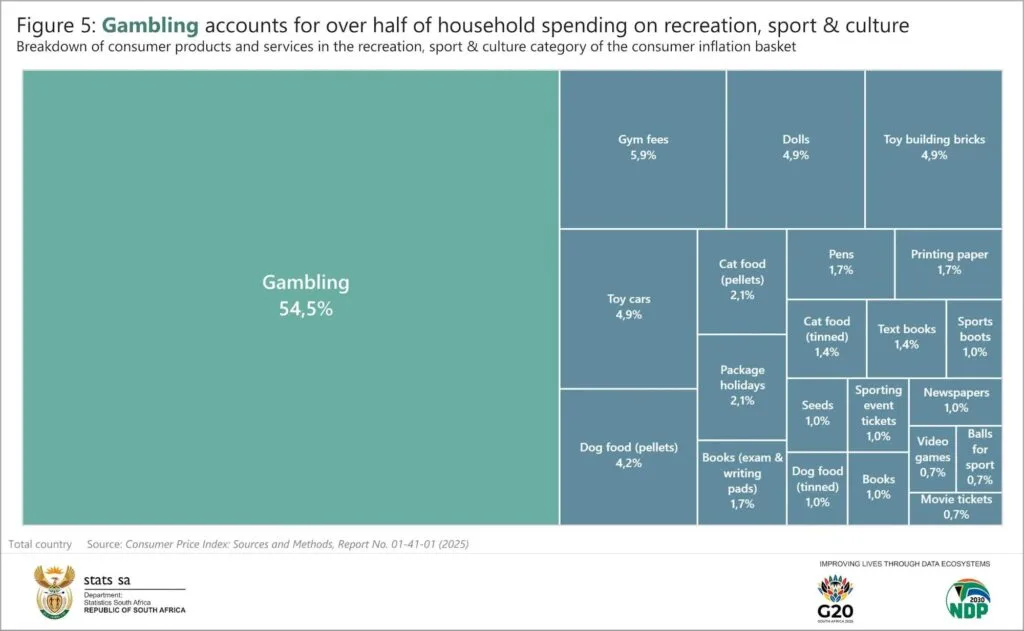
This isn’t a graph per se (I think that it’s a treemap chart), but it could be a graph if it were presented just slightly differently. But it still looks bad.

Really bad.

How people spend their disposable income is of course completely up to them. But that almost 55% of it goes on any one thing is bad. That almost 55% of it goes on gambling is really bad.

The fact is that when you spend money on anything recreational, you’re know that not going to get anything tangible back. You spend it on the “entertainment”. Gym fees, tickets for sporting events, video games, movie tickets. You spend it on the experience. You know that you’re not seeing that money again.

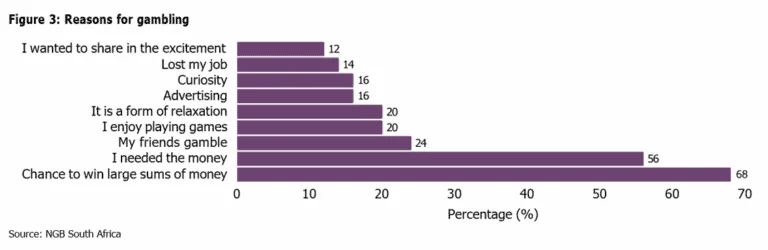
With gambling, however, you might just get something back. Evidence suggests that you’re unlikely to, especially long term. But that doesn’t stop people trying. In fact, it’s the number one reason that they do gamble:

The worrying bit is that because there is that chance of winning, the outlay on gambling is often overlooked. Because you might get it – or more – back. That’s not happening with a cinema ticket.

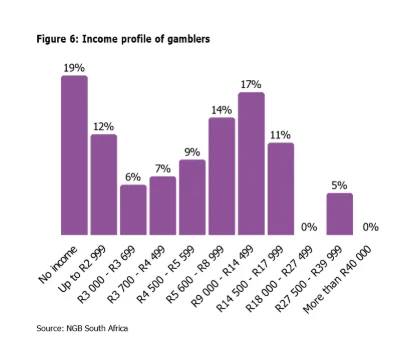
But it’s a false premise. South Africans are spending R1.1 TRILLION on gambling every year. And sadly, in the vast majority of cases, it’s money that they can’t afford to lose. This is not a second income stream, no matter how good you think your football knowledge is.

None of those links and none of these graphics make good reading. Gambling apps are now so easy to get hold of and use, and we are surrounded by ads 24/7: on the TV, on the internet, and – of course – at the racecourses, where it’s not unusual to see a horse sponsored by Betway winning a race sponsored by World Sports Betting at a track sponsored by Hollywood Bets.

And yes, I’ve posted occasional ads on here for various betting companies. Hey, gotta make ends meet. But I didn’t know it was this bad. So, while gambling addiction has always been a problem, this flooding of the market with betting apps and the insane 42% per year increase in online betting since Covid means that I won’t be doing that any more. They clearly don’t need my help (although they keep asking for it), and I don’t want to be part of the problem, which is obviously spiraling out of control.

I would say that this problem needs nipping in the bud, but I think we’re well into the flowering stage right now, and no-one is doing anything about it.

CAPE TOWN: Don’t miss the eclipse tonight!

There’s a total lunar eclipse visible over Cape Town (and much of South Africa) this evening, and it’s at a perfectly reasonable time to see, and then still get to bed ahead of your upcoming work week.

tl;dr (how lazy are you?!?)
Basically, to see it, you need to look at the moon (dur!) from 7:30pm.
And basically, the moon will be in the East.

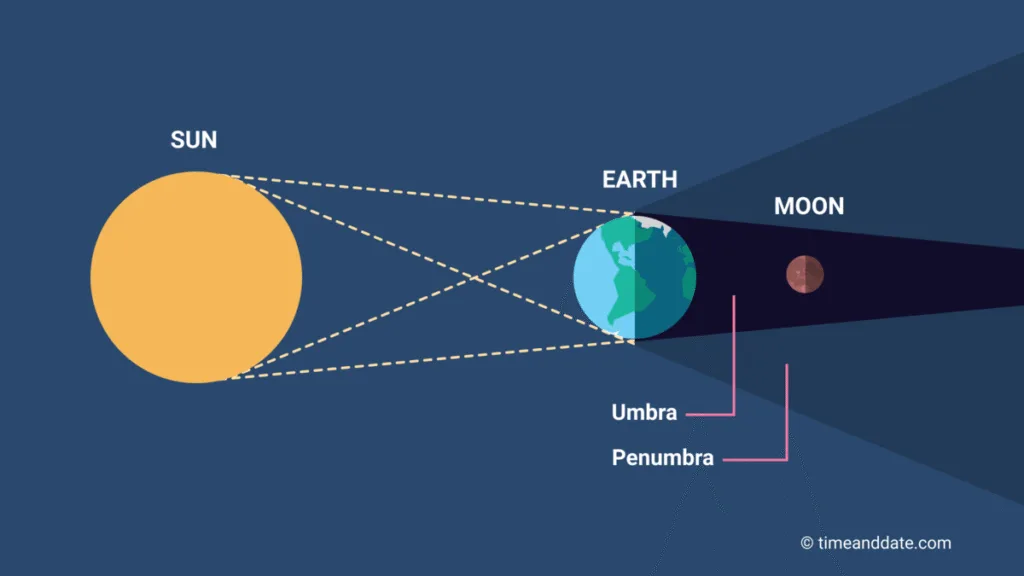
A total lunar eclipse happens when the moon is in the shadow of the earth:

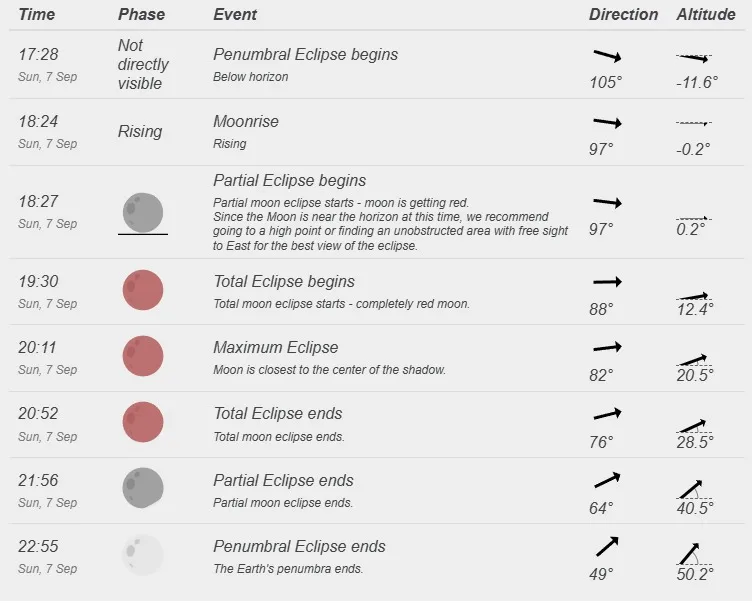
Here’s all the information you need for the timings of the various stages of the phenomenon from the Mother City:

Step 2 “, Rising, Moonrise, Rising” seems a bit repetitive, but I promise that I’ve checked and the timings are all accurate – and it could be spectacular. You don’t need any eye protection – it’s just moonlight – and it will be perfectly visible without any binoculars or similar (although take some along if you want to).

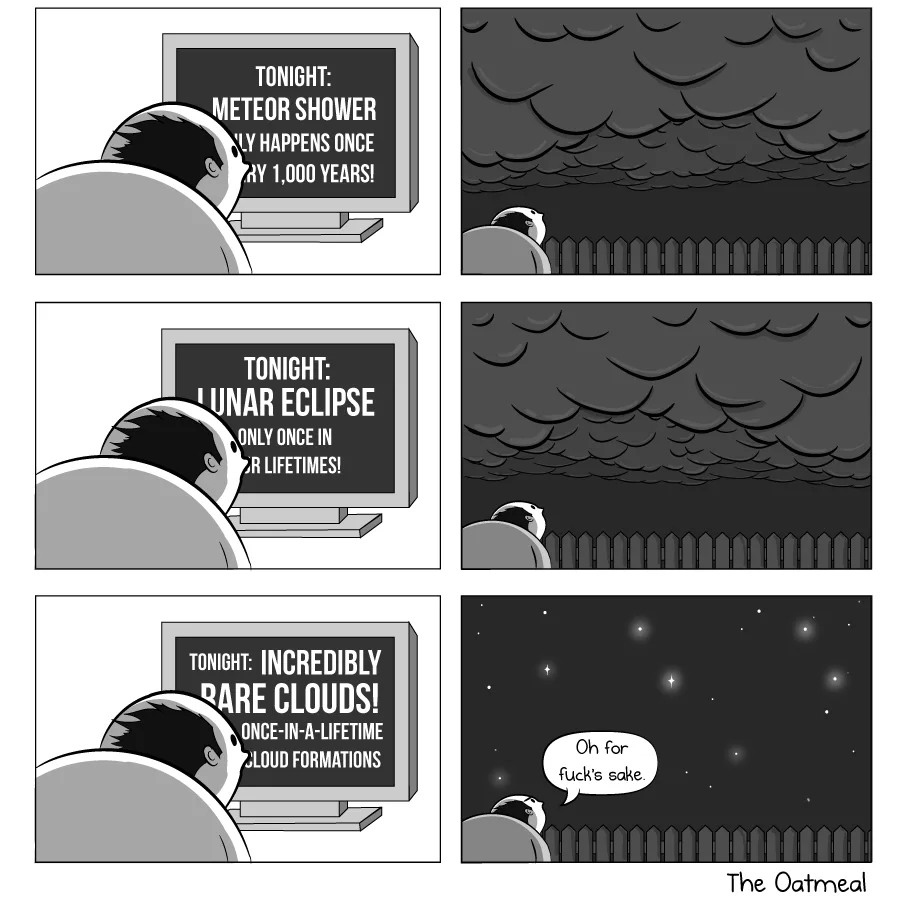
Last night would have been absolutely perfect, but it’s a bit cloudy and windy out today (I’m writing this at lunchtime). Still, as we know, weather stuff can and does change very quickly here, so it might all be ok, or it might be just rather frustrating. Remember that if it is the latter, you’re not alone…

So hold thumbs, cross fingers, pray to your given deity or just wrap up warmly, pop out at half seven and have a look.

Have fun out there! And please share this post so no-one misses out.

Crane crash

It might be a bit of an old-fashioned attitude, but if you are going to have national symbols, then surely how you choose to look after them is something of a measure of just how much pride you have in your country?

The King Protea is our national flower: it’s bold, it’s admired and revered.
The Springbok is our national animal: known for its agility and speed, synonymous with SA’s rugby wins.
The Blue Crane is our national bird: we’re killing it off.

Blue Crane numbers have decreased by between 27% and 49% in the last fifteen years: the patchy data available being indicative of just how little we actually care about what’s happening to these beautiful birds. And perhaps the more worrying aspects of this rapid decline are:
a) the fact that it is likely multi-factorial – with some of those factors being beyond our immediate control, and
b) the fact that over 60% of the remaining Blue Crane population is found in one single, small area – other Overberg wheat belt. Lose that population and really is game over.

As a result, the Blue Crane’s official conservation status has recently been officially changed to reflect this deterioration from Near Threatened to Vulnerable in the newly published Regional Red Data Book of Birds 2025.
Vulnerable reflects a higher category of threat – just below Endangered and Critically Endangered status on the Red List. This means that without significant conservation efforts, these species are likely to become endangered in the near future and face a high risk of extinction in the wild in the medium term.

As mentioned above, there are many reasons suggested as to why we are still losing Blue Cranes in this way. Aside from the problems attributed to climate change – a lack of rainfall (I know, I know) is a key driver for nest failure, and things are only going to get hotter and drier in the Western Cape – farming practices and power lines are also terrible news for Blue Crane numbers.

And while some mitigation has happened over the last decade, we’ve also chosen to build wind farms throughout the Overberg, with seemingly no thought for the Blue Crane. The turbines themselves are known for being dangerous to birds, and the additional transmission lines right through the most sensitive habitat areas of our national bird obviously increase the risks.

Collision with power lines remains the main threat to Blue Cranes, and ongoing mitigation is necessary, especially as new power lines are added to connect renewable energy to the grid. This is particularly a threat in the Renewable Energy Development Zones of the Overberg and Karoo.

Thankfully, there is now precedent for blocking construction of wind farms, but with South Africa’s ongoing issues with a stable electricity supply (and the disgusting pollution up North), there are many proponents for the expansion of wind power, as well. And the best places for those farms as far as wind goes, is right through Blue Crane habitats.

The fact that the Blue Cranes nest in wheat fields means that they are susceptible to danger from agricultural practices, such as mechanical implements (ploughing, harvesting), and the use of chemicals – targeted against rodents and other pests like geese.

Research has shown that Blue Crane breeding success in the Overberg has halved since the last published study 30 years ago. Pairs of Cranes now raise on average just 0.55 fledglings. You don’t need a maths qualification to see that those numbers will never sustain the population – especially with additional pressures such as power lines and the like.

There is some good news, some glimmers of hope.
Some farmers are displaying some of that apparently missing national pride, and acting as custodians for the Blue Cranes. Special Management Areas like the Nuwejaars Wetlands are connecting like-minded agricultural properties together, establishing safe areas and natural habitat for our wildlife, while still enabling famers to make a decent living.

But these sort of schemes are still a drop in the ocean, both in terms of area, and in terms of reducing the overall, numerous and external threats to the Blue Crane. And unless something – and no, I really don’t know what – is done to prevent this ongoing, dramatic crash in numbers, then in the very near future, we – like Mauritius – are going to have to choose a new national bird.