Double Vision

We’re heading back to the Tips page of Popular Mechanics for this one. It won Top Tip for July 2013.

Double Vision

As time moves on and we get older, some of us are faced with the loss of our close detail sight. Fading eyesight is usually addressed by purchasing reading glasses from a chemist (I have pairs of these dotted all over the house and garage). However, sometimes the magnification of these glasses is just not enough for close-up work.

My simple solution: acquire a second pair of reading glasses (perhaps from your wife), place one pair over the other and hey, presto! You may look like a character from Revenge of the Nerds, but it really works!

Ian Ruinaard
Kenilworth

Why has no-one else thought of this?

Ian has obviously got a keen mind. Perhaps, in these winter months, he noted that in order to be warm, he could put one jumper on, but in order to be warmer, a second jumper, place over the top of the first, was required. Or, potentially, he had to get something down from a particularly high shelf and became aware that while standing on one box got him closer to being able to reach said object, it took another box, place on top of the first, to make it possible for him to actually get to the shelf.

These may seem like simple observations, because they are, but let’s face it, none of us took these observations and applied them to optics and the correction of age-specific deterioration in vision, now did we?

Ian did. He did that.

And then he wrote to Popular Mechanics about it.

What Ian did then, though, is deeply puzzling. He stopped. He halted in his extrapolation of this great idea. Why he chose to do this is unclear, because surely for a great mind like that of Ian Ruinaard, merely sating himself with having the vision to complete close-up work would not be enough. Surely an exploratory continuation into this 1+1=2 phenomenon could have yielded further amazing results?

Ian stopped. But that didn’t mean that I had to.

Right. So. What if we took Ian’s 1+1=2 idea and made it 1+1+1=3?

Three pairs of chemist-bought reading glasses, perhaps acquired from the wife – perhaps selected from the pairs dotted all over the house and garage, it really is up to you – placed over each other and hey, presto, I could see LOADS OF STUFFS.
This gave me another idea. I quickly acquired an extra pair from the wife and then collected all of the pairs that were dotted all over the house and garage. Then I burgled the local chemist and chucked all the pairs on top of each other.
And then I looked.

Oh. My. God.

The results were remarkable, if a little scary. It appears that I had created a nerd-like (but rather effective) face-mounted microscope. With incredible power.

We’ve all heard how many bacteria there are on a kitchen dishcloth, right?
Well, now I could count them.
Individually.
From my bedroom.

This was fantastic, and I’ve already applied to the local patent office to ensure that no-one steals my idea.

Indeed, the only issue I could see (geddit?!?) with this marvelous new-found vision-accentuating device was that my field of vision was now sadly some distance beyond my field of reach, making it rather difficult to actually utilise this undoubtedly exciting and potentially life-altering ability.

“Now, if only I could somehow change that,” I thought, as I pulled on my gloves and headed out into the cold.
New Quagga Foal Is Very Cute

This is very cute. And great news for the environment. I like the environment, but not to extremes.
That said, I’d never eat a quagga. Probably.

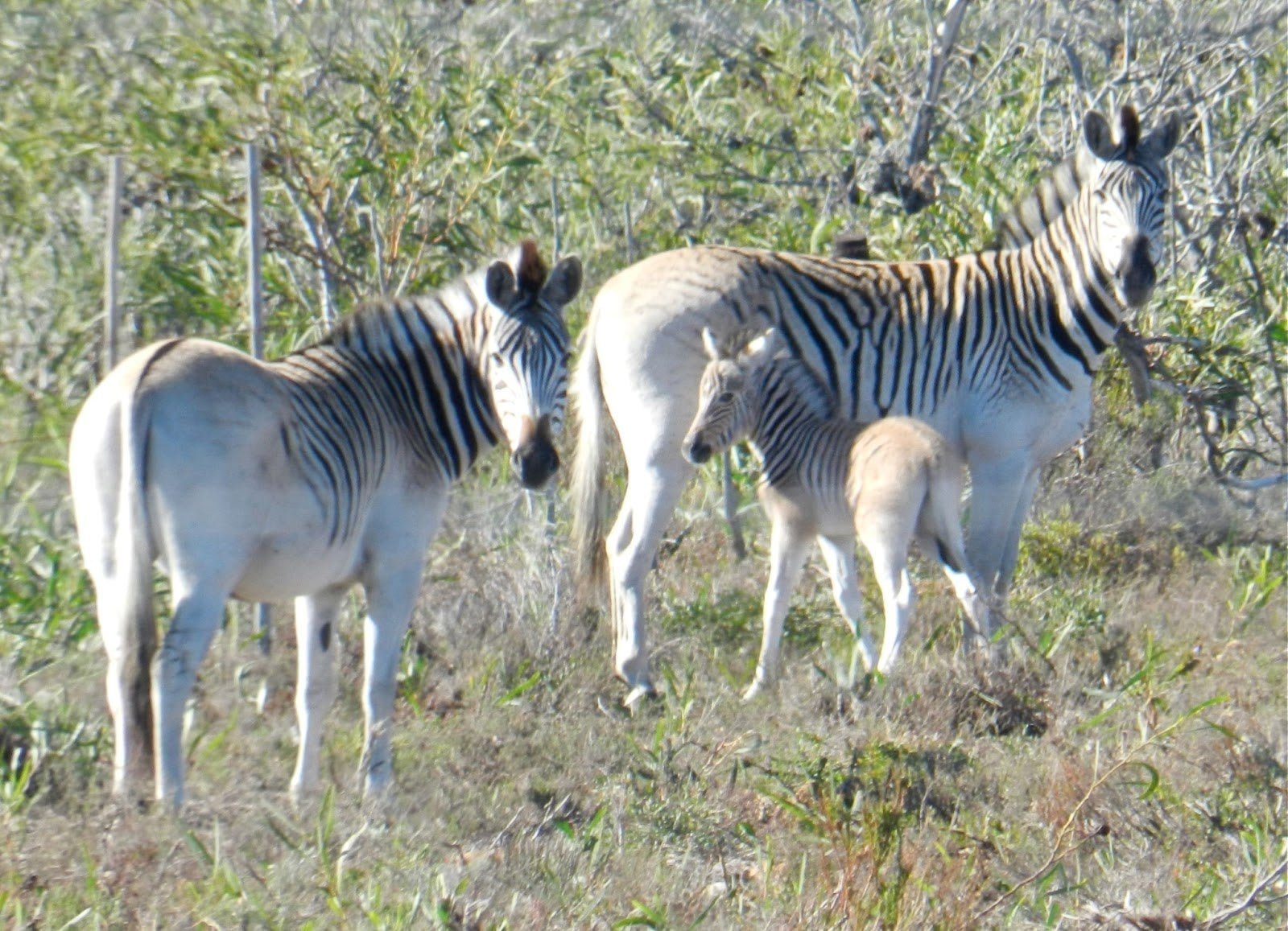
new Rau quagga foal was born about 10 days ago in the Nuwejaars Wetlands Special Management Area to parents Susan and Freddie.

And here it is:

sma_1

 Awwwwww!

What’s a quagga, you ask? It looks like a a unfinished zebra. Wikipedia has all the answers:

The quagga (Equus quagga quagga) is an extinct subspecies of the plains zebra that lived in South Africa. It was long thought to be a distinct species, but recent genetic studies have shown it to be the southernmost subspecies of the plains zebra. It is considered particularly close to Burchell’s zebra. Its name is derived from the plains zebra’s call, which is heard like “kwa-ha-ha”.

This follows a typical naturalist trait of naming animals after the noises they make. They did ok with the Kittiwake, but they failed miserably with the Hadeda ibis, which should obviously be called the (ever so slightly less catchy) “Raap-Raap-Greer” ibis.
I can’t comment on the accuracy of the nomenclature of the quagga, because I’ve never heard one calling. Anyone?

A few others among you may have spotted that the quagga is extinct, which does make the news above seem a bit of a stretch, so let Wikipedia explain again:

After the very close relationship between the quagga and surviving zebras was discovered, the Quagga Project was started in 1986 by Reinhold Rau in South Africa to recreate the quagga by selective breeding from plains zebra stock, with the eventual aim of reintroducing them to the wild.

The founding population consisted of 19 individuals from Namibia and South Africa, chosen because they had reduced striping on the rear body and legs. The first foal of the project was born in 1988.
Once a sufficiently quagga-like population has been created, it will be released in the Western Cape. In early 2006, the third and fourth generation animals produced by the project were reported to look very much like the depictions and preserved specimens of the quagga. This type of selective breeding is also called breeding back.

The practice of breeding back is controversial, since the resulting zebras will only resemble the quaggas in external appearance, but genetically they will be different.

Three quagga in the Nuwejaars Wetlands Special Management Area feature in the Top 10 of Quagga specimens in the Quagga Project (go look at this website – really interesting). Among them is Freddie – in fact – he ranks as the number one Quagga specimen in SA. So this is big news. Nice one Freddie.

This is now on my list of things to go and do next time we’re down in Cape Agulhas, and it doesn’t hurt that the Nuwejaars Wetlands SMA is just down the road from these places.

Photo credit: Mick D’Alton

Is a minus number a good thing on SARS efiling?

Riveting stuff, especially for those overseas (not), but there really needs to be a website devoted to these sort of things. An SA FAQ or something similar with straightforward answers to simple questions. I’m not going to do it, but I am going to do this one. And maybe one about what time the booms at Kenilworth Station are closed each day. That would also be helpful.

But anyway, without further ado:

YES!
A MINUS SIGN on your IT34 Notice of Assessment from SARS
MEANS THAT THEY OWE YOU some money.

Woohoo!

Look for the line:

Net amount refundable under this assessment                          -1234.56

to see how much they’re going to pop into your bank account.

Of course, the converse is true if you don’t see the minus sign there. Sorry. You owe your bit towards a new gold plated bog roll holder for the 78th guest loo in Nkandla.

Fudge

I always wanted to have my own cookery blog. I once asked a foodie about being a foodie and he told me that it’s tremendously cool to be a foodie. And there’s no ambivalence in foodie circles. They either love each other or they hate each other. No middle ground.
I think I’d be good at such dramatic extremes. I just need to pick the right side to be on.

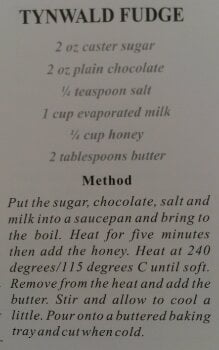
Anyway, while I’m doing that, and with it being Tynwald Day (roughly the Manx equivalent of yesterday’s American Independence Day in layman’s terms, I guess), here’s a recipe I devised copied from a conveniently hung Manx calendar.

image

I haven’t actually tried it, but at the end of the day, it’s fudge, so even if it ends up as a sloppy mess, it’s going to taste pretty amazing, right?
Now, foodie friends, I can tell you’re impressed, so gather round and worship at your new-found altar.

Bring fudge.

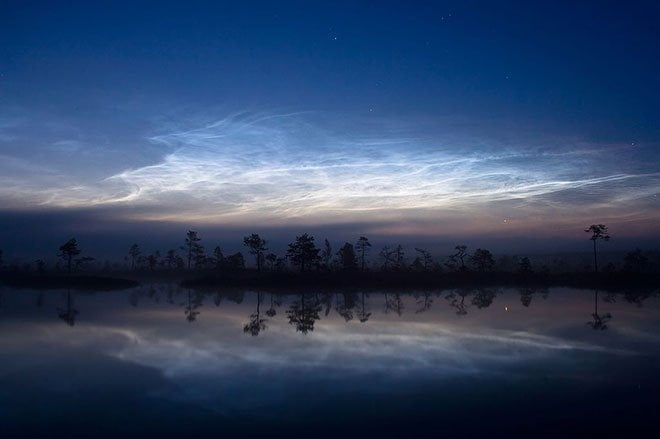
Spooky, glow-in-the-dark clouds continue to spread south…

This is cool. Of course it is, it’s glow in the dark clouds, for goodness’ sake!

The technical name for this phenomenon is noctilucent clouds and they’re not unheard of – they were first described way back in 1885. Because they exist at far higher altitudes than our normal clouds, they can continue to reflect the sun’s light, even after dark:

660px-noctilucent-clouds1

Previously, they have only been seen at extreme Northern altitudes, but more recently, they have been observed more and more regularly and further and further south (not quite as far down as Cape Town though).
Scientists are a bit confused as to why this is, but they are pointing towards higher methane concentrations in the atmosphere, which is then oxidised into water vapour, which then forms these clouds.

Thus, yes, this beautiful sight is actually – apparently – “a warning signal for climate change”. Ugh.

At least they’re prettier than a Greenpeace demo.