Yep. What it says in the title. From this evening.
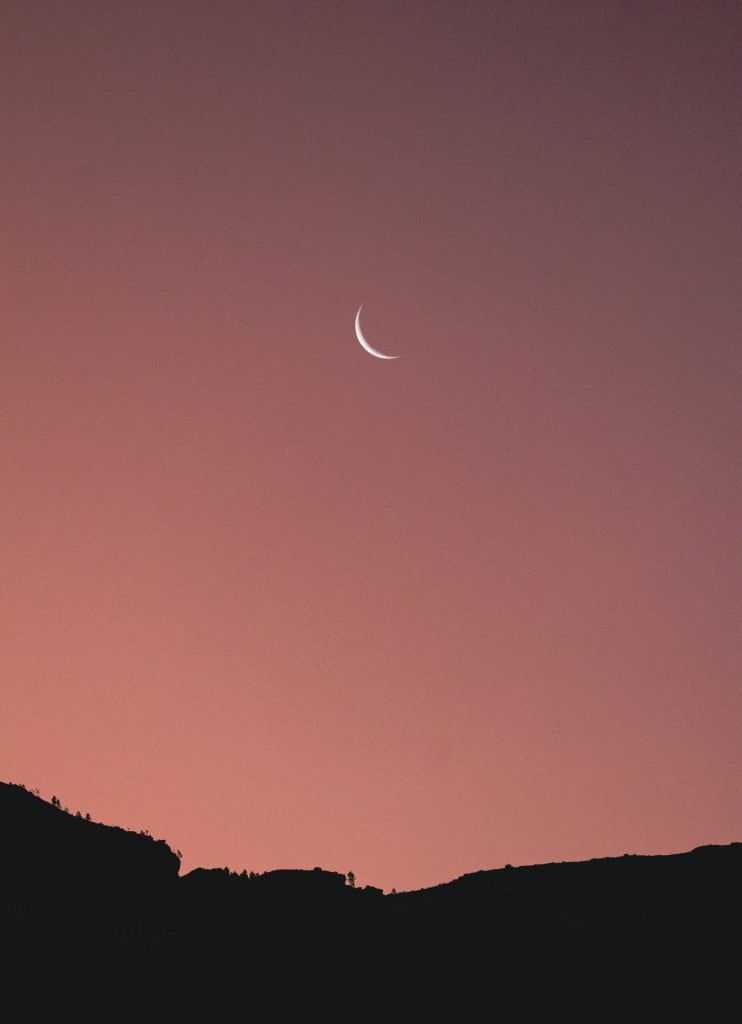
The evening sky in Cape Town has been equal parts of weird and magnificent for the last couple of nights. Gradient on point. Dark mountain silhouette giving some hefty contrast.
Delicious.

Yep. What it says in the title. From this evening.
The evening sky in Cape Town has been equal parts of weird and magnificent for the last couple of nights. Gradient on point. Dark mountain silhouette giving some hefty contrast.
Delicious.
We’re apparently past our fifth wave peak in the Western Cape and South Africa, although my anecdotal radar is still tracking several or more local friends and acquaintances who have tested positive this week.
But that’s in Cape Town.
In Struisbaai (yes, also the Western Cape, I know) however, this on the community Whatsapp group:

The local doctors should know.
The Cape Agulhas folk weren’t great at wearing masks early on in the pandemic:

…resulting in stuff like this:

So let’s hope that they take a bit of notice this time around, even though Covid is sooo passé now.
For safety’s sake, however (and because we have a plethora of stuff to do in Cape Town), we’ll be staying well away this weekend.
Spoiler: It’s not me.
Amazingly, he’s one of the contestants. I thought he was just going to be a mandatory part of the healthcare team. We’ve all done our fair share of stints at the local GUM clinic, after all.
But no, “hunky Dublin microbiologist Dami Hope” was revealed to the world as one of the contestants on Love Island 2022. And then it went a bit weird:

…because microbiologists don’t use telescopes very often. We’re probably better known for using microscopes. The hint’s in the name: we’re not “telebiologists”, are we?
In fact, looking back over my long and illustrious scientific career, I don’t think that I have ever used a telescope while in the lab. So they’ve clearly got that one very wrong.

Unless of course “telescope” is just a euphemism for his… Oh god… Oh no.
No.
The biggest ever petrol price increase in South African history kicks in tonight at midnight. At present, the (government-regulated) petrol price is estimated to go up by an additional R3.50 for a litre of the good stuff. And while that might be nought pounds noughty-nought to you, that’s a massive amount to all South Africans, representing an overnight increase of around 16.6%.
And of course, that increase will be felt by businesses as well, and they will pass on their higher costs onto their consumers and so your man on the street is going to get smacked with even more increased prices for… well… for everything.
And that means that even more individuals and families are going to have to make some difficult decisions as to what they can and can’t afford, and as to what has to be let go.
Fortunately, one company has just helpfully raised their head above the parapet for me.
Yesterday, we were informed that my daughter’s music lesson this evening at a local music school (let’s call it the College of Stone for the purposes of this blog post) was cancelled due to loadshedding this evening.
I was actually impressed with their organisation. Letting us know what was going on over 24 hours in advance. Nice work.
However, due to some magic deity smiling down upon us, there is no loadshedding this evening.

So I call the good College people this afternoon just to check that the lesson is now going ahead as usual and they say no, because they “can’t reinstate a lesson once it’s been cancelled”.
Thankfully (for them), they can still charge us for it though.
Now, I wasn’t happy at the lesson being cancelled, even more so at still having to pay for it, but it’s not the College of Stone’s fault that loadshedding happens, and while my daughter shouldn’t have to miss out on her lesson thanks to the crappy local electricity monopoly and years of horrific corruption therein, nor should the College of Stone have to lose out on their income. I do get that.
But now there is no loadshedding – it’s what passes for a “good electricity day” in South Africa – and they’re still not providing the service we’re paying them for, even though there’s now no reason for them not to… well, to paraphrase Radiohead:
When I am
Kingmaking those difficult decisions, they will be first against the wall.
I’m well used to crappy service in South Africa, but this is a new low. The only positive is that it does make one of those upcoming unfortunate decisions a whole lot easier.
Easy for me to say: I don’t have anthrax.
But as the Mail and Guardian dives in with this headline:

…I think it’s important to understand that anthrax – at least the bit of anthrax they’re talking about here – isn’t going to be the next Coronavirus, just like Monkeypox isn’t either. This is an unfortunate outbreak in the far North West corner of Sierra Leone.
Obviously, that’s bad news for the far North West corner of Sierra Leone, but it’s unlikely to adversely affect anyone outside that area.
This headline does highlight a couple of things regarding reporting of infectious diseases in the press though. Firstly, the tendency to sensationalise things a little. Anthrax can be a deadly pathogen, but a short course of really basic antibiotics will see it happily on its way. A vaccine for your herd of cattle will stop it before it’s even begun.
And “fray”:
a usually disorderly or protracted fight, struggle, or dispute
…does rather suggest that we are engaged in a constant fight against microbes, which yes, again, is kind of true, but then that always has been the case: that’s biology. There’s nothing exceptional about this particular outbreak. Anthrax has been around for millennia and so have we. It’s inevitable that our paths will cross every now and again. These things haven happened all the time and we never heard about them before. But we’re much more sensitive about bacteria and viruses now, because of what’s happened over the last couple of years.
Indeed, if the South African M&G (and yes, I recognise that this is an article originally from their pan-African partner) had taken just a moment to scoot around some high-quality local blogs, they’d find that we’ve had anthrax outbreaks right on our national doorstep very recently: In Zim in 2008 and in Lesotho in 2019. And we survived them.
With all the difficulties of obtaining decent data in deepest, darkest Africa – the continent upon which most of the global anthrax cases occur – it’s difficult to say how much anthrax there is around. But the generally accepted numbers are somewhere between 20,000 and 100,000 cases each year worldwide.
And yes, mostly in Africa, and yes, mostly in poorer, rural areas.
Just like the Port Loko District in the far North West corner of Sierra Leone.
All of which does rather make one wonder why the M&G is using that sort of language in a headline over a couple of hundred cows and sheep.