Worth repeating?

Worth repeating? Given the lack of action on this issue, despite the repeated warnings from people far more qualified and eminently more important than me, you could be excused for thinking not. However, given the gravity of the situation being described and the impact it will have on our ability to survive as a species – yeah, probably.

We’re back on that old chestnut of antibiotic resistance, I’m afraid. The topic rearing its ugly head on here thanks to this guest editorial in the South African Medical Journal for May 2015, penned by Marc Mendelson of UCT and Malebona Precious Matsoso from the DoH. It’s a local journal, written by local people, about local issues. Just like the Southern Suburbs Tatler. Except sane.
It makes such happy reading:

If our overuse and misuse of antibiotics is not halted now, about 10 million people will die annually from drug-resistant bacterial infections within 35 years. The hammer blow will fall hardest on Africa and Asia, accounting for 4.1 and 4.7 million deaths, respectively, and the world’s economy will lose more than 7% of its gross domestic product (USD210 trillion) by 2050.

If 10 million deaths sounds terrible, it’s because it is terrible. Put in context, annual deaths from HIV worldwide are around 1.5 million. TB accounts for 1.4 million deaths. Heart disease kills about 2.5 million people each year. Three big killers and we’re only just halfway there.

Fortunately, this is all way in the future, isn’t it? Well, no. It’s not:

This is not a futuristic scenario … it is being played out right here, right now, in South Africa and other countries across the globe. Decisions to withhold surgery based purely on the patient being colonised by pan-resistant bacteria are being made, and people are dying of untreatable infections in our hospitals and communities. Quite simply, our abuse of antibiotics is destroying modern medicine as we know it. Unless the international community can alter its path, we will lose the ‘miracle of antibiotics’.

So it’s here, and it’s going to get much worse, so why isn’t something being done about it? We’ve touched on this here before:

Of course, if this problem wasn’t so insidious, we’d all be panicking about it already. If there were a 9/11 or a Hurricane Sandy – a single event – there would be far more awareness. (Not that mere awareness would really help anyway.)
But that’s not the case with the antibiotic resistance problem. It’s sneaking up on us and, for those of us in the know, it’s rather worrying.

And on that note, for me, probably the most significant line in Mendelson’s and Matsoso’s musings:

These numbers should make people sit up, listen and change behaviour. But more often than not, it has to be personal to achieve this.

Yes. Sadly, that’s probably what it will take. And sadly, this will happen to people as well. It’s happened to me already this year.

I was reminded of this satirical piece by Andy Borowitz, penned in reference to climate change, but with a nice, ironic “resistance” twist:

Scientists have discovered a powerful new strain of fact-resistant humans who are threatening the ability of Earth to sustain life, a sobering new study reports…
While reaffirming the gloomy assessments of the study, Logsdon held out hope that the threat of fact-resistant humans could be mitigated in the future. “Our research is very preliminary, but it’s possible that they will become more receptive to facts once they are in an environment without food, water, or oxygen,” he said.

Maybe the same will be true once we find ourselves without antibiotics as well.

We live in hope. Briefly.
Brian’s Walk and OMG HOW MUCH?!??!

After being away for the long weekend and the rigours of the kids’ Science Week to prepare for, plus a myriad of bugs to grow in the lab, I’m only finding time to catch up on the other blogs I read. Top of that list, as regular readers will already know, is BrianMicklethwait.com.
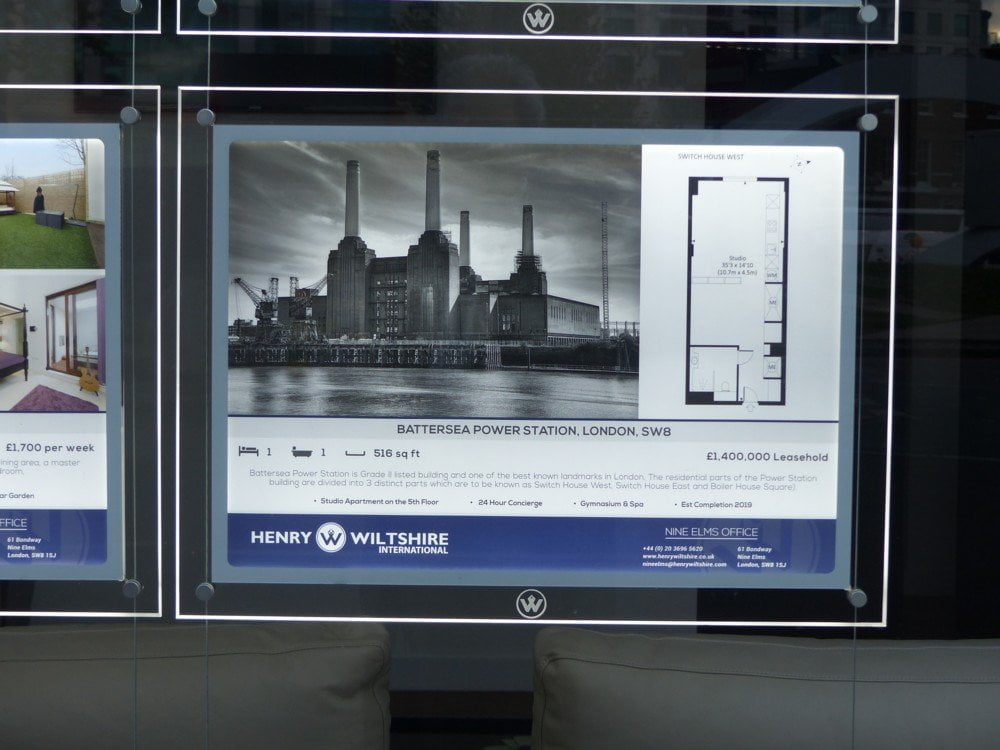
Post lurgy, and with Spring in the London air, Brian took us on a walk along the Thames to Battersea. He took some great photos too, as you’ll see when you click on that link. But it was the seventh one that stood out for me:

PowerStationDwellings

Firstly, I should note that this isn’t as “nice” as some of the other images. But just because it’s not showing “the river… adorned by bright reflections” or “world class roof clutter” doesn’t mean that it’s not a valid photo. It’s taken to share information rather than because it’s pretty. It’s something I find myself doing more and more too – photos of the blackboard shopping list in the kitchen or details of a show or something else I see on a poster for later investigation. Quick and easy.

But if you’re in SA and you’ve looked at that seventh image, then you’ll have seen why is stood out for me.

A 516 square foot, one-bedroom apartment, for £1,400,000.

Look out! Here comes the conversion:

That’s 47.94m² for a cool R25,474,034.59.
Twenty-five. And a half. Million. Rand.

‘Ow Much?!???!!??!?!

I recognise that we’re not comparing apples with apples here. I recognise that this is prime London real estate, but let’s just see what R25.5 million would get you over here, shall we? I popped in at leading SA estate agency Pam Golding Properties for a quick look.

Well, if we’re going down the apartment route, why not buy this place?

367417_H_11   367417_H_2
It’s over seven times the size of the London offering, has 4 en-suite bedrooms, overlooks all four of the beautiful Clifton beaches and comes with two (count them and weep) two parking bays. You’d also have R500,000 spare cash to buy a nice outside table, which would put you one up on the current owners.

But apartments are so boxy, aren’t they? Especially when, for the same money, you could buy your own BOUTIQUE WINE FARM AND EQUESTRIAN ESTATE:

413637_H_10
     413637_H_2   413637_H_6
At 42,505 m², the property size is a mere 887 times the size of the Battersea flat, (although the actual living area is just 17 times the size). That pool is 11m long though, meaning that it’s about the size of the R25.5m London apartment. But what else do you get?

With majestic mountain views as a backdrop and entrancing vineyards gracing the surrounding slopes, one could imagine you’re in the south of France. Enjoy the romance of your own award winning vineyards (Savignon Blanc, Merlot, Shiraz and Viognier), without the labour if you wish, as it can be leased out.
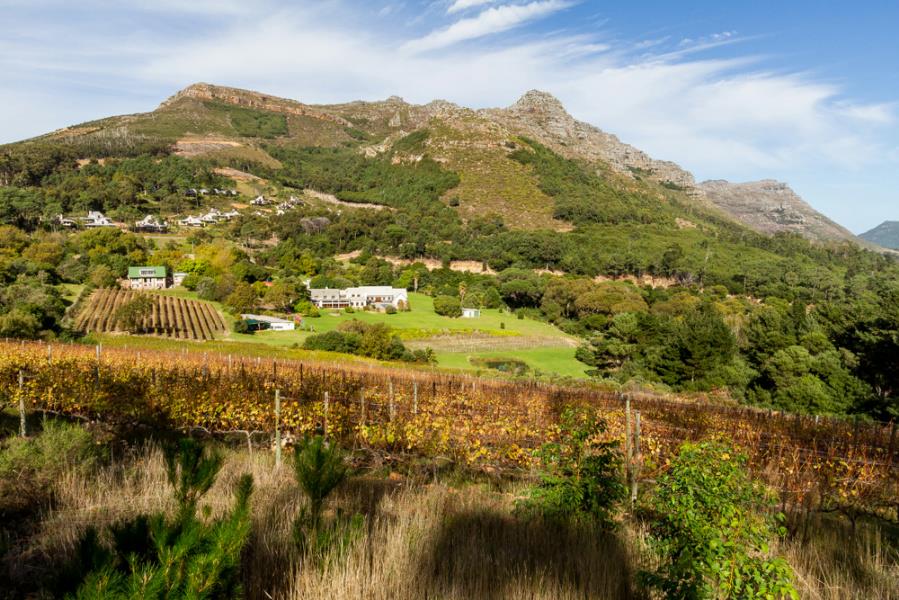
Constantia Nek Farm graces a valley on the back slopes of Table Mountain National Park with a large home, several stables and 3ha of vineyards. Riding in the restricted Orange Kloof area of the park is allowed with a special permit.
The Property also includes a granny flat, two large sheds/workshops, extensive parking, three garages, large spring and perennial stream fed dam, and adjacent staff quarters on the Houtkapperspoort side of its Southern boundary. Amenities include an 11m pool with electronically operated cover and solar heating and heat pump and large, cool wine cellar. The grounds and vineyards are irrigated via a seven station computerised underground system.

And again, you’d still have R500,000 spare for a nice outside table.
Or you could look at the Thames from your shoebox. It really is your call.

Like I said, I know that I can’t legitimately compare these properties. But with London prices and frankly terrifying exchange rates, it makes for an interesting – and, as an ex-pat, rather distressing – juxtaposition.

Still. Where would you rather be?

just Panama things

I say Panama, you say…?
Well, it’s going to be one of two things: “hats” or “canal”. OK, or possibly “Jack’s”  if you’re Capetonian and into dockside seafood.

The Canal famously goes right through Panama twixt Panama City and… er… Colon, so that’s a valid Panamanian thing (also, it’s ‘currently being extended’, but… but how?).
The hats, however, infamously actually originate from Ecuador, which is but one Colombia away from Panama, but isn’t Panama. They are definitely hats though.

There is another Panama thing. A biggie, too. The Disease. If you’ve ever had Panama Disease, then frankly I’m amazed that you’re reading this. Not just because it’s invariably fatal, but moreover because it only affects bananas.

Fusarium oxysporum – that’s your problem, right there. It’s untreatable. And it’s been an issue for a while, prompting lines like:

The banana industry was in a serious crisis, so a new banana thought to be immune to Panama disease was found and adopted, the Cavendish.

But now even the trusty, sturdy Cavendish is becoming threatened by a new variant of Panama Disease: “Tropical Race 4”.
And it’s serious. Because Banana Business is Big Business: R5.7 BILLION Business each year in North Queensland alone. NQ is panicking a bit, because the catastrophic Northern Territory banana crash of 1997 – yes, caused by that fungal bastard – is still very fresh in the memory. The NT banana industry has never really recovered either, because the Fusarium spores can hang around in the soil for 30 years or more, just waiting for their next bananary host to be planted and then killing it, and with it, the local industry.
The concern is that NQ may well go the same way.

We’re not immune here in South Africa, either.

Fusarium wilt (Panama disease) is responsible for severe Iosses of Cavendish bananas in two of the six production areas of South Africa: Kiepersol and southern KwaZulu-Natal (KZN). The disease first occurred in KZN in 1940, and from there spread to Kiepersol with infected plant material, where it resulted in 30% Ioss of banana fields between 1991 and 2000.

The biggest problem with bananas, aside from their irritating habit of being green when I want to buy them in Woolies, is that they reproduce asexually. Poor things. Asexual reproduction doesn’t allow for much genetic variation though, and so if Daddy banana is wilting (careful now), Baby banana is going to get it too. Bad news for bananas generally.

Unfortunately, I don’t have the answer. But that’s kind of the point here. No-one has the answer: it’s another case of us so-called brilliant humans being outwitted by a microbe. Now, not only it it the case that we are all going to die horrible deaths soon, we’re not going to have any bananas to eat while we’re doing it.

Donate to VWS

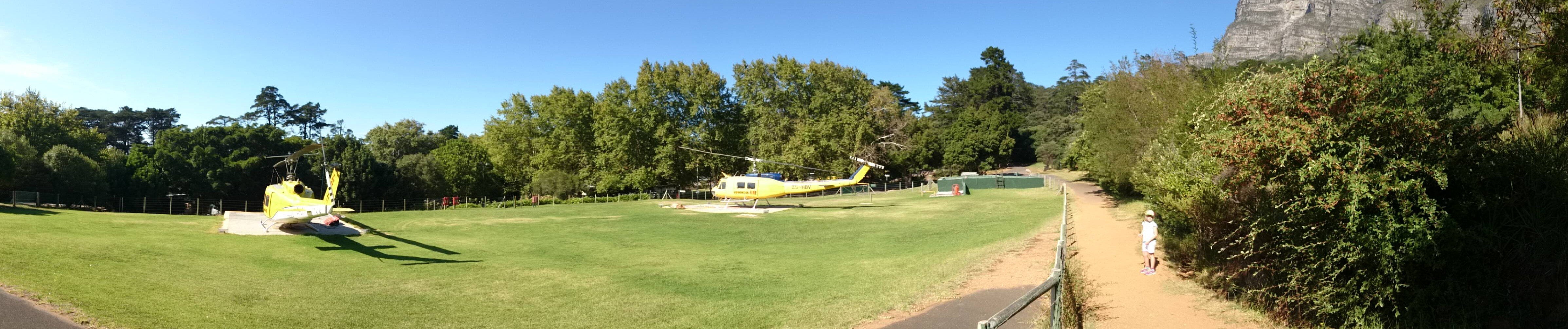
After the last 24 hours, with seemingly the whole of the Cape peninsular ablaze, the amazing work of the Volunteer Wildfire Services (VWS) has been highlighted once again. They’ve now been out fighting the huge fires for well over 24 hours, battling high winds, smoke and temperatures in excess of 40ºC today.

lakemichelle

The VWS rely on donations from the public and businesses to meet their annual running costs, and if you want to help them out with a once-off donation, here are the details you need:

Bank Deposits or EFT Payments can be made to:
Volunteer Wildfire Services
Nedbank
Branch: Foreshore
Branch Code: 108309
Account Number: 1083321226

If you make a donation, please use your name as a unique reference as well as sending us an email so we can thank you for your valued contribution.
Email: finance@vws.org.za

Alternatively, you can make a credit card donation via their Givengain page – again, they ask that you drop them an email if you do that to “keep track of incoming funding for the auditors”.

There are other longer term ways to support the VWS, including adding them as a beneficiary on your Woolworths MySchool card or pledging money each month, via their pledge page (which also has their equipment wishlist on it).

Good cause alert: please give what you can.

Paris Airport Private Transfer

Nothing better than a decent trip to the airport. Someone to carry your cases, no worries on parking, pick you up from your door, drop you at the terminal.
What’s not to like?
Many places around the world offer this service, but if you’re in Paris (as I sometimes am, and as you sometimes surely will be too) then look no further than the very reasonable Paris Shuttle to get you to OLY or CDG. [Sponsored post.]