Uber cash experiment begins

Uber are using SA as a Guinea pig. Quite why they don’t use Guinea as a Guinea pig is slightly beyond me, but still, SA it is. The experiment in question is whether cash payments for your Uber ride is a good/viable alternative to the “traditional” credit card.

South Africa becomes the first country in Uber’s global network to experiment with cash payments across five cities simultaneously and was selected because of its low credit and cheque card penetration.

Indeed. Apparently, cash makes up 65% of all transactions in SA, and while Uber says:

Uber riders in South Africa already have access to a reliable, convenient transportation; paying by cash just means more South Africans can enjoy this.

What they obviously also mean is that more people can use Uber and therefore increase their profit margins. But there’s nothing wrong with that – it’s how business works. In fact, it’s quite nice that for once the customer gets something out of it as well.

So, with the rest of the world moving away from cash as a payment form, I was interested to learn that Uber thought that this was a big enough deal to try this experiment. While the 65% figure above suggests that it makes sense, how many of the individuals who are making those cash transactions actually have a smartphone (which is still required for an Uber account/booking)? Smartphone penetration is “over 45%” in SA, and I would have thought that debit/credit card ownership (there are over 50 million cards currently in circulation in SA) would have covered most of that 45% already. Also, I’d reckon that the majority of people who don’t have a card wouldn’t live in urban areas anyway.
Urban areas are where Uber operates. Urban areas and Port Elizabeth.
In short, I’m surprised that Uber feel that a lack of a cash payment option was the rate limiting factor here.

Not everyone will have the cash option just yet. It’s being rolled out, and once you get it (I have, although I’ll probably never ever use it) you’ll see this screen upon opening your Uber app.

wp-1464258889036.jpg
And yes, of course, you can still choose a cashless option, so, much like your hot cross buns being Halal, this shouldn’t really negatively affect you at all. *ahem*

As for safety, with Uber drivers carrying cash now, will they become more of a target for thieves, skollies and skelm? Hopefully not, say Uber:

While it is unlikely that driver-partners will be carrying a large amount of cash, they will be able to deposit cash, at any time, into various FNB ATM’s across South Africa. We have also encouraged them to do regular deposits and keep as little cash on them as possible (by using their cash to pay for fuel and supplies).

Which is sensible. And it should be remembered that “regular” taxis carry money around all the time and we’re not hearing reports of them being mugged 24/7.

Well, no more than anyone else, anyway.

The electric car conundrum

Petrol is going up again next month and people are understandably searching for alternatives.

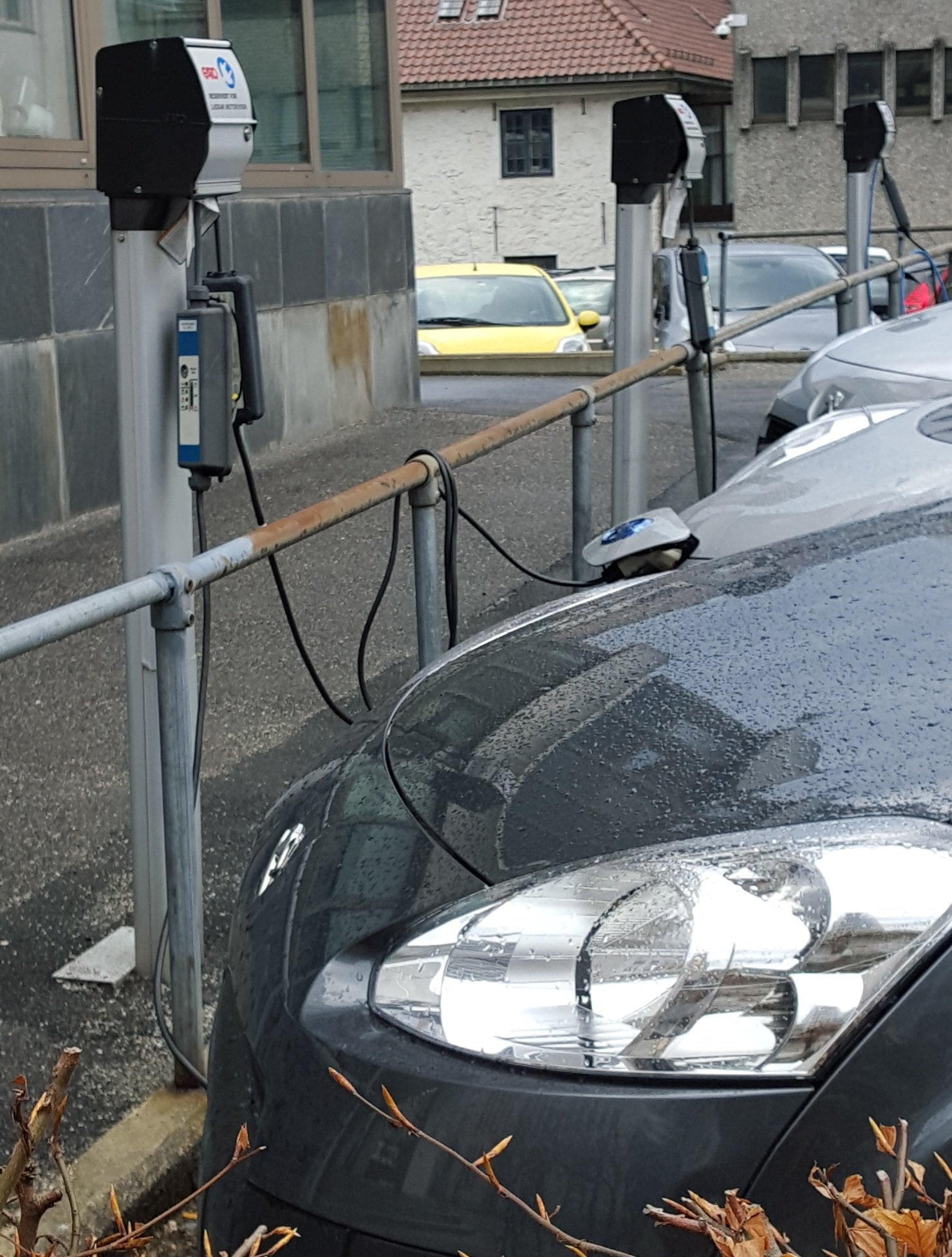
Look, electric cars are great. Some of them are even really cool. We saw loads of them in Bergen, each with the number plate prefix ‘EL‘ to signify the green credentials of both the vehicle and owner. And that’s not unusual for Norway. Check this article from 2 years ago:

Norway, with a population of only five million, now has on its roads 35,000 electric vehicles (EVs), which also represent 14.5 per cent of new vehicle sales. Figures show another spike last month with 1,346 sales.

Onward and upward. What nice people, concerned about CO2, the greenhouse effect and climate change. But hang on, it seems that the electric car boom is driven by tax breaks, subsidies and privileges, rather than altruistic environmentalism:

Those benefits are incredibly generous, including exemption for VAT and car tax as well as access to bus lanes, free parking, free toll-road use, free ferries and employment tax benefits. A recent study suggested this equals as much as £1,000 a year in savings over the life of an EV.

Never mind. A by-product of this apparent greed is fewer car fumes in the city. Winning all round.

ecbergenEVs plugged in at the Bergen rådhus

One drawback with electric cars, however, is that they require electricity to run. Bugger. But in Norway, this is fine, because almost all of their plentiful electricity comes from the plentiful water falling down the plentiful waterfalls on the side of the plentiful mountains. And that’s very clean and green.

In South Africa, we don’t have enough water or big mountains to work this way. We do have shedloads of fossil fuels though, so we make our electricity by burning those. Thus, following the electrical supply audit trail upwards, when you plug in your EV in Cape Town (and good luck with finding somewhere to do that, by the way), it’s basically running on coal, like an old steam engine. Filthy.
So, right now, there’s really no environmental benefit to driving an EV in South Africa.

And they’re massively expensive. Massively, massively expensive. Like solar panels. But more so.

There is some evidence that people don’t think past what’s immediately in front of them though. Look at these guys, for example: Scootours. Now, this looks like a very, very cool idea, and one that I am determined to try. But their claim that it’s green? Well…

Fullscreen capture 2016-05-20 090012 AM.bmp

Yes. Going down a hill “propelled by gravity” is environmentally neutral. Well done.
But that vehicle taking you to the top of the runs? Fossil fuels, mate. And the laws of Conservation of Energy mean that the whole uphill thing will be especially dirty, heading up Kloof Nek and generating all that potential energy for you and your huge scooter.

I suppose that the thing with electric cars is that you would need to measure the amount of damage that burning petrol is doing versus the coal to make the electricity for your EV. But that difference is likely to be minimal. There was the option of buying clean power by subsiding the 4 wind turbines near Darling, darling, but they proved to be so inefficient that the company went bust.

Darling Wind Farm was one of the first two wind farms in South Africa. It is located 70 km (43mi) north of Cape Town, between Darling and Yzerfontein on the west coast of South Africa. It is an Department of Energy demonstrator site with the 4 turbines constructed. The second phase, 6 additional turbines, was never completed.

Darling Wind Power company is subject to liquidation. The DWP Board adopted a resolution to liquidate the company. Expected to operate at 28% capacity and deliver 13.2 GWh per year, it has only been delivering 8 GWh per year at 19% capacity.

Awkward.

OK. Once we get our clean electricity sorted (hello nuclear) and the price of cars with big batteries comes down to at least reasonable levels, we can revisit the electric car in South Africa. But these things aren’t going to happen before petrol goes up by a Rand per litre in a fortnight’s time.

And so that’s why you need to try out our massively efficient public transport system [cue laughter] or start walking.

Thinking About You

Well done to Goodluck for this wonderful cover of London Beat’s 1990 hit Thinking About You, and well done again for breaking the mould on the amazing video to go with it.

It’s all wholly implausible, of course. No one leaving Sea Point and heading out into the Cape wilderness to relive memories of a lost love would travel westbound along Rhodes Drive, would they?
And no-one jumping into a Cape farm dam under those sort of grey skies is going to be smiling. We’ve all tried that (albeit not necessarily with a couple of guys who look like they were probably once half of ABBA) and it’s simply TOO DAMN (no pun intended) COLD.
Perhaps a grimace, but certainly not the apparent joyful countenances that we see here.

No. It’s all just acting.
And I’m pretty sure survival blankets were involved at some point soon after the take.

More seriously though, congratulations to  all involved. It feels terrible to have to say this, but thank you for not going down the tried, tested and (sadly) commercially comfortable route of the “traditional” relationship music video.

Rumbled – EXCLUSIVE!

I wasn’t supposed to tell anyone about this, but I guess that the cat is well and truly out of the bag now. I thought that the bricks I’d included and several feet of the Swartrivier would have kept the cat fairly permanently in the bag, but the pesky thing seems to have escaped and is now telling everyone about my secret… about my previously secret plans.

So. Time to come clean. I’m not really a microbiologist, fighting the scourge of tuberculosis in South Africa. I’m actually a secret agent for the British Ministry of Defence, fighting the scourge of the anti-ANC counter-revolutionary, third force(s) in South Africa.
I’m not trying to keep the SA population healthy, I’m simply trying to keep them under the governance of Jacob Zuma and the African National Congress.

And now everyone knows about it.

Fullscreen capture 2016-05-17 095018 AM.bmp

Bugger.

To be fair, for years, it was not really a problem at all. All the hard work was done by other people pre-1994, and then by the big Man(dela) for the years thereafter. Minimal ruling party propage was required.
It was easy money.
Even when Nelson handed the reins over to Thabo, everything was still going fine. Sure, there were about three hundred thousand problems, but we were starting from a very high base level and even those weren’t nearly enough to unsettle, let alone unseat, the mighty ANC.

No. The problems only began when Thabs was usurped by Zuma in 2009. Things started to go south rather rapidly  – and I don’t just mean concerned senior members of the British armed forces visiting my office. When JZ-junior, Julius Malema, was booted unceremoniously from the ruling party, alarm bells started ringing. When he set up his own political party and started actually doing things with it, those alarms became deafening, and I was unwillingly raised from my several years long slumber in order to prop up the ailing SA government.

I’ll be honest, it hasn’t gone very well.

But look, it’s not all my fault. I’ve been trying my hardest. The clear first targets were those that were themselves targeting the ANC. But how? Any obvious intervention would be… well… obvious.
Cleverly, I made them metaphorically shoot themselves in their metaphorical feet. After all, who would vote out the ANC when the alternatives were so decidedly unappealing? Yeah, suicidal self-sabotage was the obvious choice.

I warmed up with the easy ones. Mamphela Ramphele and Agang – once a promising option – were quickly disposed of after I suggested that snogging the leader of the opposition “would look great in the papers” (it did) and “would ensure their political future” (ha! not so much!). The rest, much like Agang, is history.

But bigger fish lay ahead and needed tackling. Thus, it was me that hinted to Helen Zille that she should join Twitter. “It will be a great way to instantly engage with those disenfranchised, floating voters,” I told her. “You’ll help them make up their minds in no time.”

And she did:

hz1

Again and again:

hz2

hz3

It was a tough job, my work had to ensure that while the DA had no chance at national government, they safely held Cape Town – I can like to like my potholes mended and my traffic lights working.

If it was easy to hobble Helen, the EFF were a whole different kettle of fish. Younger, louder and in touch with the voting public, their populist firebrand approach was their trump card, but I soon worked out that their love of repeatedly shouting at things could be used against them.

Yes, it was my idea that they repeatedly shouted at Jacob Zuma and his people in Parliament.

And then, once that had made successfully made absolutely no difference to the status quo, I got them to repeatedly shout at him again.

And again and again.

They love it, the media loves it, their voters love it. And it’s massively effective… at keeping the ANC in power.

Job done.

The only fly in my ANC-anointing ointment is Jacob Zuma. While I’ve been organising own goals for his opponents, he’s been scoring repeatedly at the wrong end, and it seems that there’s not much I – or anyone else – can do about it.

I think I may be out of a job soon because of him. Still – much like the local economy – at least I’m going down in flames; the good news is that in the few months I probably have left, I am being paid in Pounds Sterling.