Short

A quick post about our current predicaments:

There’s not enough electricity to go around. This is actually very old news, although South Africans continue to complain about it while doing nothing to save the damn stuff when they have it. It’s clear that generally, despite their lack of action to combat the problem, people are very unhappy about it.

The alternative, of course, is gas. We don’t have it plumbed to our houses here in SA like some other countries I’ve lived in, so it comes in big bottles. Well, it would if there wasn’t a shortage of it:

Dear Customers,
As you may have heard through the media, LP gas is currently in short supply in South Africa as a result of planned maintenance on a few of the major refineries in the country.
Please take the time to read the attached letter regarding the LP gas supply issues we are currently experiencing.

I’ll spare you the attached letter, which basically says there’s a shortage of gas, resulting in “unavoidable price increases”. Supply and demand etc etc. People are not going to be happy.

Anecdotally (hey, it works for Prof Tim), there’s also a shortage of diesel in Cape Town. My car doesn’t run on diesel. Mrs 6000’s car does run on diesel – when she can find some to put in it. Same with lorries delivering food and goods all over the country. Less diesel, higher demand, higher prices (although they are somewhat regulated in SA) = unhappy people.

And now, arguably the most serious of all, we have a shortage of water. Figures due to be released this morning will almost certainly indicate that the reservoirs supplying Cape Town are now less than half full. That’s not good, but ironically, it’s less than half the problem as well. The bigger issue is that it’s also not raining on the local farms:

A drought that has probably reduced South Africa’s corn crop for 2015 to the smallest in eight years is also putting at least half the country’s wheat harvest at risk, the largest grain farmers’ lobby said.
Farms in the Western Cape have had little or no rain since the start of the planting season in April and need showers before the end of May, Andries Theron, vice chairman of Grain SA, told reporters Thursday at an agricultural show in Bothaville.

The province, whose wheat fields are rain-fed, produces about 50% of the nation’s harvest of the cereal, data from the Grain Information Service show.
“We started planting in dry soil,” he said. “Usually, our rainy season would start in the middle of April, but it didn’t. We’ve got a hectic season on hand.”

And then this, from Agri Wes-Cape’s CEO Carl Opperman:

“This has been the driest summer the province has seen in many years. Rains that should have already fallen are desperately needed, especially by grain farmers.
“It’s a dry circle that we’ve got at the moment. We will be managing it, so we’re expecting rain in the future. It’s most probably going to be what we call ‘a dry winter'”.

Come now, Carl – drop the technical terminology, can’t you? You’re unnecessarily baffling us with bullshit there. Is there really no language you could have used so that us laypersons could understand?

Looking at the forecast for the coming week, our local grain farmers are going to remain disappointed.

And so… guess what? Less grain supply, no reduction in demand = higher prices. And that means unhappy people.

I’ve never been convinced that a single straw could break a camel’s back. But several big fat straws? Well, maybe we’re in for interesting times ahead.
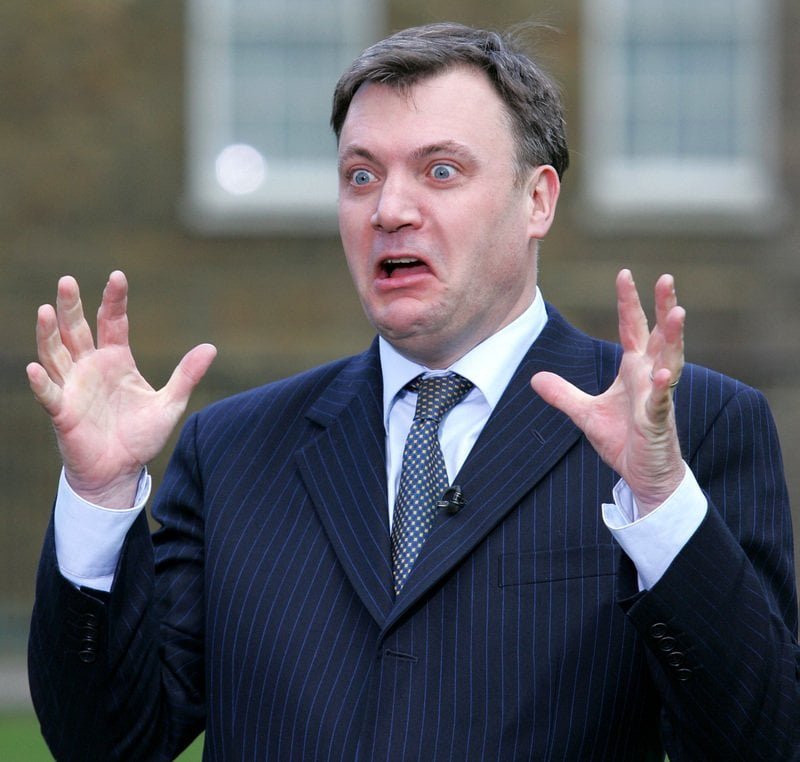
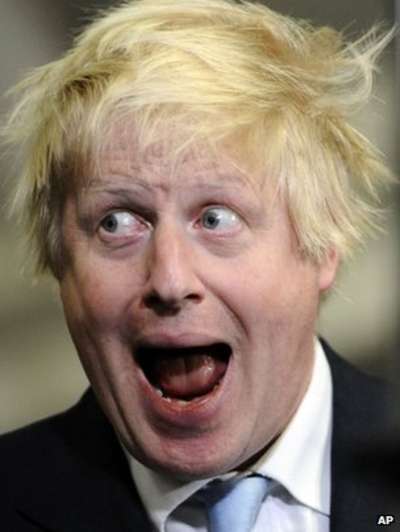
Election faces

I think this sums things up.

ed-balls-2  _82854713_boz
On an unexpectedly good night for the Conservative party, it looks like the end for Nick Clegg, Ed Miliband and (possibly even, at the time of writing) Nigel Farage. After a tight election, during which campaigning was anything but exciting, widespread Facebook sharing of the political beliefs of various comedians, actors and musicians seemingly mattered not. What a shame.

The only downside is that now we have to put up with the pitiful calls of how unfair the FPTP system is (as if we didn’t all know that was the electoral methodology we were using) and the bias of the newspapers and the allegedly low turnout and and and… and how the NHS is dead and buried now (although that hasn’t happened in any of the previous 40 years that it’s been around under a Conservative government).
Just for the record, I worked in the NHS under a Conservative and a Labour government and both of them treated it with equal contempt. In fact, the only major difference that I could see was that we had a lot more infections in traumatic amputation wounds from the “45 minutes to WMD” Iraq war under the Labour government.

Anyway, it’s done. The winners will crow, the losers will whine.
At the end of the day – that’s how democracy works. And yes, it looks like a much better system when you’ve just won.

D&G

I saw this tweet this morning:


and I was intrigued, because Southern Scotland (much like the rest of Scotland) isn’t known for its support of the (blue) Conservative party.
I went to the (rather cool) website to have a closer look, and yes – it seems that in their latest polls, the Tories hold an ever so slender lead over Labour and the SNP in those three constituencies. I don’t actually come close to believing this, by the way. But supposing for a moment that I actually did, how cool are the numbers in Dumfries & Galloway?

dandg

That’s tight.

In fact, according to figures from the 2010 results, it would mean that those top three parties are separated by only 200 votes. It would also mean that the Conservative vote has remained completely unchanged while loads of Labour voters moved from Red Ed to Scary Nicola’s Party (SNP). OK, so that latter bit is more believable.

I have limited interest in the UK election, if I’m honest. I do enjoy the websites and the facts and the figures. But it’s all been a bit negative, confrontational and depressing. I’m not voting and unless something amazing happens, it’s probably going to end up in a horrible, horrible mess after the vote, no matter who doesn’t win.

Still, I’m going to have my beagle-eyes on D&G, and I’ll try to remember to update you on exactly how close it turned out to be after the big day.

TIL about cellphone jammers

There were seventeen different kinds of uproar last week at the State of the Nation address when journalists sent to cover the debacle event noticed that they were unable to use mobile communication to file their reports on JZ’s evasiveness and parliament’s generally appalling misbehaviour.

They blamed a device found near the media gallery:

scramb

…which obviously, no-one knows who put there. Although my money is on the man with the pointy shoes.

And yes, it turns out that this is what a (military strength) cellphone jammer looks like. But how does a cellphone jammer work? Well, given the high tech world we live in, it’s actually surprisingly crude.

Basically, it’s the airwave version of a Denial-of-Service Attack in that it doesn’t do anything other than flood the frequency which cellphones use to talk to the nearest tower with signal, thus preventing any mobile device from accessing the network. I’m guessing that it’s like the illegal version of what happens when you try to send a tweet from a concert. (Which you shouldn’t be doing anyway, you went there for the music, right?) Simply too many signals competing to try and latch onto one tower – except in this case, the vast majority of them are artificially generated.

Cellphones use two different frequencies to send and receive information, but if even one of them is jammed, then the device is fooled into thinking that it can’t get through at all. But fancy jammers like this one can block lots of different frequencies at the same time – just in case you think you have some alternative means of accessing the network.

If your cellphone is being jammed, the likelihood is that you won’t find it suspicious – it’ll just be like you’re in an area with no signal – we’ve all been there:

Yeah, I think we got cut off
Yeah, I got crap reception in my house
I have to stand in a certain spot in my kitchen or it cuts out

Such a Twat, The Streets

It was only because there were large numbers of people in a small area struggling to get any reception on Thursday that it became obvious that something a bit sinister was going on.

Depending on how strong the jammer jamming your phone is, you might only have to walk a few steps away to regain a signal. But with a big one like the one above, and with everyone in a defined space (the Parliament building), the only way to #bringbackthesignal was for somebody to switch the big box (which no-one knows who put there) off.

Once that brief hiccup was dealt with, we could get on with the rest of the circus, and deal with the hangover and recriminations of media freedom denied for weeks and months to come.

What a difference a year makes…

…52 little weeks.

On 20th January last year, South Africa woke up to read what our Sports Minister had said about the national football team’s defeat the previous evening:

“The mediocrity we saw yesterday is disgraceful. Last night, we saw a bunch of losers who conceded two useless goals. We must never wake up to this situation ever again,” said Mbalula.

But then guess what happened last night?
Oops.

On 20th January this year, South Africa woke up to the words of a somewhat different Fikile Mbalula:

But that’s politics for you isn’t it? A short-term, shiny surface popularity contest (see yesterday’s post) with no real substance behind it. I’d love to think that Mbalula felt differently about the South African football team, but deep down, I think he’s just trying to look good in front of his legion of twitter fans after the kicking his reputation took for those 2014 comments.

So, while I’m all for this “new approach”, while we’re a whole 365 days on from Fikile’s extraordinary outburst, while he tells us how we must react to last night’s rubbish with dignity and while we’re all not calling Bafana Bafana names, let’s not allow ourselves to conveniently forget exactly who was the most famous name caller of all.