1,300 different sorts of bugs found in Beijing smog

Here’s one I meant to blog earlier:
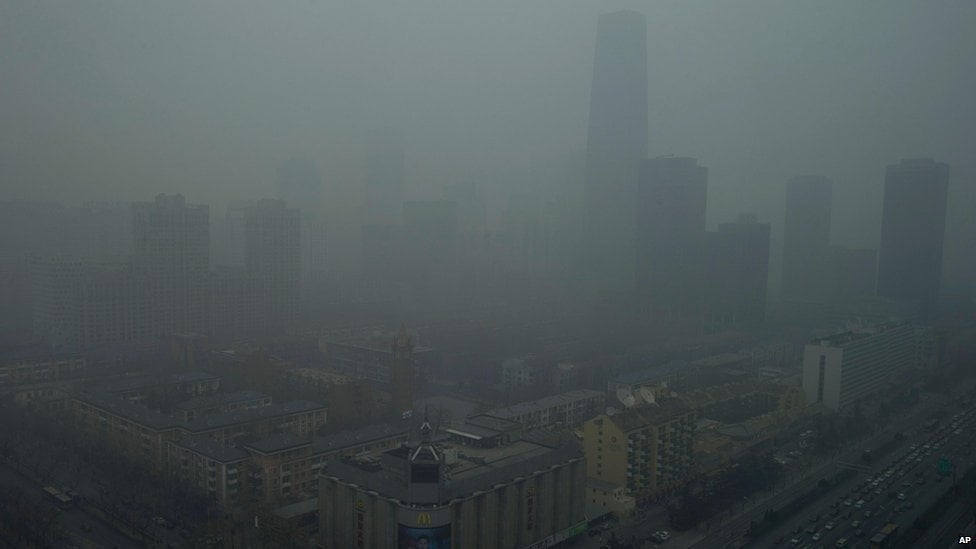
beismog

Beijing’s smog problem has long been talked about, but now it’s not just the unpleasant chemicals and particulates that are out to get the local population: a recently published study found shedloads of microbes were hitching a ride on the smog as well.

Chinese researchers have now used genome sequencing to identify about 1,300 different microbial species in an exceptionally soupy smog that hit Beijing in January 2013. Reassuringly, most of the microbes they found are benign — but a few are responsible for allergies and respiratory disease in humans. And on days with heavier pollution, the proportion of DNA from these allergens and pathogens increased, suggesting that they might present an additional health threat to vulnerable groups, such as older people or those with weakened immune systems.

It should be pointed out that this was a search for genetic material in the air samples, and while that means that you’re more likely to find anything that’s there, a positive result does also mean that the microbes could be either alive or dead. Spoiler: Dead ones are less likely to infect you. Either way, you really don’t want to be breathing them in.

The most abundant species identified was Geodermatophilus obscurus, a common soil bacterium. But they also found Streptococcus pneumoniae, which can cause pneumonia; Aspergillus fumigatus, a fungal allergen; and a range of other bacteria typically found in faeces. 

Nice.

Interestingly, the proportion of the bugs found are similar to those found in a similar survey done in Milan, Italy. Despite the fact that these cities are halfway around the planet from one another, the microbes are essentially the same.

And the other point to note was that microbe levels increased on smoggier days. Which, given that we have some quite smoggy days here in Cape Town is worth bearing in mind if you have asthma or some other respitatory disease.
And you’re here.
On a smoggy day.

Temperatures scales explained

A temperature-related conversation on Twitter earlier today reminded me that I’ve been meaning to post this helpful guide to the differences between the three main temperature scales:

image

On that note, the rest of the week in Cape Town is looking dangerously hot whichever scale you choose, with Friday baking us all and Saturday melting us with some sickeningly Durbanesque humidity.

A picture of a VW gear lever

Remember this extraordinary outburst?

you say you weren’t used to the car?LIAR,LIAR,LIAR… As EVERYBODY knows,in a VW,1st and reverse gear are TOTALLY on the opposite side to each other.

*pauses for dramatic echo effect*

Well, helpful reader @pimrie has helpfully taken a photograph of his VW gear lever, and he’s kindly allowed me to share it with you.
Please excuse the fact that his car could probably do with a bit of a clean. That’s not what this is about.

vwrev

No, what this is about is the fact that in this particular VW, 1st and reverse gear are… er… not “TOTALLY on the opposite side to each other”.
Maybe there’s more than one sort of VW gearbox. And evidently, internet commenter and legal threat donor Paul Murray was thinking of the other sort of VW gearbox. Which makes it all the more confusing, because when you’re panicking because several tonnes of angry, infected pachyderm is bearing down on you, you might well forget which sort of VW you’re in and, with that vital information, the layout of the gearbox.

Rule one of posting outraged allegations on the internet, Paul: make sure that you’re actually correct in your outraged allegations.

iTunes broke my PC

And judging by the recent traffic on the Apple support forums, I are not alone.
Suffice to say, don’t try and install any updates to the program if you’re running any version of Windows.

Something bad will happen.

Anyway, between trying to fix that, being a dragon guarding some treasure in the garden and heading out to a housewarming this evening, I find that I’m right out of time for posting anything other than this important warning.

You’re welcome.

In Search of Tranquility

The Telegraph has come out with their list of Britain’s Most Tranquil Places and there at number six is the Isle of Man, a fact that they chose to illustrate with a rather disappointing photograph of the Calf Sound:

quiet6_2783623k

That image really doesn’t do it justice. Some of the other photos on the slideshow (link above) are very pretty though.

But looking at the rest of the list, remoteness and simplicity is key for inclusion. That’s something that we can almost take for granted in South Africa, but the UK is packed and there are far fewer places where you can get away from the hustle and bustle of normal daily life.

Interestingly, it appears that I have lived in both the quietest (Oxford) and noisiest (Newcastle) cities in Britain. Being generally of average volume, I’m not sure that I did anything to contribute to either of those achievements. Plus, I haven’t lived there for 10 years, anyway.

The Isle of Man is also home to:

the largest concentration of Dark Sky sites in Britain. Dark Sky Discovery Network announced in 2014 that the island has a total of 26 designated “Dark Sky Discovery Sites”.

Again, we’re spoiled for this in SA, once you’re anywhere outside the big cities. The difference and detail that one can see in the night sky between Cape Town and Cape Agulhas is a good case in point. It’s not quite that simple in the UK, as generally, once you’re a sufficient distance from one city, you’re generally approaching another.

So, where are your quietest spots in SA (or wherever you are)?