At the elephant park

Mrs 6000 recently made a trip to the Knysna Elephant Park in… well… near Knysna. Among the activities on offer there are watching the elephants, feeding the elephants, riding the elephants and photographing the…

30107602800_abf4e5cba0_b

er… zebras?

Yes, they have zebras there too. Mrs 6000 took many amazing photos of the elephants too, and I will be uploading them to Flickr. [UPDATE: Done! Here.] But this striking (previously variegated) image of these four chaps jumped out as an immediate favourite of mine, and that’s why it’s up here first.

Related: it’s quite nice to have Mrs 6000 home again.

Tit

There’s a hint of spring in the air. That’s good, because spring is nice and warm and a forerunner of summer (yes, that happens here too). It’s not so great because we still need quite a lot of winter rain to fill up our dams.

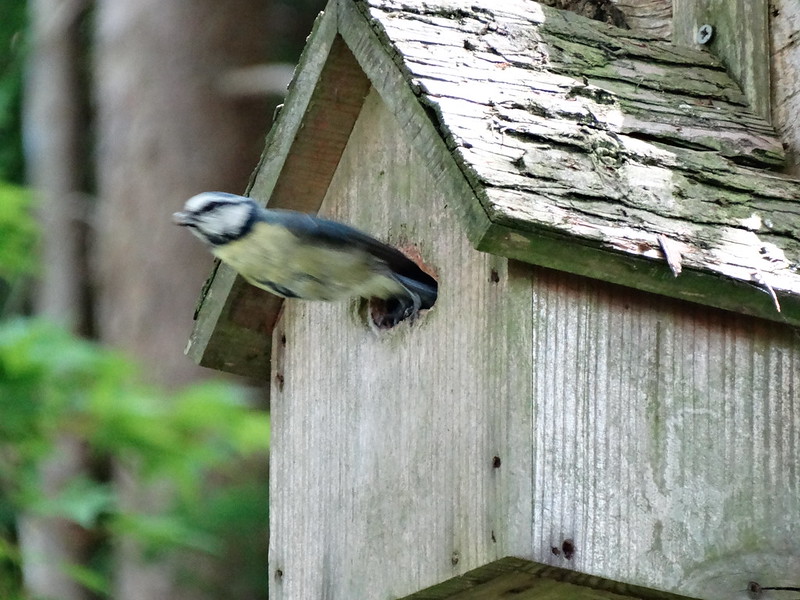
Here’s spring-like quota photo of a Eurasian Blue Tit (Cyanistes caeruleus) exiting a nesting box last spring in Sheffield:

I’ll admit that I couldn’t remember the scientific name for this little guy, so I had to look it up. On the page was this:

Fullscreen capture 2016-08-26 022854 PM.bmp

Yeah. Bit generic, that second one.

Interestingly, the Common chaffinch (Fringilla coelebs) continues to be a problematic invasive species but only in certain parts of the Southern Suburbs:

The chaffinch was introduced from Britain into several of its overseas territories in the 19th century. In South Africa a very small breeding colony in the suburbs of Constantia, Hout Bay and Camps Bay in Cape Town is the only remnant of such an introduction.

I was shocked when I saw one in Bergvliet last year. Seeing a chaffinch was shocking, but worse was the sudden realisation that I was in Bergvliet.

Matches

We found ourselves with a few thousand safety matches in a plastic bag. It’s probably best that you don’t ask how this came to be. Anyway, aside from gooi’ing the whole lot onto the braai to see what would happen, there were a few other ideas. One of these was to take 1/4000 second exposure photos of the matches igniting as dusk fell.
I guess I was inspired by last week’s Slo-Mo guys video.

Sadly, 1/4000 really isn’t fast enough to be Slo-Mo, if you see what I mean. Still, one lives, one learns.

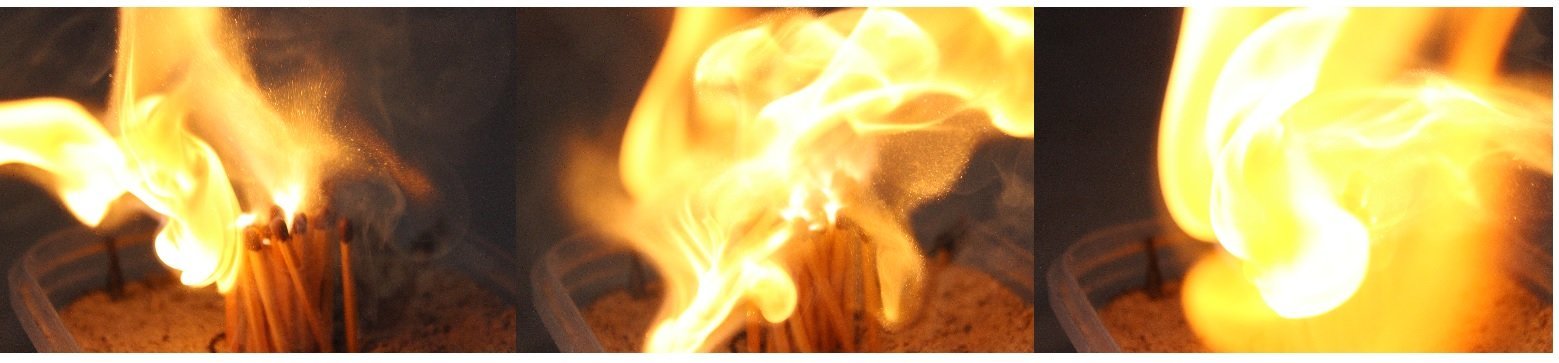
The first experiment went well enough that I was encouraged by my 10-year old son (and official lightee of the matches) to try a larger, second attempt. Somewhat buoyed by the success of initial effort together with a certain amount of Castle Milk Stout, I agreed to give it another go. The second attempt was rather less successful, mainly because the flames decided to turn on the photographer (me) – as the three photos below testify:

matches

The good news is that the doctors say my eyebrows should grow back fairly quickly.

Other photos from the weekend (including a bit more night photography) are here.

When is a photo-expedition not a photo-expedition?

From the blogroll, this gem from Brian Micklethwait:

…I went on a short photo-expedition.  It was short because I forgot to take my camera.

It was just thrown into this post, which was more concerned with the antics of his new hard drive than anything else, but I love the idea of a photo-expedition with no camera. Can such a thing actually even really exist?

When do you find out that you have no camera? If you’re lucky, maybe it’s as you’re walking towards your destination. Logic suggests that it can only be as late as when you try to take your first photo. And presumably then you go through the five stages: denial, anger, bargaining, depression and acceptance, the last being marked by the need to make something of your trip out: maybe grab some bread and milk at the corner shop and make it a shopping expedition?

But as requirements for photo expeditions go, I’m sure that Brian would agree that a camera is right up there under “essentials”.

Tenuous link time, because I also went on a short photo-expedition on the long weekend. I did have a camera. Mine was short because I wasn’t really sure what I was doing, and it was dark. It being dark was pretty much the point of the timing of the expedition though, since this was my night photography project take two. You can see the images here (c.f. take 1 here). Be nice.

Yes, different ways of playing, but the moon was too bright on Monday for a proper long exposure. Also the moisture in the air and the dew was a real issue: the camera needed a wipedown after every 20 second exposure: it would have practically drowned with a half hour effort. I’m hoping that maybe some of the “noise” was due to that phenomenon and I can find a drier evening as we head towards summer.
So yes, lots (and lots) more work to do to make nicer photographs, but I feel I’m getting somewhere, at least. And each clear evening that I spend in Agulhas, I will tweak a little further until I can produce something lovelier and better every time.

But hey, at least I took my camera along. 🙂

More photos from the weekend here.

Quota pelicans

I’ve been here a long time now. Almost 30% of my life. But I still get a childish kind of excitement when I spot stuff that, as a child, I would only have seen in a zoo. And by this, I mean wild stuff. Not stuff in a zoo. Because you’d expect to see that in a zoo anyway. No, I’m talking about baboons, penguins, whales (no, I’ve never seen a whale in a zoo), flamingos, ostriches, snakes, mongeeses, and yes, pelicans.

28349707962_299f97960f_h

This isn’t my photo. I was emailed it. Sadly, I’m fairly sure that it isn’t the photo of the person that emailed me either. So credit to the Unknown Photographer. Nice work.

Pelicans, for the record, are large. Big, chunky birds which do a lot of soaring. You can see them in Cape Town on the in-this-case-ever-so-slightly-misnamed Flamingo Vlei in (Uns)Table View and, if you’re lucky on the Black River between Obs and the M5. The locals are Great White Pelicans (Pelecanus onocrotalus) (and nothing to do with the sharks) whereas the ones above with their pink beaks and thin black line under their wings are, I think, Australian Pelicans (Pelecanus conspicillatus).

And of course, when speaking of pelicans, one should always quote Dixon Lanier Merritt:

A wonderful bird is the Pelican.
His beak can hold more than his belly can.
He can hold in his beak
Enough food for a week!
But I’ll be darned if I know how the hellican?

Yep. Big beaks. And those Aussies above have the biggest of all.

The record-sized bill was 50cm (20″) long.

Half a metre of beak. And that’s mainly keratin, just like your hair and nails, and just like a rhino’s horn.

Yikes. No-one tell the poachers…