Is a minus number a good thing on SARS efiling?

Riveting stuff, especially for those overseas (not), but there really needs to be a website devoted to these sort of things. An SA FAQ or something similar with straightforward answers to simple questions. I’m not going to do it, but I am going to do this one. And maybe one about what time the booms at Kenilworth Station are closed each day. That would also be helpful.

But anyway, without further ado:

YES!
A MINUS SIGN on your IT34 Notice of Assessment from SARS
MEANS THAT THEY OWE YOU some money.

Woohoo!

Look for the line:

Net amount refundable under this assessment                          -1234.56

to see how much they’re going to pop into your bank account.

Of course, the converse is true if you don’t see the minus sign there. Sorry. You owe your bit towards a new gold plated bog roll holder for the 78th guest loo in Nkandla.

Fudge

I always wanted to have my own cookery blog. I once asked a foodie about being a foodie and he told me that it’s tremendously cool to be a foodie. And there’s no ambivalence in foodie circles. They either love each other or they hate each other. No middle ground.
I think I’d be good at such dramatic extremes. I just need to pick the right side to be on.

Anyway, while I’m doing that, and with it being Tynwald Day (roughly the Manx equivalent of yesterday’s American Independence Day in layman’s terms, I guess), here’s a recipe I devised copied from a conveniently hung Manx calendar.

image

I haven’t actually tried it, but at the end of the day, it’s fudge, so even if it ends up as a sloppy mess, it’s going to taste pretty amazing, right?
Now, foodie friends, I can tell you’re impressed, so gather round and worship at your new-found altar.

Bring fudge.

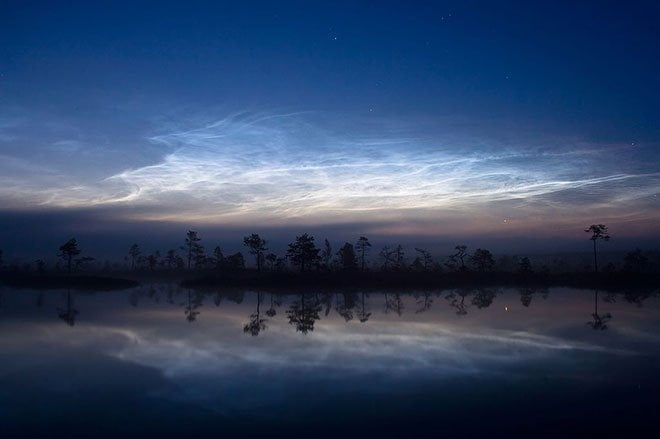
Spooky, glow-in-the-dark clouds continue to spread south…

This is cool. Of course it is, it’s glow in the dark clouds, for goodness’ sake!

The technical name for this phenomenon is noctilucent clouds and they’re not unheard of – they were first described way back in 1885. Because they exist at far higher altitudes than our normal clouds, they can continue to reflect the sun’s light, even after dark:

660px-noctilucent-clouds1

Previously, they have only been seen at extreme Northern altitudes, but more recently, they have been observed more and more regularly and further and further south (not quite as far down as Cape Town though).
Scientists are a bit confused as to why this is, but they are pointing towards higher methane concentrations in the atmosphere, which is then oxidised into water vapour, which then forms these clouds.

Thus, yes, this beautiful sight is actually – apparently – “a warning signal for climate change”. Ugh.

At least they’re prettier than a Greenpeace demo.

Track A Shark

Thanks to the wonders of modern technology, plus a little bit of cash from those hard working sponsors, you’re now able to track basking sharks off the coast of the Isle of Man. They’ve tagged 4 sharks and they are following them around (electronically) because:

This scientific data is useful to government to enable them to make informed wildlife management decisions.

I’ve been following Mister Tailor for a few days now:

129183

He’s:

a 5.5m male, named for his unusually shaped tail fin that slopes gently backwards rather than standing tall like most caudal fin tips.

So there you go.

Basking sharks are huge, much bigger than your average Great White, but as plankton eaters, they are completely harmless to humans.
My personal hope is that Mister Tailor’s wanderings unwittingly draw a diagram of the circuitry and mathematics required to design and build a time machine. But I suppose that’s quite unlikely.

Elsewhere on the wildlifetracking.org site, you can follow birds, bees (ok, not bees) and other animals all around the world.
(Hint: The geese are especially cool.)

Sunset won’t get any earlier

We’re in the grips of midwinter here in Cape Town. It’s hell. Almost, anyway.

But the good news is that the shortening of the days is almost over and we are nearly able to look forward to SUMMER!
This week, the sun has been setting at 17:44, but despite the fact that the shortest day (our winter solstice this year is at 07:04 on Friday, 21 June) is actually still a couple of weeks away, the sunset won’t be getting any earlier now, 17:44 is the earliest it’s going to get this year.

The time of sunset in most major cities around the world used to be calculated by astronomers using complicated algorithms, but for Cape Town these days, a guy in a white coat just pops down to Green Point Promenade and counts the number of Instagrammers, before calling the results back in to HQ.

Because of the tilt of the earth on its axis, the sunrise does continue to get a little later until the end of the month, but by that time we’ve already gained another 4 minutes of light in the evening, so I think that we can basically say that summer is pretty much already here.

Some few facts for you:

Cape Town’s shortest day this year is 21st June, with 9h 53m 35s of daylight.
The longest day will be the 21st December, when the sun will rise at 05:32 and set at 19:57, giving us 14h 25m 03s of daylight. If you really think that you can do a lot more with those 4½ hours of light, you might want to consider using artificial light sources to lengthen the useful time each day during winter.

However, the latest sunset next summer will be on the 3rd January 2014, at 20:01. On this day, the sun will be “just” 147,098,000 km from Cape Town, compared with 152,094,000 km on 5th July 2013.

That’s a difference of about 5 million km. Wow. No wonder it gets warmer.

Data from here.