He’s a keeper

PRAISE your deity of choice. Or, if you’re not that way inclined, just be generally thankful.

Sheffield United have signed a new goalkeeper.

He is fresh in from Cardiff City, where he made 25 appearances after being signed from the Southampton academy.

Look, I’m in no way blaming the current goalkeeper, George Long, for our current woes (but I also kinda am):

wp-1471606555613.jpg

Indeed.
And poor old George Long apparently comes from a whole line of dodgy Blades keepers:

goalie

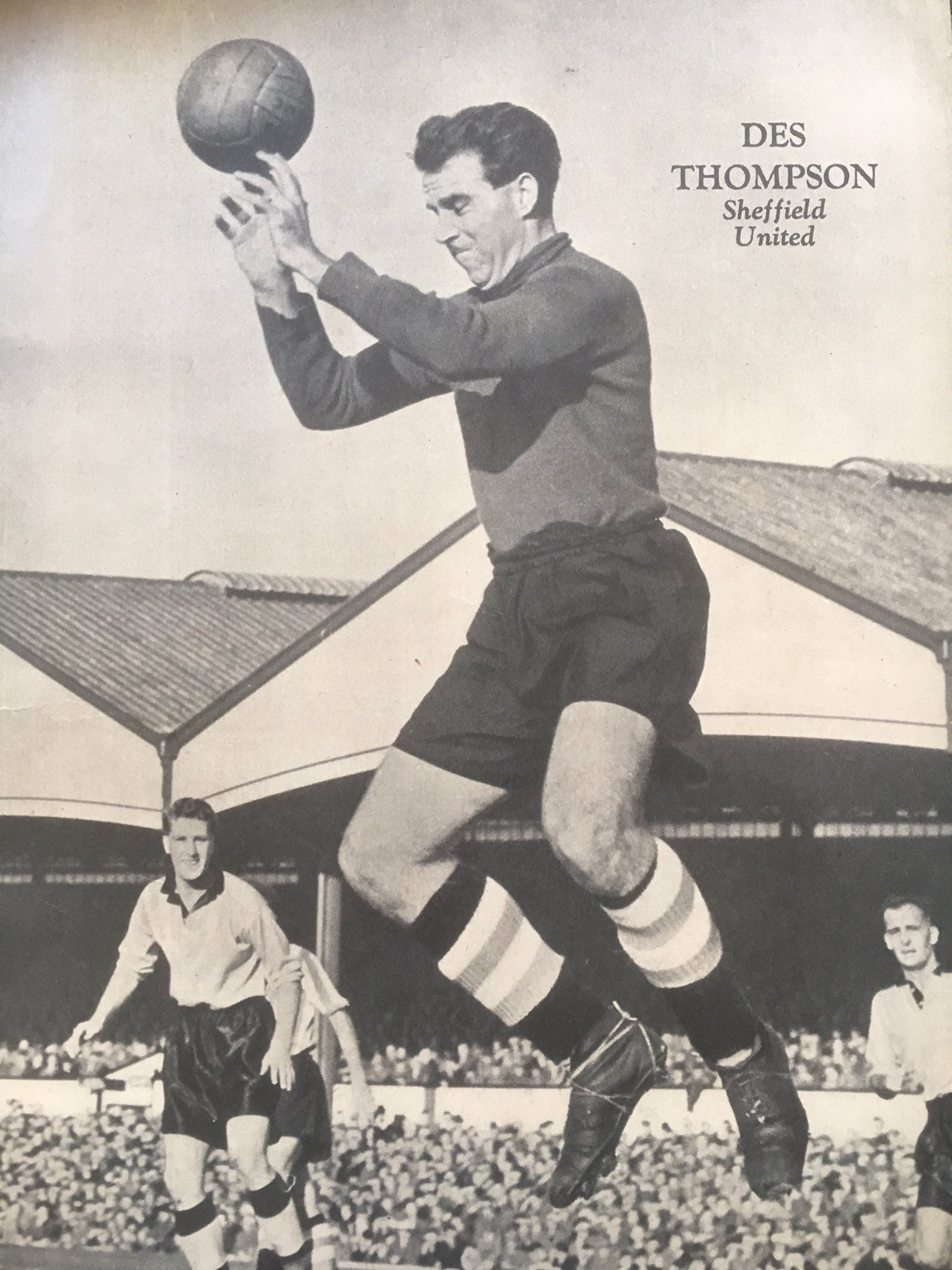
Look at those eyes on the ball. Look at that firm-handed grip.

Des Thompson made 25 appearances for United between 1955 and 1964, before moving to Buxton, which was at that time, not the thriving hotbed of football stardom and celebrity that it still isn’t today.

Des’ brother George was also a goalkeeper, who played for Scunthorpe United, Preston North End, Manchester City and Carlisle United. And, their father (also George) was also a goalkeeper for Southampton.

In the 1929–30 Round 3 match at Bradford City, Thompson allowed a shot to crawl under his body after an awful defensive mix-up for Bradford’s first goal, with Saints going on to lose the match 4–1.

Keeping it in the family.

Video celebration post

Remember the video test post? Really? Well, it was right here just a few days ago. You might want to see a doctor about that memory of yours. Maybe write that down, hey?

The video test post showed that my existing way of putting videos on the blog was no longer working. I had already found an alternative method, though, so all was not lost. Hope for the future.
But that didn’t help much with the issue that every Youtube video I’d ever put on 6000 miles… was broken. That’s quite a lot of videos.

Then, a WordPress update (to 4.6) and (not) suddenly, everything was back to normal. All the links were mended, all the videos work again. This calls for a celebration – a video celebration. I found this one, just waiting to be posted:


I’ve used to old method to put this on here. I guess I’m now at a bit of crossroads as to where to go now with regards to posting videos. The old method (it’s called “EasyTube”, for the purists) has worked really well for years, aside from the last week or so, but is less futureproofed than the native WordPress method. The native WordPress method, however, is less flexible regarding size and positioning of the video.

So, swings, and indeed, roundabouts.

P.S. I am no longer Grolsch bottles.

Bad driver checklist

Cape Town drivers are, apparently, terrible. And apparently Cape Town drivers aren’t just terrible, they’re more terrible than drivers in other parts of South Africa. I might well be persuaded to go along with this sweeping generalisation, but then I don’t do a huge amount of driving elsewhere in South Africa, so I don’t really have a lot to compare them with.

As with all things that are good and/or bad, there are degrees of goodity or baditude. The best way to find out whether someone is a terrible driver is probably just to observe them driving terribly, but if you don’t have time for that – or if you prefer to be forewarned – then I have noted that there are a few telltale signs that should alert you that a Cape Town driver is going to be particularly terrible.

Here is a list of those signs. It’s not in any particular order. The risk is cumulative, so the more of these boxes that any driver ticks, the greater the danger to those around them.

1. The vehicle has a CF number plate. It used to be that you had to be wary of CY number plates (and with good reason), but Kuils River is the new Bellville. In number plate terms, at least. I suppose the dodgy strip joints will soon follow.
As I’ve mentioned before, bad driving is evidently spreading slowly eastwards. Plettenberg Bay is going to be a disaster in about 2052. You’ve been warned.

2. The SSSS concern. As in, the vehicle is sporting a Southern Suburbs School Sticker. Specifically from a boys school. Like “Proud Rondebosch Family”, “Brothers In An Endless Chain” (that’s Wynberg Boys’ current sickeningly simpering ideology) or “SACS Pride”.
These stickers are worn with honour, but honour does not come for free. It comes at the hefty price of a 50% decrease in your (possibly already meagre) driving ability.

3. Hondas. (Had One Never Did Again; History Of No Dramatic Acceleration).
Yes, BMW and Audi drivers drive arrogantly, dangerously and stupidly fast, but that’s to be expected, because their drivers are cocks. Honda drivers (especially those driving the Jazz), drive obliviously, and that’s actually far more terrifying. It’s almost as if they don’t recognise that there’s likely to be any other road users out there.
Take your horrid little Brio out to the middle of the Karoo and you might be right. Drive it down Sea Point Main Road on a Saturday morning and – I assure you – you’ll be wrong (to the detriment of all around you).

4. GPS in the middle of the windscreen. Do people in other cities really do this too? Yes, you need to know where you’re going (although we have the Mountain for that), and yes, you need us all to see that you have a GPS, but putting it directly in your field of view when you are (allegedly) in control of 1000+kgs of motor vehicle isn’t the best idea you’ve ever had. It’s like driving with one eye closed (I’d presume, anyway), and that makes the road infinitely more dangerous for those unfortunate enough to be around you.

5. Any 4 wheel drive Toyota. Do you drive a Run-X or a Yaris? If so, you pose no additional risk to anyone else on the road. Are you in a Land Cruiser? Yes? Well, you’re a massive liability.
Sorry to do this, but the major culprits in (already dangerous) Land Cruisers have two add-on risk factors: i) 30- and 40-something year old mothers, and ii) those pisspoor stick figure family things on the back windscreen.
Don’t misunderstand me here: 30- and 40-something year old mothers in any other vehicle are fine, and stick figure family things on the back windscreen are… well… they’re utterly dismal. But alone (or even as a pair) these factors don’t come along with any additional deterioration in driving prowess. Stick either of them – or, heavens preserve us, both – onto or into a big Chelsea Tractor though, and you increase the danger to those around you to frankly near incomprehensible levels.

6. Golden Arrow Buses. In Durban, bus drivers have used their vehicles to block intersections as a form of protest. In Cape Town, they do it because there’s a vowel in the day. The only thing scarier than an errant driver racing through Observatory in a Honda Jazz is an errant driver racing through Observatory in a 15-tonne Golden Arrow Bus.
It used to be that taxi drivers were the public transport scourge of the roads. No longer. It’s not because the taxi drivers have got any better. They’re simply been overtaken (often literally and illegally) by a filthy, 12 metre long, 1980s accident waiting to happen.

7. Cyclists. Obviously not drivers per se, but disproportionately dangerous on the roads. We’ve been through the issues surrounding cyclists more than once, but it seems to make sense to warn you to steer well clear of them and their entirely predictable unpredictability. The only thing you can guarantee about them is that they’ll happily race through red traffic lights and then blame cars for everything. This is a great example of tarring everyone with the same brush: in actual fact, cyclists should just blame Hondas for everything.

8. Cars with a dreamcatcher hanging from the rear view mirror. Technically, individuals who have a dreamcatcher hanging from their rear view mirror don’t know actually what a rear view mirror is. They think it’s a dreamcatcher hanger. They have no idea that it has any other purpose. That’s one reason that they’re more risky to be around on the road. The second reason that individuals who possess dreamcatchers are dangerous is that they are usually hippies who are concentrating more on stuff like world peace and veganism rather than actually driving safely. For some reason, these people feel that they are allowed to appropriate First Nation culture with absolutely no penalty. Aside from the crippling inability to drive.

Did I miss anything?
Stay safe out there.
And please share for awareness.

Dead Heat

Filing under Interesting, Really Rather.

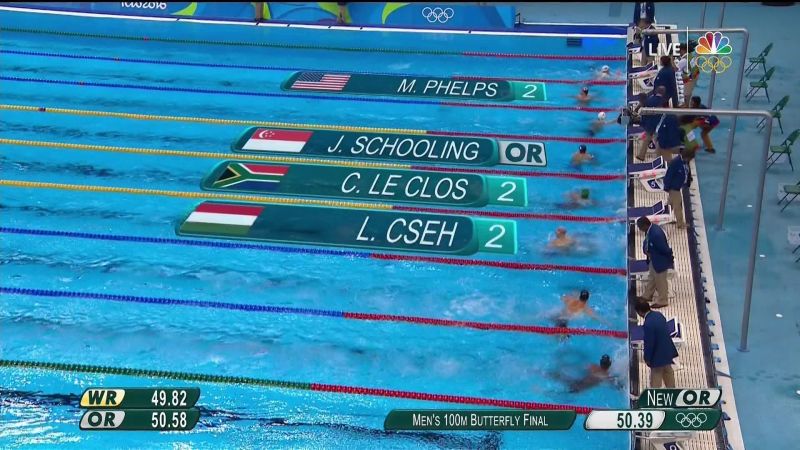
After the three way tie for second between Michael Phelps, Chad Le Clos and László Cseh in the 100m butterfly, you might wonder why the swimming authorities don’t work to thousandths rather than hundredths of a second to separate these athletes.

vhnyosu7cov82wynjmxl

Well, the simple answer is: they can’t.

For the record:

In a 50 meter Olympic pool, at the current men’s world record 50m pace, a thousandth-of-a-second constitutes 2.39 millimeters of travel.

And while that might not seem like a lot (because it isn’t), we are talking about the best swimmers in the world, at the most important swimming event in the world, so these tiny margins count for a lot.

The trouble is, while our swimmers are pushing boundaries all over the place, our pool builders haven’t quite attained the same sort of levels.

FINA pool dimension regulations allow a tolerance of 3 centimeters in each lane, more than ten times that amount. Could you time swimmers to a thousandth-of-a-second? Sure, but you couldn’t guarantee the winning swimmer didn’t have a thousandth-of-a-second-shorter course to swim.

I’ve been doing some rudimentary calculations, and that potential 3cm variation amounts to 12.5523012552 thousandths of a second. That’s 1.25523012552 hundredths of a second. And that explains why timing to thousandths of a second wouldn’t actually be fair. But it’s not like we can do anything about it:

Attempting to construct a concrete pool to any tighter a tolerance is nearly impossible; the effective length of a pool can change depending on the ambient temperature, the water temperature, and even whether or not there are people in the pool itself.

Of course, there are some sports that do time to thousandths of a second – like track cycling and bobsleigh – but the important difference here is that all the athletes compete on the same track. No danger there of Lane 4 being 3cm shorter than Lane 5 (or whatever). If the track isn’t quite the correct length, well, there’s no advantage for any one athlete: it’s the same for everyone.

One anomaly here: speed skating: Yes, they use the same track, but they’re so backward in using a starting pistol to begin races that some competitors definitely start at a disadvantage…

Virus Vrydag

Alliteration because this is a post about viruses. And it is a Friday. And Vrydag is Friday in Afrikaans.
Also Virus is Virus in Afrikaans. So we’re all good.

My inbox was full of posts and articles about viruses today. Real viruses, not digital ones. I’m not sure what prompted this outbreak, but if you have even a passing interest in microbiology and biomedical science, they’re quite interesting.

First up, a two-parter: this TED-talk from CSIR laser scientist Patience Mthunzi.

Could we cure HIV with lasers?

and this response:
Fullscreen capture 2016-08-12 105612 AM.bmp

because, as UCT virus scientist Ed Rybicki says:

Sorry, and I realise that she’s a passionate and well-meaning woman who has a TED talk and everything, but this idea is right up there with using electrotherapy to treat HIV infections. In short, it might work at the single-cell level, but is hopelessly impractical to use on whole people.

Eina.

Next up: Polio is back in Nigeria.

After more than two years without wild poliovirus in Nigeria, the Government reported today that 2 children have been paralyzed by the disease in the northern Borno state.

A huge push on a very successful worldwide vaccine programme against polio has yielded incredible results. It does/did appear that polio is/was heading the same way as smallpox.

Polio_cases_over_time.svg

But continuing religious opposition, together with political upheaval in northern Nigeria has meant that the campaign has been failing at local level. These two cases, which have resulted in two children being paralysed for life, are both a setback and a reminder that we’re not quite there yet and that any thoughts of eradication were decidedly, and sadly, premature.

Room for one more? Good. Because it’s really interesting.

It’s a long one, but if you want to try to take some positives away from the West Africa Ebola Outbreak which began 2 years ago this month (yes, I know), then it would be the lessons that we have learned about how to contain future outbreaks. Not just Ebola outbreaks, but any outbreaks. Especially those in the developing world.

These lessons will stand us in better stead when the next challenge arises, says the London School of Hygiene and Tropical Medicine’s Professor David Heymann:

“By using language that they could understand we were able to get communities to work very rapidly to stop transmission,” said Prof Heymann, who feels this was not the initial priority in West Africa. “We’re too biomedical in all our approaches, but we’ve learned that community engagement is the key as we’ve gone along.”

“If communities can be empowered with understanding about how to bury their own people safely and how to prevent themselves getting infected, outbreaks can be stopped. That’s how they’ve been stopped in the past and will be stopped in the future.”

Much of this isn’t rocket science. In fact, none of it it is rocket science. Rocket science isn’t going to help you prevent the spread of a killer virus in West Africa. Getting to the moon, perhaps. But telling scared villagers how they can avoid dying from a seemingly unstoppable disease process? No. This basically comes down to using the correct language (something we’ve talked about before on the blog) and going through the correct channels. In effect, just communicating effectively.

If that’s the rather simple foundation for a more successful response to the next outbreak – whatever that might be – then lives are going to be saved. And that’s obviously a very good thing.