This only works for half the world

Much like “World Tours” which don’t really take in much of the world, you only really begin to understand just how Northern Hemisphere-centric the world’s media is when you come to live down on the bottom half of the planet.

And yes, I get it. With somewhere between 87 and 90% of the world’s population up there, and “much less” of it down here, it does make sense. But we do still exist.

Here’s a message, ostensibly from popular composer Ludovico Einaudi, which I received via email this morning:

OK. There are a few points here. But let’s start with the elephant in the message:
I’m in South Africa. The days are not getting brighter. That’s not how things work in March down here.
Quite the opposite, in fact. The nights are closing in and I woke up (almost) in darkness this morning.
(Although that said, it’s going to be 27oC tomorrow and over the weekend, and my brother is currently covered in snow in Derbyshire. There are levels here.)

However, given that autumn officially started 4 days ago, they’ve managed to somehow be correct on their “Summer gets ever closer” line. I think that was more by luck than by judgement, but that’s just my supposition, and technically, they’re right.

They do finish that sentence off with a question though, and I feel that it deserves a question mark, rather than a full stop. They’re not ok on that one?

Either way though, it’s not a bad way to spend an hour or so this afternoon – whatever the weather, the hours of daylight, and the relative proximity of the warmer seasons – and I’ve been tempted into it.

Give it a go on that link just there [finger points upwards].

The “next global health crisis” is not new news

This morning in the Daily Maverick – it’s been going downhill for a while – was this opinion piece:

Gosh. Really?

It’s 2026. Microbiologists have been watching this happen for 30 or more years already, and we’ve been telling you about it for almost as long.

Even on this blog, which isn’t a microbiology blog, we’ve covered all of this in some detail. Some repeated detail.

In 2012:

The time will come (soon), when we run out of antibiotics and we’ll be at the mercy of what are – at the moment, at least – minor infections. Advanced surgery like transplantation, will become impossible – immunosuppressed patients will simply not survive the inevitable infections without prophylactic (preventative) antibiotic treatment. Even “basic” surgery will be impossible for the same reasons. Anything around the abdomen – appendicitis, for example – will effectively mean game over.

In 2013:

Dame Sally Davies (the Chief Medical Officer in the UK) thinks that “…the threat from infections that are resistant to frontline antibiotics was so serious that the issue should be added to the government’s national risk register of civil emergencies.”
And that puts it alongside threats like “explosive volcanic eruptions” and “catastrophic terrorist acts”.

Twice, actually:

The Centers for Disease Control and Prevention (CDC) in the US revealed (just before the Federal Shutdown) that of the 2 million plus Americans affected by antibiotic resistant bugs each year, around 23,000 will die.

And then 2014:

“We risk going into a post-antibiotic era, and that could start any time in the next 10 or 20 years, when modern medicine becomes impossible. Routine surgical procedures – hip replacements, caesarean sections, modern cancer treatments – all are based on using antibiotics to prevent or treat infections. Without them, people will die.”

I was still banging the drum in 2015:

This is not a futuristic scenario … it is being played out right here, right now, in South Africa and other countries across the globe. Decisions to withhold surgery based purely on the patient being colonised by pan-resistant bacteria are being made, and people are dying of untreatable infections in our hospitals and communities. Quite simply, our abuse of antibiotics is destroying modern medicine as we know it. 

And then again six months later:

But it seems that a lot of people simply don’t understand what antibiotic resistance and superbugs are. Research has shown that there are two main categories of misunderstanding here. Both are bad, but you can completely understand the confusion of the 20% of people who have simply misheard the word and believe that it’s actually a “Superb Hug”. That wouldn’t be bad at all. It would be… well… superb. And a hug. Everyone loves hugs. Especially superb ones.

That’s not going to kill you.

Sadly, the other 80% of those who don’t get what antibiotic resistance is, think that it’s the patient who becomes resistant to the antibiotic:

2016. Ten whole years ago:

And again, just before 2017 as the UK Government announced their War on Superbugs:

It’s not a bad idea. It’s just a 15-years-too-late idea.


Apparently, I gave up on being a stuck record after that, because what’s the point in warning people if no-one is listening? It’s all too easy to become apathetic, and there are plenty of other things to be worried about since then, like Covid, like Trump, like numerous attempted World Wars and like the baggage retrieval system they’ve got at Heathrow.

Because there is no focus to this problem, because it is just a slow, ongoing, insidious issue, no-one is taking it seriously. Sure, there are a lot of words from scientists and doctors, but until the public get on board, there won’t be any action, because all too often, policy decisions are made on popular things, not on important things.

As Rowan Govender notes in the not-quite-as-good-as-it-used-to-be Daily Maverick (link way back up there):

Antimicrobial resistance does not trigger the same urgency as an explosive outbreak. It spreads across hospitals, farms, communities and borders without a single dramatic moment of recognition. Yet its cumulative impact could rival or surpass many traditional pandemics.

Yes, it’s happening now. It’s been happening for the last 30 years. But mostly, we’ve been able to avert the crisis by moving to a different drug when the first one didn’t work. And more recently, sometimes even to a third or fourth drug if the second or third didn’t work.

Sadly, this can’t continue, because we’re using up our drug options far faster than we can make new drug options. We’re running out of options. And so, increasingly, when a patient has an infection, there are times when none of the drugs that we can use are effective in treating that. And yes, we all have immune systems that might be able to help out, but we had those before we discovered antibiotics, and the data very clearly shows that they’re not able to do it all by themselves.

That’s why global deaths from infectious diseases decreased by over 70% after penicillin was first used in 1942.

The first outbreak of fully resistant bacterial disease is really not that far way, and ironically, the current world geopolitical situation might exacerbate the problem. Food shortages and inflation will lead to increased poverty, poor living conditions and malnutrition, and a larger number of people immediately vulnerable to infectious diseases.

Even after learning a lot through the Covid pandemic, we’re still hugely underprepared for this eventuality. And it will end in disaster.

You can’t say that you weren’t warned.

So, are you still with us?

What? Me?

Oh, after this?

Yes.

But it was very, very hot.

I got to the place early, and having heaved my car door open into the thick, still, Green Point atmosphere, decided that I would head for the sea (only a couple of hundred metres away) in search of some moving air.

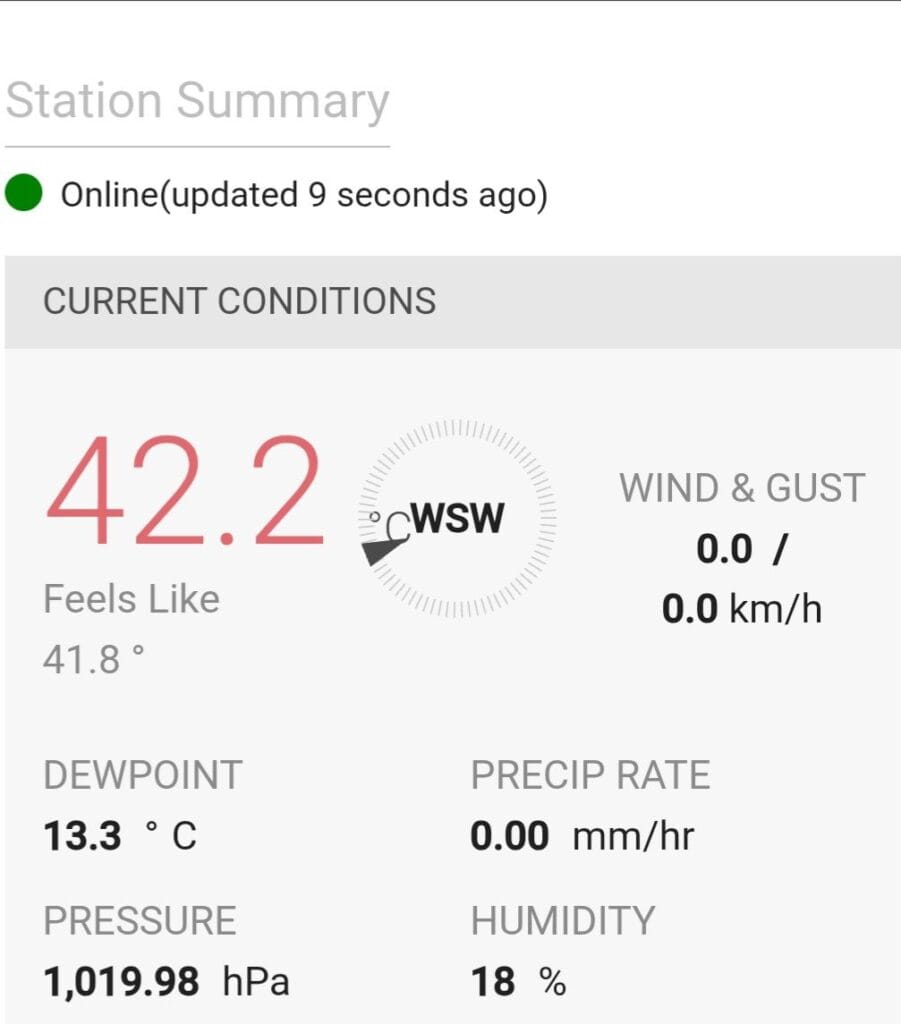
A gentle warm-up (lol!) run along the Prom followed, and there was an occasional breath of air, but it didn’t do much to cool anything down. It certainly wasn’t the fresh, sea breeze that I was longing for. And it was 41oC in the shade: of which there is infamously none on Green Point Prom.

In fact, it was so hot that Garmin gave me a virtual badge for running in it. Although I’m not sure that they should be encouraging anyone to be getting out and about in that sort of heat.

I went for just a couple of kilometres, but the dense, heavy, hot conditions were definitely taking their toll, and there was still a football match to play, and so I headed back for the safety of the footy place, bravely ignoring the option of aircon in my car on the way back through the car park.

We played, and the match was a tight, hot, sweaty, well-contested affair.
Did we win? No. Not in scoreline terms, at least. But just surviving the game, getting to the car and being able to drive home without collapsing honestly felt like at least 3 points gained.

And those are the sort of victories that don’t show up on the league table, but do mean that you are able to show up at family breakfast the next morning.

It’s all about context.

Let’s do this again

14 years on, and we haven’t learned a thing.

We’re supposed to be grown-ups. Adults. And yet, at 6pm this evening, we’ll head out onto the pitch for another potentially epic 5-a-side football game against some other supposed adults.

Nothing wrong with that, you might think – if you aren’t in Cape Town, that is, because if you are in Cape Town then you know very well that there’s something very wrong with it – because it’s rather warm out.

Really actually quite warm already.
Almost bordering on hot, one could argue.

And, as I alluded to above, there’s history here. And it really isn’t pretty.

It was horrible. One of the worst footballing experiences of my life. Within 2 minutes of running around, I was gasping, drenched through with sweat, and feeling dizzy and nauseous. These, even by Cape Town standards, were extreme conditions. The ball wasn’t even flying through the air properly. I felt truly awful.
Some sort of sense of self-preservation should probably have kicked in here. But it didn’t. And so, with a couple of breaks, we continued to toil for an hour. What utter, utter idiots.

We all (mostly) remember (some of) that day.
I think my therapist called it PTSD: Phenomenal Temperature, Stupid Decision.

And it’s already 6 degrees warmer today than it was back on that day in February 2012.

Common sense says that they call the games off this evening. At best, it’s going to be extremely unpleasant, at worst, it could actually be dangerous. But they probably won’t. And that being the case, common sense says that we should forfeit the game. But that’s absolutely not how we roll, and I grudgingly have to respect our determination. Even though we’re clearly being very daft here.

I really wouldn’t recommend such bravado though.
To coin Wilfred Owen:

My friend, you would not tell with such high zest
To children ardent for some desperate glory,
The old Lie: Dulce et decorum est
Pro manus mori.

The game is still going ahead as I write this.

See you on the other side, I guess.
And yes, you can choose any meaning of that phrase that seems fit.

The Suiderstrand Log

If you walk down onto the beach at Suiderstrand and take a right turn, following the coastline along and into the Agulhas National Park, you’ll come across a large log on the beach, about 1½km towards the cottages out at Piet se Punt. Just next to the rocky outcrop know locally as “The Washing Machine”.

It is a big log, so big in fact, that you can see it from space (with a bit of zooming in on Google Maps).

And it featured on my Instagram post “Dog On A Log”, featuring a dog on the log, back in August 2019:

It’s been there for as long as we’ve been going to Suiderstand, and that’s 17+ years. And now, thanks to a bit of research, I found out that it’s actually been there from about the turn of the century, after a Swiss-owned, Panamanian-registered, 24,732 dwt freighter, the MV Sanaga, sank off the south of Madagascar on October 11th 1999.

What? Give us the details, please.

With pleasure.

The MV Sanaga was built in 1979 and was carrying a cargo of logs (see where this is going?) and stainless steel from Durban to China. The logs were teak and mahogany from West Africa, each one about 10m long and each weighing around 20 tonnes.

The MV Sanaga got into trouble, began taking on water and issued a Mayday call. The crew of 26 Indian nationals abandoned ship and were picked up by a passing Japanese container vessel.

The freighter was subsequently presumed foundered. And it seems reasonable that it took the steel down with it, while the logs… well… floated.

But that posed its own problems. The Agulhas current dragged the logs southwards and westwards along the coast of South Africa, where they caused many issues. In January 2000, at Blue Horizon Bay, near PE (as was), a woman and her grandson, playing in the surf, were seriously injured when a wave brought one of the logs down on them:

Iloma Cilliers was helping her grandson, Mark-Anthony Mayhew, out of the water when a wave lifted the huge log on to them and crushed them into the sand.
Cilliers’s husband, Lowie, dug them out and they were treated for serious injuries in the intensive care unit of a Port Elizabeth hospital.

While elsewhere on the Eastern Cape coast, a 10 year old boy was knocked unconscious by a log while swimming, and sadly drowned.

Reports had been received of at least two other children who had suffered head injuries from being hit by logs in the surf at another Port Elizabeth beach.

They also posed a huge danger to shipping all around the South coast of the country.
Several logs washed up in False Bay: at Cape Point, Strandfontein, St James, Kalk Bay and Fishhoek.

And – as we now also know – further east, in Suiderstrand.

As they found out in Fishhoek, you need a large crane to be able to shift these logs. Which makes this seem a bit silly:

Johan Scheepers, a customs and excise official, said people should not remove the logs from the shore: anyone wanting to salvage material washed up on a beach has to obtain a salvage permit and pay 15 percent duty on the value of the object. The logs are believed to be worth thousands of rands each.

Not something you’re going to be able to quietly slip into your back pocket. And since The Suiderstrand Log is in a National Park, not something you’d be allowed to quietly slip into your back pocket anyway.

That weight, and hardwood being what it is (hard), despite the very best efforts of the South Atlantic Ocean, and although there has been a lot of weathering over the last 26 years, it’s clear that the Suiderstrand log isn’t going anywhere soon.

WANT MORE LOCAL HISTORY?
Other stuff that has washed up on the Cape coast from shipwrecks: Rubber Bales.