DOOM ANTS / W DU TOIT / 655F

Indeed. Wouter du Toit (for it is he) has complained to the Advertising Standards Authority of South Africa (ASASA) about an insecticide commercial which – somewhat implausibly – contains scenes of insects… being cided killed.

Wouter se case is as follows:

The complainant is of the opinion that the commercial “makes a sport of killing innocent and harmless ants”. He adds that it is harmful to portray the killing of any living creature on television. The complainant pointed out that viewers (especially children) should rather learn about the role ants play in the world, and how they factor into the eco system.

Wouter has too much time on his hands.

“Yeah, ok,” said the legal people representing the insecticide company, “but hang on…”

Firstly, insects aren’t animals, according to the What Is An Animal? Act of 1962 (also known as the Animals Protection Act, No 71 of 1962); and
Two, they weren’t killing ants in the veld. Ants in the veld are lovely. Ants in your kitchen though? Nah, dude; and
C. What harm have we really done to kids by showing this? Really? and
Anyway – this ad was flighted during a 16-rated film which kids shouldn’t have been watching.

Too shay.

Before bodyslamming Wouter’s complaint into the polished concrete floor of their Burnside Island Office Park home, the ASA then went on to also note that:

 …there is no cruelty depicted beyond the killing of these pests. They are not dismembered, disfigured, or otherwise made to suffer before being killed. They are effectively either hit by a soccer ball, or killed with a pesticide, but death appears to come almost instantaneously.

Which sounds like the insecticide in question might be just what you’re after if you don’t have a football to hand. Or… er… foot.

This is a wonderfully sensible ruling by the ASASA, which makes a pleasant change given their previously general arseholery here and here.

Oh Happy Days

I don’t think that we in South Africa are in any doubt that South Africa is going through a bit of a rough patch at the moment.  While I don’t believe everything I read in the papers, I’m not sure that you can blame this impression solely on our allegedly “anti government media”, because it does mainly seem to be down to our erstwhile government and top clown, Jacob Zuma. It’s not like the government is even bothering to properly deny stuff or explain themselves anymore: they just mumble something about some agenda and continue on to the next scandal. They really don’t appear to give toss about what the public think of them. I’ve covered the “crossing of these lines of pisstakery” in a couple of posts previously here and here.
But let’s not think that the problems end with the issues of the FIFA bribes, Nkandla, Eskom’s loadshedding and the winter rain (ok, we can’t blame them for that). Because wait, in true Verimark style, there’s more!

There is the much delayed Marikana report (about how and why the police shot dead more than 30 miners in 2012), to which the President is currently “applying his mind” [insert oft used line about how that shouldn’t take long], but of which we now know the approximate contents of, thanks to an off the cuff remark by JZ yesterday.

Even the Marikana miners were shot after killing people

So that’s the way that one is going.

And then there was the Al Bashir affair, whereby the Sudanese President escaped from/was helped to leave the country, defying a court order and the wishes of the ICC, which SA – and more specifically JZ – had signed up to.

Max du Preez spelled it out for us all on Facebook:

I think the matter is rather simple. When the ANC/government volunteered to host the AU summit and prepared for it, it knew very well that people like Mugabe would pressure it to invite Omar al-Bashir. It knew very well – and was reminded of it shortly before Bashir’s arrival by the ICC – that it had no legal ground to defy the ICC arrest warrants and South Africa’s own enabling act of parliament.
Government also knew that it would be a African diplomatic disaster to arrest Bashir and deliver him to the ICC in Europe. It must have known that there would be a very good chance that some NGO or rights group would take the matter to court. It must have known that the court was highly likely to order Bashir’s arrest. It went ahead anyway, so we can only conclude Zuma and his inner circle had made a conscious decision in advance that they would defy such a direct court order.
They went further than that: they misled the judges of the High Court – probably even blatantly lied to them – and then executed an escape plan for Bashir.
This is not about the credibility or legitimacy of the ICC. It’s about the president and the cabinet of the country defying a direct court order. Their response to criticism was to attack the court as “anti-ANC”, “anti-majoritarian” and “wanting to govern the country” – we had these arguments from Blade Nzimande and Gwede Mantashe the last two days.
Can we now expect the ANC and government to also defy a likely court order later this year that the criminal charges against Zuma be reinstated? The next step on this slippery slope is to defy the results of an election. And a slippery slope it is indeed. If our constitution tumbles, so do our freedom and stability.

There’s nothing there that seems too much of a stretch, and, as with any premeditated crime, that’s rather worrying.
The solution to this seems simple (at least, in a Belling the Cat kind of way): JZ must go. The trouble with this is that because of a distinct lack of previous action, and (let’s not overlook this) a significant amount of clever wheeling and dealing by the man himself in placing allies in influential places and taking very good care of them, there’s no-one that’s going to be able to do that.

Save maybe for the electorate. But firstly, would they, could they ever vote the ANC out of power? And secondly, as per the point raised by du Preez above, if they did, would the ANC accept the result?

Previously, I would have never believed that the first was possible. Now, given the levels of dismay and disquiet, I’m beginning to change my tune on that one. (Raising the next issue – do we have anything significantly better in the current opposition?)
Previously, I would never have believed that the second would ever happen. Now, given the lack of respect that the government is showing for the country and seemingly, for the rule of law, I’m not convinced on that either.

Yeah, as I said, happy days here in ‘the Rainbow Nation’.

Essential Reading

I don’t read enough, apparently.
I don’t do a lot of things enough, according to some people. They like to judge me by their lifestyles and can’t understand why I don’t read enough, watch movies or spend every Saturday morning at a hipster market. I don’t think that I don’t read enough, I just think that I don’t read as much as they read. And that’s an altogether different thing. By the same criteria, they don’t blog enough. I’m just saying.

Anyway, maybe “I don’t read enough” because the stuff that’s out there to read isn’t very good. (I did make it through this abridged version of Grey last night though, so, you know, be proud of me.) But now, I have discovered this:

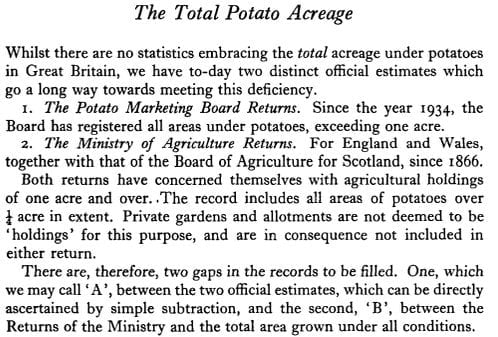
The History and Social Influence of the Potato (Cambridge Paperback Library) Amazon.co.uk Redcliffe N. Salaman, J. G. Hawkes 9780521316231 Books - Google Chrome 2015-06-23 010416 PM.bmp

Redcliffe banged the original version out in 1949, but it was this 1985 revised impression which took the proverbial biscuit, thanks in part to the input from renowned potato scholar and Emeritus Professor of Plant Biology at the University of Birmingham, J.G. Hawkes, and – many believe – the additional chapter on INDUSTRIAL USES by W.G Burton.

This is a book filled with facts and figures:

The History and Social Influence of the Potato (Cambridge Paperback Library) Amazon.co.uk Redcliffe N. Salaman, J. G. Hawkes 9780521316231 Books - Google Chrome 2015-06-23 011615 PM.bmp

But being of scientific bent, that’s just fine by me. Facts and figures are my bread and butter. Although, being that this magnificent tome was first published in the 40s, there is a certain dated style of language. I find it intriguing that Salaman borrowed descriptions from other crops though; the extent of cereal crops, for example, was always described as, say, the area “under wheat”. Quite how he got away with “under potatoes”, this being a subterranean crop, is rather beyond me.

It’s these sort of foibles that intrigue me and, despite the somewhat extravagant cost, I’m going to be reading all about spuds and how they’ve affected all of our lives, very shortly.

Cat-calling

The practice of cat-calling – allegedly socially acceptable in the 1970s – has rightly come under the spotlight of late. The difficulty, however, in socially outlawing this practice is the challenge of radically changing such a deeply engrained convention with any immediate effect. Despite the (loud) wishes of the feminists, that’s actually not so easy to do and consequently seems likely to fail.

So how about some baby steps towards a mutually acceptable conclusion? Perhaps it should begin this way, but for me the smart progression in cat-calling would be something along these lines:

_catcall2

And if it’s kind of difficult for you to imagine that a hunky, macho builder would call his cat “Fluffy”, then try to imagine one not wolf-whistling at a passing woman.

More dairy issues

After yesterday’s Malan’s Dairy post, here’s another dairy issue.
This time it’s at Woolworths.

DSC_0004(1)

And they’re not even kidd… they’re not even joking.

When it comes to cattle, this isn’t a problem. Consumer comes before calf. It’s the natural order of things. But when it comes to goats’s, it seems that the kids are alright. Their need is greater than yours – and it’s a well known fact that baby goats are fully dependent on a reliable supply of Chevre.

Damn this nanny state.

Fortunately, as the notice suggests, once September comes, the shelves will once again by laden with goats’s’s milk products. Until then, you’re going to have to just go all mainstream and bovine, hipster folk.