More fire expertise…

It turns out that just a couple of weeks before the big Cape Town fire got started above Kalk Bay, a one Dr Simon Pooley was at a bookshop in Kalk Bay, launching his latest book all about fires on Table Mountain.

What? No!
No. I wasn’t saying that at all. Leave me out of the wild accusations formed by your cynical mental gymnastics. I’m sure his book sales would have been superb anyway. Interesting subject.
Topical. Suddenly very topical.

Anyway, when the fires came, Dr P was obviously the go-to guy for some Cape Times column inches – you can read them here (or in PDF here) – in which he told us that fires are (and always have been) a regular part of living next to the Table Mountain National Park:

Fires are by nature sensational news, and nowhere else in South Africa is this more so than on the Cape Peninsula, where a national park protecting fynbos which must burn every 10 to 20 years is bordered by the country’s parliamentary capital city, which must not.

Great line, right there. The rest of it is a good read too. And we’ve already touched on the ecological importance of the fire. But I also liked these few salient points from ‘Die Kaartman’, who (while agreeing with much of what the good doctor said) added to Pooley’s piece thus:

Whether the fire was deliberately set or caused by human carelessness is irrelevant in the end, because on Wednesday, while the fire was still raging on several fronts, lightning started a fire at Cape Point. The wind switched to a strong south-easter and the fire was only contained because it moved into an area of younger veld [a recent controlled burn]. Now imagine the Peninsula 365 years ago, clothed in 15 year old fynbos without any roads or houses. The same bolt of lightning on 4th March 1650, in the same weather conditions, would have burned the entire Peninsula, all the way to Table Mountain. If ever any more evidence was needed that fire is a natural phenomenon in fynbos, this was it.

The point they both make is that this was always going to happen and it will happen again. And while we can protect ourselves against it to some degree, it’s simply too big a thing to prevent. Thus, the clever money is on building smart (no thatch roof, no wooden fence, no building in the fire breaks etc) rather than assuming that we’re done now and that there won’t be another fire.

Because, some time in the next 10-20 years, there will be.
Some more Friday Ephemera

Hey, blog reader. Let’s not beat about the Baardskeerdersbos here (more of that below): you’ve had a good week on here. Well. Prolific, at least. Nine posts on here already and I’m about to add a tenth.
Forget your old adages about Quality over Quantity. You get what you’re given.
And here comes another spoonful right now. Open wide…

Let’s start with Baardskeerdersbos – it’s a tiny village in the Overberg – not too far from the Black Oystercatcher. Crazy name, crazy reason for the name…

The name “Baardskeerdersbos” in Afrikaans or “Baardscheerders Bosch” in the original Dutch literally means “Beard Shaver’s Forest”. The accepted explanation for this name is that a species of solifuge inhabits the area, and that this arachnid is referred to as a “beard shaver” because it cuts hair to use for nest-building.

Cool. What’s a solifuge?

OhmygodIwishIhadn’tlookedthatup.

______________________

We move on, quickly. To Nurofen, who have been accused of misleading consumers in Australia:

The products at the centre of the dispute are Nurofen Back Pain, Nurofen Period Pain, Nurofen Migraine Pain and Nurofen Tension Headache.
The consumer watchdog has alleged that making each product look like it treats a particular type of pain is false or misleading – because the tablets inside are identical.
The drugs, which are sometimes sold for different prices, contain the same active ingredient – ibuprofen lysine 342mg.

Well, just buy the cheapest one then. That was easy.

______________________

Here are some Cybergoths (yes, they are a thing), dancing to the theme music from Thomas the Tank Engine.

Let’s be fair, you can make most anyone look a bit silly by simply changing the soundtrack on a video of them dancing, and the further you go from the original, the sillier it looks. I think it’s reasonable to suggest that the gap between Industrial Aggrotech Power Noise and theme from animated kids’ TV programme about a talking steam train is about as far as you can get, and therefore we may have already reached peak silliness in this particular video format.

______________________

Intelligence news now (or rather lack of intelligence news, lol).

After the State Security Agency joined the long line of spy shops to become a laughing stock, the government is fighting back. On Thursday afternoon, they warned us of an espionage plot hatched by a CIA superspy team comprising Julius Malema, Lindiwe Mazibiuko and Thuli Madonsela.

Seems legit. No, really, it does seem totally legit that our brain-dead State Security Agency thought that this might actually be true.

______________________

This is scary. The Anatomy of a Hack.

In the early morning hours of October 21st, 2014, Partap Davis lost $3,000. He had gone to sleep just after 2AM in his Albuquerque, New Mexico, home after a late night playing World of Tanks. While he slept, an attacker undid every online security protection he set up. By the time he woke up, most of his online life had been compromised: two email accounts, his phone, his Twitter, his two-factor authenticator, and most importantly, his bitcoin wallets.

Basically, it all stemmed from the hacker gaining control over Davis’ email account. The rest was fairly simple. If you take one thing away from this post, it should be those cybergoths dancing to the Thomas the Tank Engine music. However, if you take two things away from it, then the other thing should be to make sure that your email password is as uncrackable as possible.

______________________

This quote (via Sign with a E):

When Bulletproof coffee looks like the answer, the odds are you’re asking the wrong question.

It’s from this article, which isn’t anti-LCHF in the manner of being pro-anything else in particular, but is more about not looking for the one magic diet to make us live forever.

…the truth, as always with diet, is more nuanced. The doctor David Katz, a leading expert on public health who runs the Yale Prevention Research Centre, points out that when it comes to food, there is something worse for us than either sugar or saturated fat: “It is mostly stupidity that is killing us.”

Yes. Sadly, just not quickly enough in some people’s case.

______________________

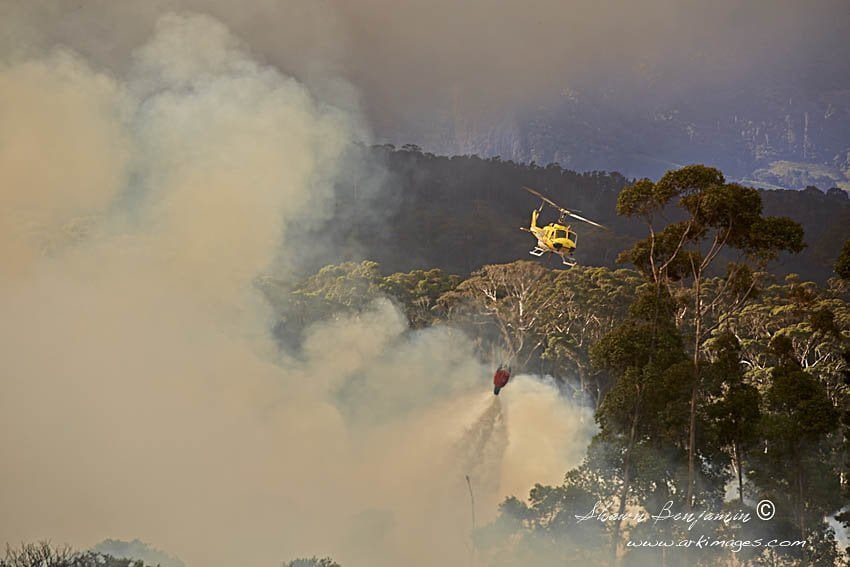
Finally, a link I tweeted earlier this week – Shawn Benjamin’s photos of the Cape Town fire.

drre

There are obviously a lot of shots around of this weeks events, but I particularly enjoyed this set because of the way that Shawn has captured the human element in so many of his photos. Then, just for balance, there are dramatic fire pictures, smoky ones and a whole heap of helicopters.

What’s not to like? (Apart from the widespread destruction of wildlife and property, obviously.)

Invoked today…

In this tweet about the Muizenberg Fire:

This 1988 song about drug addiction:

Amazingly, TIL that Fergie and Jennifer Love-Hewitt (amongst others) sang backing vocals on the chorus to this song. And because you’re now trying to remember the other songs that Martika did (solely for pub quiz purposes, of course), let me help you out with I Feel The Earth Move, Love (Thy Will Be Done), and the utterly dreadful Martika’s Kitchen.

I think I still have the album on cassette somewhere.

World’s Biggest Windmill

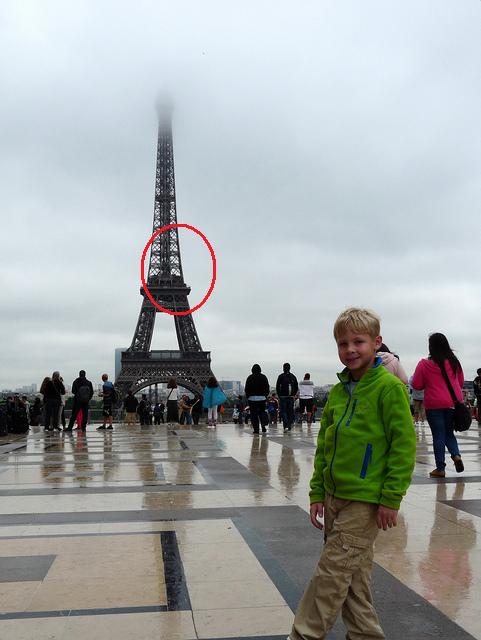
Not really, but still – nice story: they’ve put a couple of VAWTs on the Eiffel Tower in Paris. Well, they couldn’t really put them on the Eiffel Tower anywhere else, could they?

If you’ve ever seen the Eiffel Tower in real life, you’ll know that it’s not small. Here it is with its head in the clouds in the height of summer, 2012 with the boy wonder in the foreground, and a handy indicator of where the turbines have been fitted just above the 2eme étage:

7473130232_86e6c6fed1_z

Amazingly, despite their hugely elevated position, they’re not even at the height of the wind turbines in Caledon just up the road from Cape Town. Suddenly, Gustav’s big project doesn’t seem quite so huge. Or maybe wind turbines are just generally horribly invasive. Hey, you decide.

The 10,000 kilowatt-hours of electricity they’ll produce each year is about enough to self-sustain the commercial section on the tower’s first floor, but not much else.

Look, it’s something. And I do understand that this is really all just about visibility. To be honest, short of putting a set of huge blades on the top of the tower itself, it’s probably about as good as it’s going to get. Especially in a country which produces around 80% of its electricity from nuclear. But while wind is good because it’s renewable, it’s may not be quite as green as you think. Here’s an interesting “back-of-the-envelope calculation” by Popular Science magazine on which are the nastiest forms of electricity generation if you happen to be, say… a bird (as one of the endangered Blue Cranes near Caledon might self-identify, for example).

bird-deaths-per-1000mwh

You can read more here, but the gist of it is that Coal is downright evil (we knew this), solar plants fry birds:

Rewire reports that during the test, operators fired up a third of the 110-megawatt facility’s mirrors, concentrating sunlight on a spot 1,200 feet off the ground. Over a six-hour period, biologists counted 130 “streamers,” or trails of smoke and water left behind as birds ignited and plummeted to their deaths. Rewire’s anonymous source said that at least one of the birds “turned white hot and vaporized completely.”

and we already knew that wind turbines kill birds and bats.

Sadly, despite our current (no pun intended) electricity woes, it seems like nuclear isn’t the er… cleanest option for SA either (although not necessarily for environmental reasons).

So we have the choice of evil coal (which we’re going to use), the horribly inefficient and not-ever-so-nice-after-all solar and wind, or the allegedly dangerously corrupt nuclear.

Or we could do fracking… Now there’s a good idea.

More Parisian flickritude

TIL about cellphone jammers

There were seventeen different kinds of uproar last week at the State of the Nation address when journalists sent to cover the debacle event noticed that they were unable to use mobile communication to file their reports on JZ’s evasiveness and parliament’s generally appalling misbehaviour.

They blamed a device found near the media gallery:

scramb

…which obviously, no-one knows who put there. Although my money is on the man with the pointy shoes.

And yes, it turns out that this is what a (military strength) cellphone jammer looks like. But how does a cellphone jammer work? Well, given the high tech world we live in, it’s actually surprisingly crude.

Basically, it’s the airwave version of a Denial-of-Service Attack in that it doesn’t do anything other than flood the frequency which cellphones use to talk to the nearest tower with signal, thus preventing any mobile device from accessing the network. I’m guessing that it’s like the illegal version of what happens when you try to send a tweet from a concert. (Which you shouldn’t be doing anyway, you went there for the music, right?) Simply too many signals competing to try and latch onto one tower – except in this case, the vast majority of them are artificially generated.

Cellphones use two different frequencies to send and receive information, but if even one of them is jammed, then the device is fooled into thinking that it can’t get through at all. But fancy jammers like this one can block lots of different frequencies at the same time – just in case you think you have some alternative means of accessing the network.

If your cellphone is being jammed, the likelihood is that you won’t find it suspicious – it’ll just be like you’re in an area with no signal – we’ve all been there:

Yeah, I think we got cut off
Yeah, I got crap reception in my house
I have to stand in a certain spot in my kitchen or it cuts out

Such a Twat, The Streets

It was only because there were large numbers of people in a small area struggling to get any reception on Thursday that it became obvious that something a bit sinister was going on.

Depending on how strong the jammer jamming your phone is, you might only have to walk a few steps away to regain a signal. But with a big one like the one above, and with everyone in a defined space (the Parliament building), the only way to #bringbackthesignal was for somebody to switch the big box (which no-one knows who put there) off.

Once that brief hiccup was dealt with, we could get on with the rest of the circus, and deal with the hangover and recriminations of media freedom denied for weeks and months to come.