Time on Shale Gas

Another sensible article on shale gas, its value in the energy demands of the modern world and the environmental dangers of its extraction? Surely not.

But yes, it is.
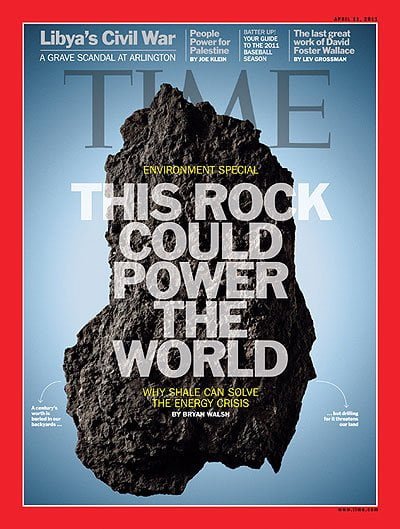
Bryan Walsh gives us a few thousand words on the natural gas boom (poor choice of word, I guess), the need for alternative energy sources, the benefits and the difficulties that it has brought to the communities where drilling is taking place and the the awkward balancing act between powering and protecting our lifestyles.

Along with the Scientific American article I pointed to here, this has to rate as one of the most balanced pieces of reporting I have read on this often hyped and unnecessarily emotive subject.
Walsh takes in both sides and, importantly, doesn’t conclude by coming down on either. After all, that’s not for a journalist to do: that’s the politicians’ decision based on the evidence set down before them.

And, once again, I must stress that I am not fighting for the oil companies here – merely for people to have all the information laid out objectively in front of them before they choose sides in this debate.

“The gas is out there, and it can be accessed,” says Dean Oskvig, president and CEO of Black & Veatch’s energy business. “But we do need to solve the environmental issues surrounding that extraction.”

If that can be done right, shale gas really could change the way we use energy for the better. But even if it does, the industry will still fundamentally remake parts of the U.S., and of the world, in ways we won’t always like. But that’s the price of extreme energy, and it’s one we’ll continue to pay until we can curb our hunger for fossil fuels or find a cheap, reliable and clean alternative to them.

Opponents of fracking will pay heed to the 1,218 violations issued the Pennsylvanian Department of Environment “for offences ranging from littering to spills on oil sites” last year, but what this article emphasised to me was that fracking is as safe as any other industrial process if it is done properly. The vast majority of issues around pollution stem not from wells exploding or aquifers being polluted (a “huge concern” for the Karoo groups, but as Walsh mentions, there are actually no proven instances of the latter), but from the mismanagement of waste water. That such a simple part of such a complex process can be the cause of so many problems is inexcusable, but it should also be easy to remedy.

Walsh also compares the localised pollution from fracking with the more generalised pollution of coal-powered electricity generation: a methodology which is especially relevant while the problems at Japan’s Fukushima-Daiichi nuclear plant continue.

The economic benefits are also taken into account – from both sides. Obviously, while there is profit for the comapnies doing the drilling (otherwise they wouldn’t be doing it, durr) there have been both positive and negative economic effects on local communities:

“I think it’s been a good thing overall,” says John Sullivan, a commissioner for Bradford County. “But I just wish we could keep the economic benefit and minimize everything else.”

As Walsh says: “Good luck with that”.

Sullivan’s pipe dream is an ironic parallel to those who feel that we can produce enough energy through renewable sources such as wind and solar to bypass the need for fracking – either here in SA or anywhere else in the world. Yes, of course, I agree that that would be the ideal solution, but it really isn’t possible given the demands of our society. And yes, of course, I agree that it would be ideal if we could radically alter those demands, but as Eskom’s call for saving electricity back in 2008 proves, you’re smoking your socks (an environmentally damaging activity, incidentally) if you think that’s going to happen, as well.

Anyway – despite Time’s horrible habits of linking to other articles in big red letters every two lines, putting adverts everywhere and breaking it up into five pages – this is an informative article which weighs up both sides of the fracking debate and is well worth a read, either as a first introduction to the subject or for those seeking more facts and figures and further questions posed by our need for alternative energy sources.

Holiday home

Ah… Yzerfontein.
The jewel in the crown of SA’s West Coast. Although, Paternoster also has a reasonable argument for that title and plenty of hipsters will be shouting about Churchaven as well, so perhaps we’ll settle for “one of the jewels in the crown of SA’s West Coast” to prevent any fighting amongst the two of you reading this.
But Yzerfontein has a particular place in my heart, since Mrs 6000 stars on the town’s official homepage after photos of her were spotted following an infinity pool testing visit there a few years ago.

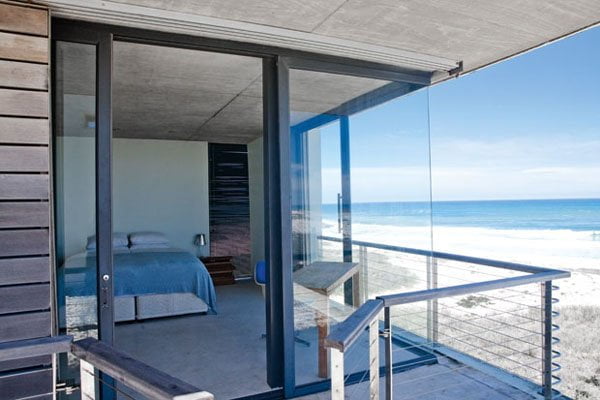
Anyway, if you were to be thinking about purchasing a hazy escape in the particular jewel that is Yzerfontein, then you could do a whole lot worse than this place.

Ignoring the error in the title – this is about an hour north of Cape Town – I rather like this place. Even if I hadn’t just invested in another seaside location, I still wouldn’t be able to even dream of affording it, but then again, just because I can’t afford Minki van der Westhuizen doesn’t mean that she’s not nice to look at.

The blurb tells us:

Leaning against the dunes covered in fynbos (“fine bush” in Afrikaans), the L shaped plan is spread over three levels; the home has been designed to intensely enjoy the view and the sea air. There are two bedrooms with a bathroom on the top floor, communicating with a cobbled terrace, living room and kitchen at the intermediate level, linked to the garden and infinity edge swimming pool, and a third room plus a photography studio.

Terrible.

The design is by Richard Townsend and Stefan Antoni, who has done some amazing buildings in the more affluent areas of Cape Town. All of which brings me to the one issue I have with this place: it sticks out like a sore thumb. There’s a time and a place for this modern design and while this may be the time, Yzerfontein certainly isn’t the place as far as I’m concerned.
Never mind. To their credit, they have at least sited this home some distance back from the beach and behind the protection of the dunes, no doubt mindful of the icebergs which are a feature of this part of the coastline (as anyone who has ever set foot in the sea there will surely testify).

There’s not a lot to do in Yzerfontein besides watching the world go by, enjoying the gentle pace of life and seeing those amazing sunsets, but then, if you owned this place, why would you ever want to leave the house anyway?

Pictures: Adriano Brusaferri

New Wine Tour

Now this looks like a good plan.

During the Christmas break, we took the kids (and ourselves) on the Cape  Town Sightseeing bus. We did the Waterfront, the CBD, Table Mountain and Camps Bay, before taking two exhausted, happy kids home. For some weird personal reasons, maybe you don’t believe me, so here are some photos and a blog post to prove it. See? Your issues, not mine. Get some help.

Anyway, incoming PR from Cape Town Sightseeing tells me that they have now added a couple of wine farms onto their Peninsular “Blue Tour”. Nice idea, peeps.

Claus Tworeck, the CEO of City Sightseeing, explains that the new Wine Tour has been launched as an added free value extension to the existing Blue Mini Peninsula Tour, and offers visitors and locals alike the chance to experience a true Cape outing.

“The Cape is synonymous with its wines and Groot Constantia, which has been in existence since 1685, not only offers visitors the chance to taste and purchase top quality wines but to also experience the grandeur and history of this beautiful estate and its surrounds!”

The list of things to do at Groot Constantia is impressive and, amongst other things, includes a fascinating tour of the historical Cape Dutch manor house, a cellar tour and wine tasting, the unique vineyard walk, the option to eat lunch at the restaurants or order a pre-packed picnic. Alternatively, bring your own.

“This is a wonderful day out for the entire family, and the estate is extremely child friendly. Kids can run around under the oak trees, visit the ducks in the pond and generally have a great time whilst their parents enjoy some wine tasting and a meal.”

And Claus is right. I think that the Constantia Wine Route is one of the most underrated attractions in Cape Town and if this helps it gain a little ground in the competition against its (admittedly also lovely) counterparts in Stellenbosch, Paarl and Franschhoek, then I’m all for it.

Add that to the other attractions on the blue tour: Kirstenbosch, Hout Bay and Camps Bay and you’ve got yourself a big day out. With wine. What’s not to like?

The “hop-on, hop-off” buses for the wine tour depart from the Waterfront stop (at the 2 Oceans Aquarium) every 35 minutes from 9am. Tickets are R120 for a day tour or and extraordinary R200 for two days consecutive tours – and if you book online, you will save R10 and R20 on the prices respectively.

Remember: Stuff found in the 6000 recommends category comes personally recommended. I don’t recommend stuff that I haven’t personally used and enjoyed, no matter how much cash people offer me to do so.

No boom boom

After the recent events in Japan – most notably the er… “issues” at the Fukushima Daiichi nuclear facility following the earthquake – the public in Cape Town and surrounds has been warned not to panic if they see steam apparently leaking from the Koeberg Power Station just up the road from the city.

The public are advised not to be alarmed at steam issuing from the Koeberg nuclear power station during the next few days.

“Given the events in Japan, we want to assure the public that perfectly clean steam will issue from next to the reactor during the routine shutdown,” spokesman Tony Stott says.

He says that this was part of the cool down process of unit two, which began on Monday at 1.30am.
The unit will take two to three days to cool down enough for it to be opened for workers to begin the refuelling, maintenance and inspections.

Stott went on to say that the shutdown would last around 55 days, during which Unit One would continue to operate at full power.

Let’s hope that this operation goes off (poor choice of expression, sorry) better than the tests Eskom ran at the Duvha Power Station (not nuclear), where a turbo generator apparently malfunctioned during an overspeed test, exploded and caught fire in our own little homage to Fukushima. You only have to look at the photos to see that this was a very big bang. Eina.

This has effectively shut down (probably permanently) the 600MW facility at Duvha and with one of Koeberg’s 900MW reactors out of commission for a couple of months, there’s going to be a lot more pressure on a grid which was under a lot of pressure anyway.

So it looks like we must save electricity or once again face load-shedding.
Please help and do your bit, because no-one likes being loadshod.

What’s the point of…?

It struck me over the weekend that there are two questions I need answering.

1. What is the point of Somerset West?

Yes, what is the point of Somerset West, exactly?
Most Capetonians will know Somerset West as the place that ruins your weekend getaway plans by delaying you so much on Friday night that you arrive in your Overberg or Garden Route destination later than you wanted to be, tireder than you wanted to be and a whole lot more pissed off than you wanted to be. You curse the name of the wretched place and it gets back at you by making your return journey even more hellish, by allowing you to see the delays that face you all the way down Sir Lowry’s Pass.
And even with the multi-million Rand upgrade of the N2 passing through the place, they haven’t managed to make things much better, since there’s still about 500m of ridiculous single lane traffic on the way into the town.
And an extra set of traffic lights.

Hello? McFly????

It’s not in Cape  Town, it’s not in Stellenbosch, it’s not really a town but it’s also not really in the countryside. It’s not even by the sea.
It seems to me that the only thing that this ugly combination of dual carriageway and several sets of traffic lights is good for is to act as some sort of premature rumble strip, slowing the traffic down before it hits Cape Town. It’s marketed as being “The Gateway to the Overberg”, but why do we need a gateway to the Overberg? Why can’t we just drive to the Overberg, gateway-free? What they forget to inform you about “The Gateway to the Overberg” is that there’s only one car allowed through it at a time. And like the fat Afrikaners lining up at the automatic doors at Canal Walk, that’s going to slow your journey down considerably.

It’s screaming out for a bypass, but I’ve got a better idea. Why not save the dangerously high costs of building an expensive road by simply knocking the whole place down?

I suspect that only the inmates unfortunate enough to live in the damned place would have any objection at all to that.

2. What is the point of Infecting the City?

I’ve never really got over being asked “Is money spent on arts a waste?” by an interviewer at Wolverhampton Polytechnic. While my immediate reaction was to scream out “Yes, of course it bloody is!”, I felt that she was probing for a deeper, more considered answer than that, but probably with the same conclusion. As it was, I fudged it and still got offered a place on their General Microbiology course, which I immediately declined as it was being taught in Wolverhampton.

But I digress. Often.

Infecting the City is the “new” “name” for the Spier Public Arts Festival, which is now based in Cape Town. As their website tells us:

Infecting the City 2011 emerges from the bricks, flagstones and pavements of the City to challenge Cape Town’s idea of art, itself and its streets.

and it does this, according to a Cape Times story today, by spectators being treated to performances and artwork free of charge:

City “treasures”, including King Edward’s statue on the Grand Parade, were covered in clingwrap and trees on the station forecourt were draped in toilet paper.

Now, call me a philistine if you will, but I think that on any other day of the year and in any other context, that’s called “littering”.

And yet, somehow, they have attracted some fairly big names to support this nonsense, including Cape Town Tourism (partially funded by the City of Cape Town), the CCID (supported by the City of Cape Town) and er… the City of Cape Town.
Yes, folks – those loo rolls in the branches are paid for with the help of your taxes. Oh joy.

The “Is money spent on arts a waste?” question rears its ugly head once again with rather greater vehemence here. To fund clingwraped statues and loo rolls in trees when there are so many other issues facing this city seems, to me, a little misguided.
Even the corporate sponsors could surely find something more worthwhile to spend their CSR budgets on. Why not help build some houses, or, if you’re already doing that, why not help build some more?
Don’t fund 500m of cling wrap for some weirdo from beyond the Lentil Curtain to wrap up a statue. Maybe to wrap up sandwiches for hungry schoolkids, but not a statue. That doesn’t help anyone.

And yes, I recognise that anyone involved with the organisation of Infecting the City will probably defend it by telling me that I am being “challenged” by the concepts and that by raising this issue on here, I am participating in the festival and if that’s how they want to feel, that’s just fine, cos comment is free.

At least I’m not wasting public money chucking bog rolls into trees.
Seriously, WTF?

Footnote: Don’t even get me started on the Design Indaba… Eish!