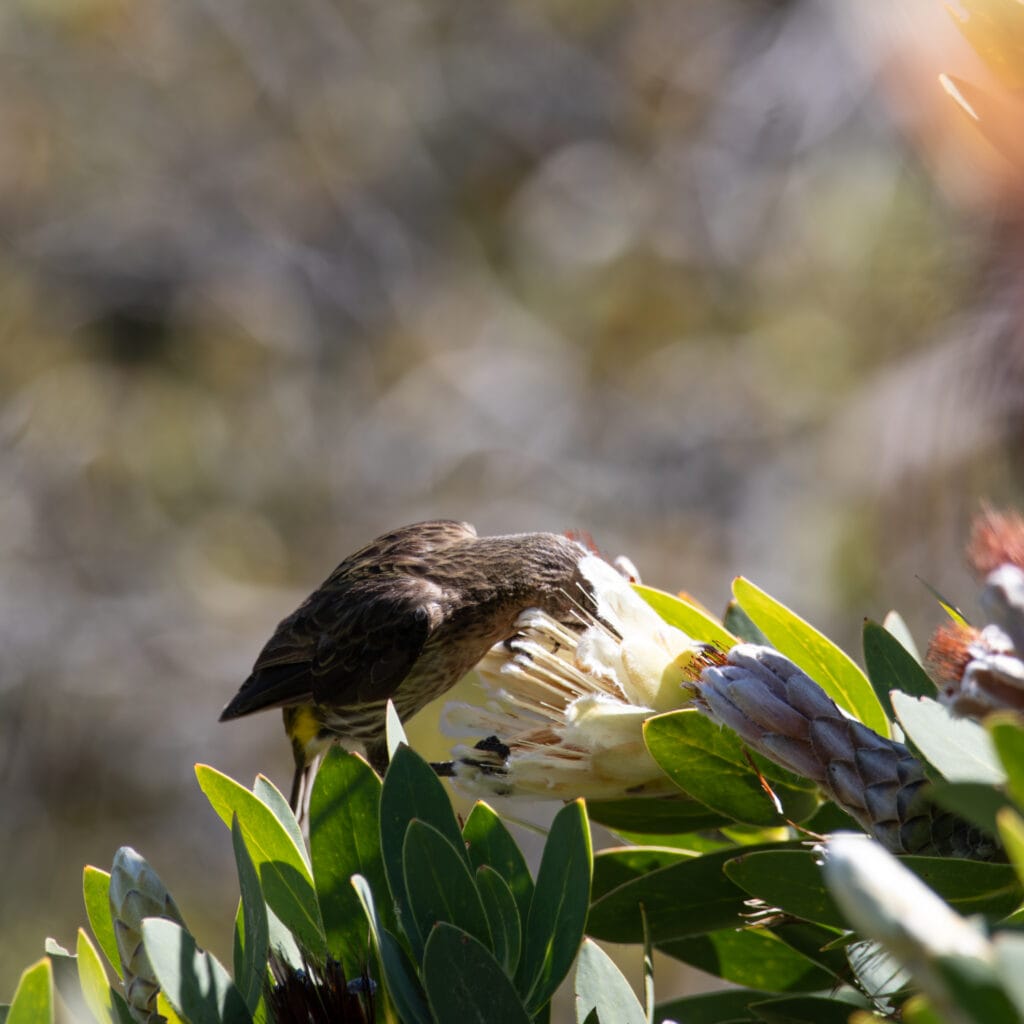
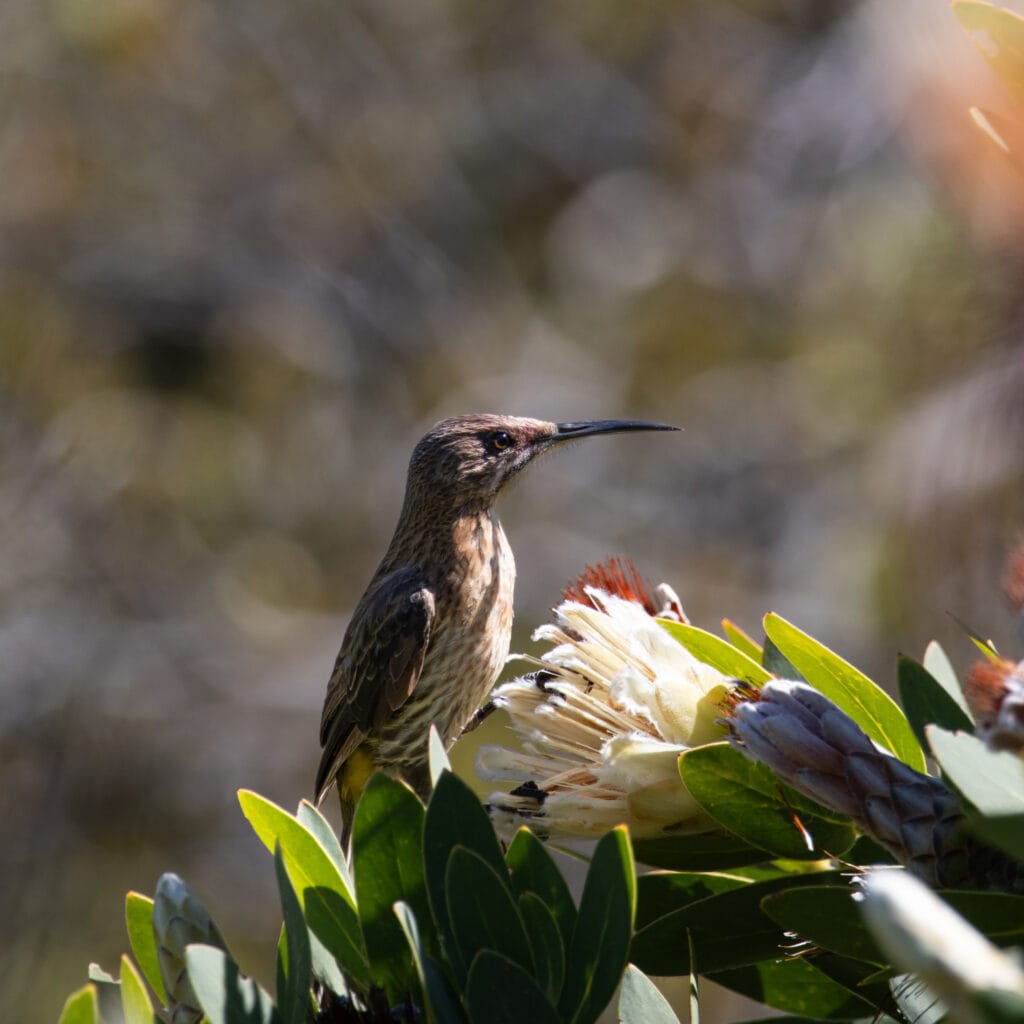
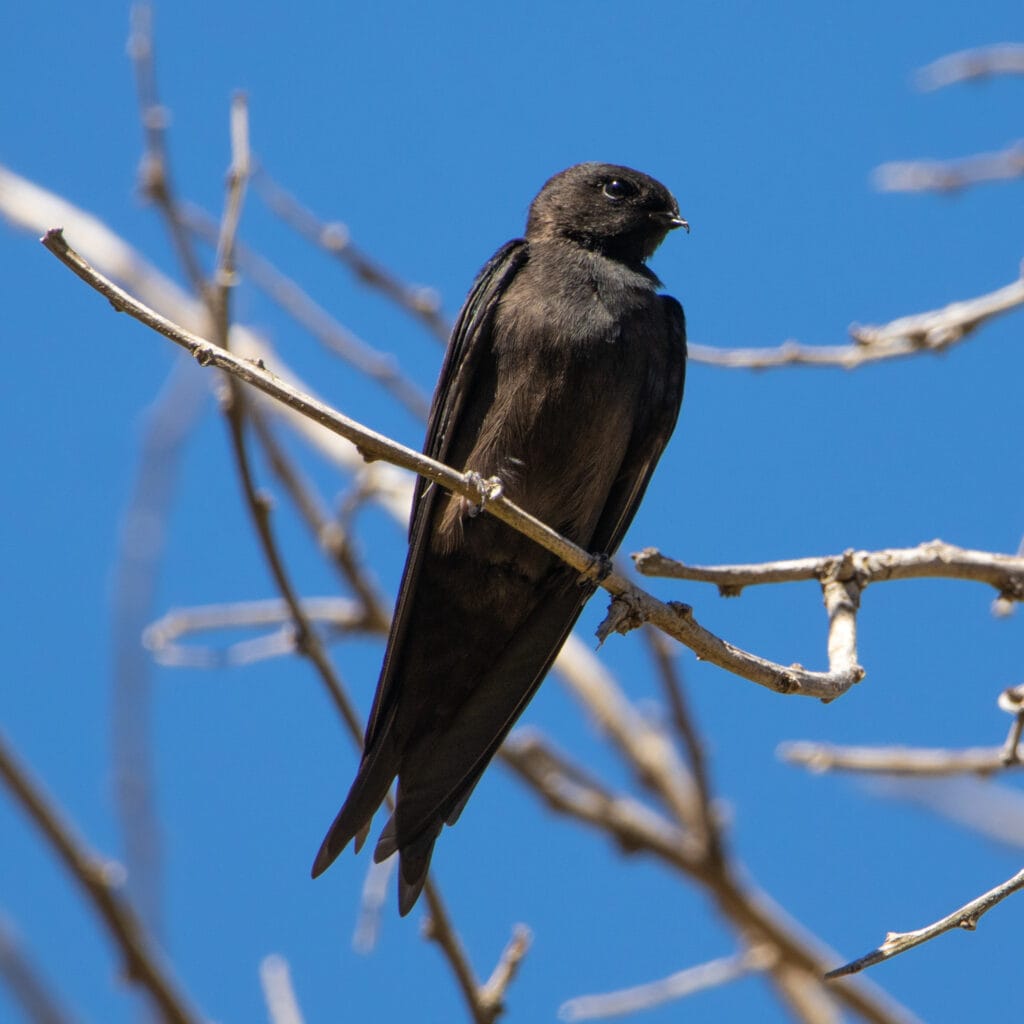
A couple of hours in the sun at Kirstenbosch this afternoon, before the upcoming Matthew Mole concert made things loud and busy.
A few lizards and mice around. Plenty of birds, including a rather hungry Cape Sugarbird (Promerops cafer) and some very pretty, very dainty Black Saw-wings (Psalidoprocne pristoptera)
A few kilometres and some very nice fresh air was just what I needed after an unexpectedly boozy evening out last night and a very necessary lie-in this morning.
Now it’s back to real life with some household chores and a bit of FA Cup football.
If you walk down onto the beach at Suiderstrand and take a right turn, following the coastline along and into the Agulhas National Park, you’ll come across a large log on the beach, about 1½km towards the cottages out at Piet se Punt. Just next to the rocky outcrop know locally as “The Washing Machine”.
It is a big log, so big in fact, that you can see it from space (with a bit of zooming in on Google Maps).
It’s been there for as long as we’ve been going to Suiderstand, and that’s 17+ years. And now, thanks to a bit of research, I found out that it’s actually been there from about the turn of the century, after a Swiss-owned, Panamanian-registered, 24,732 dwt freighter, the MV Sanaga, sank off the south of Madagascar on October 11th 1999.
What? Give us the details, please.
With pleasure.
The MV Sanaga was built in 1979 and was carrying a cargo of logs (see where this is going?) and stainless steel from Durban to China. The logs were teak and mahogany from West Africa, each one about 10m long and each weighing around 20 tonnes.
The MV Sanaga got into trouble, began taking on water and issued a Mayday call. The crew of 26 Indian nationals abandoned ship and were picked up by a passing Japanese container vessel.
The freighter was subsequently presumed foundered. And it seems reasonable that it took the steel down with it, while the logs… well… floated.
But that posed its own problems. The Agulhas current dragged the logs southwards and westwards along the coast of South Africa, where they caused many issues. In January 2000, at Blue Horizon Bay, near PE (as was), a woman and her grandson, playing in the surf, were seriously injured when a wave brought one of the logs down on them:
Iloma Cilliers was helping her grandson, Mark-Anthony Mayhew, out of the water when a wave lifted the huge log on to them and crushed them into the sand. Cilliers’s husband, Lowie, dug them out and they were treated for serious injuries in the intensive care unit of a Port Elizabeth hospital.
While elsewhere on the Eastern Cape coast, a 10 year old boy was knocked unconscious by a log while swimming, and sadly drowned.
Reports had been received of at least two other children who had suffered head injuries from being hit by logs in the surf at another Port Elizabeth beach.
They also posed a huge danger to shipping all around the South coast of the country. Several logs washed up in False Bay: at Cape Point, Strandfontein, St James, Kalk Bay and Fishhoek.
And – as we now also know – further east, in Suiderstrand.
As they found out in Fishhoek, you need a large crane to be able to shift these logs. Which makes this seem a bit silly:
Johan Scheepers, a customs and excise official, said people should not remove the logs from the shore: anyone wanting to salvage material washed up on a beach has to obtain a salvage permit and pay 15 percent duty on the value of the object. The logs are believed to be worth thousands of rands each.
Not something you’re going to be able to quietly slip into your back pocket. And since The Suiderstrand Log is in a National Park, not something you’d be allowed to quietly slip into your back pocket anyway.
That weight, and hardwood being what it is (hard), despite the very best efforts of the South Atlantic Ocean, and although there has been a lot of weathering over the last 26 years, it’s clear that the Suiderstrand log isn’t going anywhere soon.
WANT MORE LOCAL HISTORY? Other stuff that has washed up on the Cape coast from shipwrecks: Rubber Bales.
That might mean something else if you were in the Middle East right now, but it’s very much the South and the West of the continent that I’m talking about here. At the moment, hidden away in our little corner of Africa – away from all the sirens and the smoke – seems to be a very good place to be.
Until later today, that is. Because we’re going to have both. But, once you’ve read this post, you’ll know that they’re really nothing to worry about and you can reassure your friends, family and colleagues.
First of all, the sirens. Koeberg Nuclear Power Station will be doing their annual full volume siren test between 10am and 12pm today. You’ll (hopefully) hear it if you’re in any one of the following areas:
Atlantis, Duynefontein, Melkbosstrand, Van Riebeeckstrand, Philadelphia, Bloubergstrand, Bloubergrandt, West Beach, Sunningdale, Parklands, Robben Island and the farms surrounding Koeberg Nuclear Power Station.
There will be a public address message before the sirens, informing you that it’s a test, but just in case you miss that bit, I’m telling you that it’s a test, so you don’t need to panic.
And don’t panic if you see some smoke in the South later today. Weather permitting, there will be a controlled burn in the Westlake Nature Reserve at the junction of Ou Kaapse Weg and Steenberg Road.
I’ve seen another map with lots of fire hydrants marked on it, and I’m sure that the guys in charge of this know what they’re doing. So don’t stress when you see the smoke rising over Tokai (Constantia?). At least, not today.
More information here, but it’s mainly “keep your doors and windows closed” and “don’t put your washing out”. Sensible, if rather mundane, advice.
So there you go. Chill. Nothing to worry about today.
Unless, of course, you hear sirens in Tokai and see smoke over Koeberg Nuclear Power Station. That wouldn’t be good. Then you can panic.
And wow. What an amazing difference from the old model.
The old model was in here when we moved in several (or more) years ago now. The old model shouldn’t have been in here when we moved in, because it fails the gas certificate of compliance even at the most basic level. But, as longer-term readers might remember, there was an awful lot that failed the CoCs on this house, because the certificates were issued by knobheads by friends of the previous owner.
Dodgy as.
Still, that’s all water under the bridge now (which was probably due to another pipe that needed replacing).
The new hob is bigger than the last hob, and the gas is more controllable, thanks to Bosch’s new FlameSelect™ function. It’s still not anything professional, but I’m not exactly a professional cook either, so the match is good. But that extra 150mm and the ability to have a very low flame without the danger of blowing the place up, make a massive difference, and last night’s curry really benefitted from me being able to leave it to simmer without concern.
We’re slowly becoming a bit of a Bosch household. Not because we have any particular affinity to the brand, but just because they’re stuff is good value, good quality and it just works. German engineering, made in China. But then, isn’t everything?
Anyway. One of those purchases that needed making, but has had a huge positive effect already.
If you’re looking for a sign to make one of those “I’ve got to get one at some point” buys, then consider this it.
…I’m not particularly looking forward to this coming Monday.
With apologies to the Boomtown Rats.
One of the best bits about this blog (ok, ok: possibly the only good bit if you want to be like that) is the fact that I don’t have to stick to any one given topic. This isn’t a blog about music or football or politics. It’s a blog about whatever takes my fancy that particular day.
But I have been talking quite a lot about the weather recently.
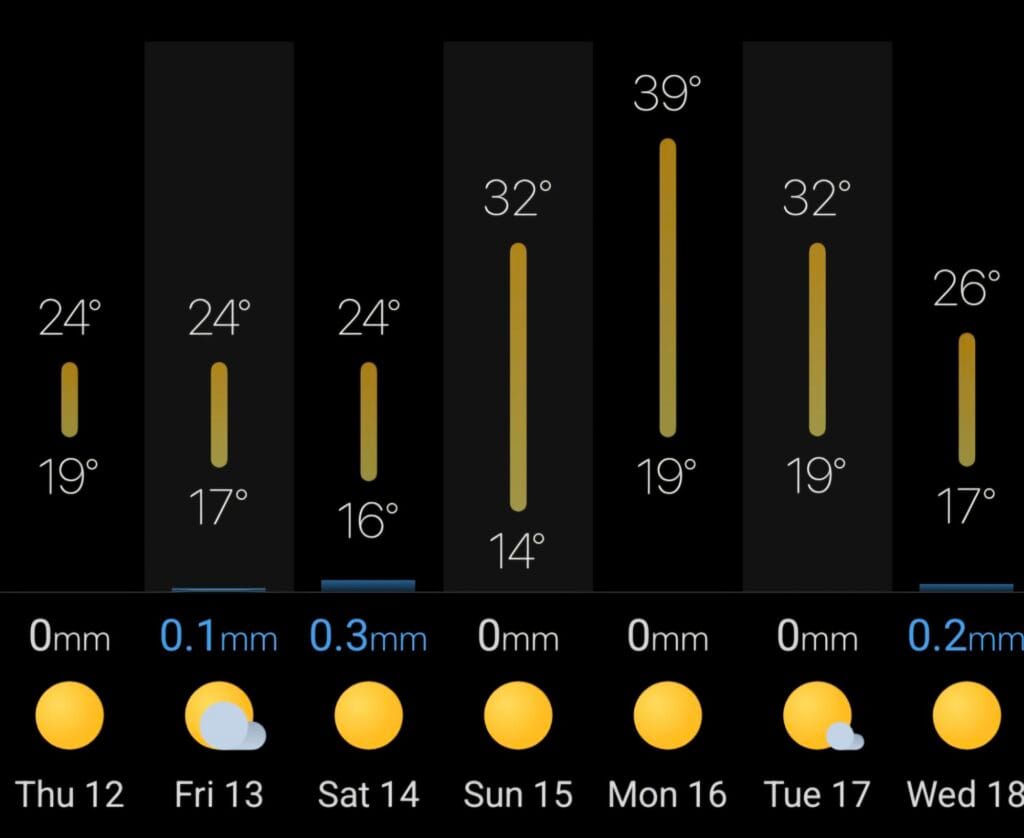
That’s completely reasonable though, because the Cape Town weather has been bloody weird over the last few months. And after a week of horrific humidity, gloomy skies and even *gasp* occasional rain, next Monday looks… well…
…”warm”.
Ironically, this isn’t actually very unusual for February. We will have a few days each year here that get up towards 40oC and are generally rather uncomfortable. More surprising is the fact that this will be the first one of the year.
That said, even if we’re used to it, it would probably be wise to take things a bit easy that day and to drink plenty of water. Also, find and hug an air conditioner.