Thinking Things Through

Thinking Things Through is always a good idea. Without sound research, consideration and analysis, we’d forever be making poor decisions, and it’s rare that any good comes of having made a poor decision.

We waste time, money, energy and attention by not Thinking Things Through… Our beliefs inform our actions – and if beliefs are used to support irrational choices, then our society is likely to be less free as a result.

To that end, the Free Society Institute (FSI) is holding a conference on 1st December 2013 called Thinking Things Through with an excellent line-up of speakers, addressing many of the obstacles to a free society, such as “oppressive or irrational legislation, moral confusions, bigotry and prejudice, and misconceptions about science and secularism”.

This is a great opportunity for (at least) two reasons: Firstly, that it’s a chance to hear and engage with some of the country’s great minds and social commentators in fields such as science, journalism and philosophy and secondly, to enlighten yourself as to how these issues and obstacles could affect (and are affecting) our society.

The line-up includes MC Chester Missing (what could possibly go wrong?), Eusebius McKaiser, Gareth Cliff (think beyond the Breakfast Show, really) and The Guru, Jacques Rousseau. It looks like it will be a really fascinating day and I would be there in the manner of an ursine if circumstances allowed. But just because I’m missing out doesn’t mean that you should. Tickets are R200 for students, R400 for the rest of us and there’s also an option to tag a half price annual membership of the FSI on to your ticket, should you so desire.

Click here for direct link to ticketing

Thinking Things Through, hosted by the Free Society Institute.
10:00am, Sunday 1st December 2013.
SciBono Discovery Centre, Johannesburg.
Plans for weekend – avoid falling satellite

Yes. Really. Because the European Space Agency’s GOCE satellite, launched in 2009 to measure the Earth’s magnetic field, is falling back to Earth. This is because it has run out of fuel, which was the only thing keeping it up in a rather tenuous 280km orbit. Now, already having fallen to about 190km above us by yesterday, it’s expected to fall out of the sky completely by Sunday or Monday.

Should you be worried? Well, no.
Not according to Dr Stuart Clark anyway. He says it’s likely that the one tonne unit is “likely to fragment into 25-45 pieces en route”. And although “No one knows exactly when or where it will smash down”, we’ll probably be ok. That’s because those pieces (each weighing an absolute minimum of 22.22kg if his assumptions are correct) will likely burn up before they touch down.
Much like most other meteorites:

According to Cornell University’s Ask and Astronomer webpage, between 18,000 and 84,000 meteorites bigger than 10 grams hit the Earth every year. Not all of these survive to strike the ground.

The total amount of mass contained in a year’s worth of meteorites is about 37,000-78,000 tonnes, or 101–214 tonnes per day. So, another tonne from GOCE represents an increase of just 0.5-1% on the day.

To put the numbers into clear context, the Chelyabinsk meteor that struck Russia on 15 February 2013, injuring people and causing wide-spread damage, is estimated to have been 12,000–13,000 times more massive than GOCE.

All of which is very reassuring, until 20 kilos of hot metal ruins your Sunday evening braai.

Chiton

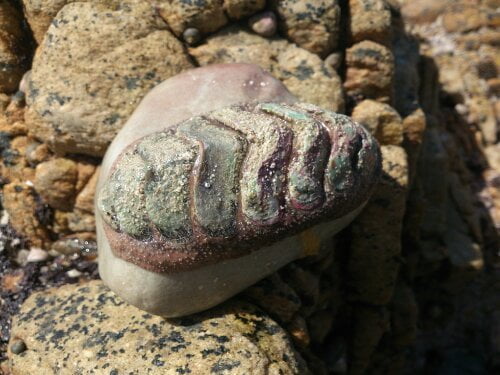
I found some of these molluscs on the beach in Agulhas today. They’re called Chitons and they’re rather cool:

image

And why are they so cool? Well, because they have metal teeth. And they don’t just use them for eating with:

Chitons have radular teeth made of magnetite (an iron compound) making them unique among animals. This means they have an exceptionally abrasive tongue with which to scrape algae from rocks. The iron crystals may also be involved in magnetoception, the ability to sense the polarity or the inclination of the Earth’s magnetic field, and thus may be used in navigation.

Pretty cool, hey?
Told you so.

Is This The Best Opening Paragraph Ever?

It’s from a piece on slate.com entitled: Sea Otters Are Jerks. So Are Dolphins, Penguins, and Other Adorable Animals, which deals – rather bluntly – with the fact that when anthromorphosized, the behaviour of some of the creatures we love to love, isn’t actually all that lovable.

And it starts, like this:

I’m going to ruin sea otters for you. Or at least I’m going to tarnish their reputation as some of the most charming little beasties in the seas. For as cute as they are while intertwining paws at an aquarium, frolicking among the wafting fronds of California kelp forests, or smashing sea urchins open with stones, some sea otters have developed the disturbing habit of humping and drowning baby seals.

Eww.

And it doesn’t get any better as Brian Switek goes into detail as to the injuries sustained by the baby seals in these heinous attacks, because as we learn:

Strange as it may seem, mating is a relatively common cause of death for female sea otters as well. Male sea otters typically grasp the female from behind and bite her face, and this rough behaviour was associated with the deaths of about 11 percent of dead sea otters discovered between 2000 and 2003.

And if you think that sea otters are dodgy (in which case you’d be right, because they are), just wait until you hear about what dolphins get up to. (We’ve warned you about dolphins before.)

And then, there’s the Adélie penguin:

…the species shocked and horrified Levick so much so that his four-page report “Sexual Habits of the Adélie Penguin” was purposefully omitted from the official expedition findings and distributed only to a small group of researchers considered learned and discreet enough to handle the graphic content.

You can just picture the faces of that “small group of researchers” as they read the report:

Jesus – it does WHAT?!?!??!??!???!

The take-away lesson from all this, folks, is to ensure that you learn all about your prospective cute animal before you give it your unwavering support.
Because there’s nothing worse than proclaiming how wonderful the sweet little local Dassies are, only to have someone inform you that Procavia capensis is actually responsible for over 90% of the muggings in the City Bowl.

Right?

Are you listening yet?

It was about a year ago that I wrote the We’re All Buggered post, referring to antibiotic resistance and the potential threat of living in a post-antibiotic era. At that point, it wasn’t really news to anyone in the microbiological community: indeed, in that post I mentioned a seminar I attended ten years ago in Oxford, and even then it wasn’t really news to us.

But slowly, surely, these stories are beginning to infiltrate the media more and more often. And the reasons for this are fairly clear – scientists are becoming ever more concerned about the impending problems we are facing and moreover, a great number of the public are being affected by the issue, thus it’s becoming more relevant and therefore, more newsworthy.

Of course, if this problem wasn’t so insidious, we’d all be panicking about it already. If there were a 9/11 or a Hurricane Sandy – a single event – there would be far more awareness. (Not that awareness would really help anyway.)
But that’s not the case with the antibiotic resistance problem. It’s sneaking up on us and, for those of us in the know, it’s rather worrying*.

The latest “big name” to have come out with a stark warning is an associate director for the CDC, Dr. Arjun Srinivasan:

For a long time, there have been newspaper stories and covers of magazines that talked about “The end of antibiotics, question mark?” Well, now I would say you can change the title to “The end of antibiotics, period.”

We’re here. We’re in the post-antibiotic era. There are patients for whom we have no therapy, and we are literally in a position of having a patient in a bed who has an infection, something that five years ago even we could have treated, but now we can’t.

Quote via kottke.org (take tinfoil hat along for some of the comments). Here’s the full programme on PBS.org, with the suitably dramatic title: Hunting The Nightmare Bacteria. (Hint: it’s not difficult – just go to any major hospital and they’ll come find you.)

Jason Kottke suggests that drug-resistant infectious diseases should be added to the list of “disasters with no clear low point”, and he’s probably correct. Remember that Dame Sally Davies (the Chief Medical Officer in the UK) thought that:

“…the threat from infections that are resistant to frontline antibiotics was so serious that the issue should be added to the government’s national risk register of civil emergencies.”

and that puts it alongside threats like “explosive volcanic eruptions” and “catastrophic terrorist acts”.

As previously, I don’t expect this post to do anything to make a difference to the situation. There’s actually nothing we can do to prevent this now. I just thought that you ought to know.

Have a great weekend.

* The latter part of this sentence contains a fair amount of understatement.