On Märket 

Märket is a lump of rock between Sweden and Finland. It’s only 3.3 hectares in size and there’s really nothing there apart from a lighthouse. Originally, no-one claimed the island as their territory, and so Finland built a lighthouse on there back in 1885. They built it on the highest bit of the island, which was the logical thing to do.

However, when the island was divided between the two countries (because everything has to be owned by someone, right?), the lighthouse ended up on the Swedish side – basically the Western half of the island.

But it was a Finnish lighthouse. Built by Finland and operated by Finland.

So in 1985, the border was moved the reposition the lighthouse back onto Finnish territory.

But you can’t just give up land merely because there’s some other country’s lighthouse on it.

Thus, the adjustment was carried out such that no net transfer of territory occurred, and the ownership of the coastline was unchanged so as not to interfere with each country’s fishing rights.

Which means that the border now looks like this:
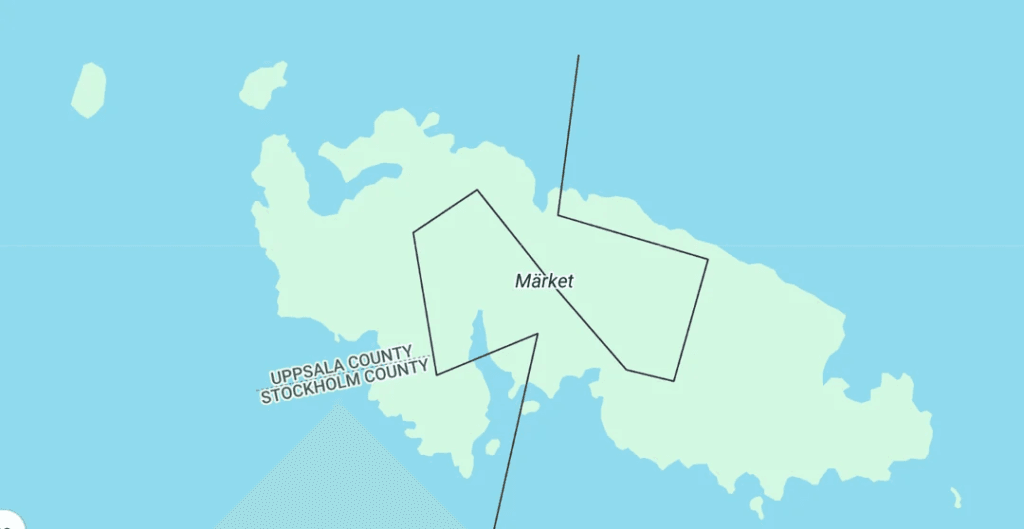
The interlocking idea does stop the two countries drifting apart. Which is nice.

And in real life:
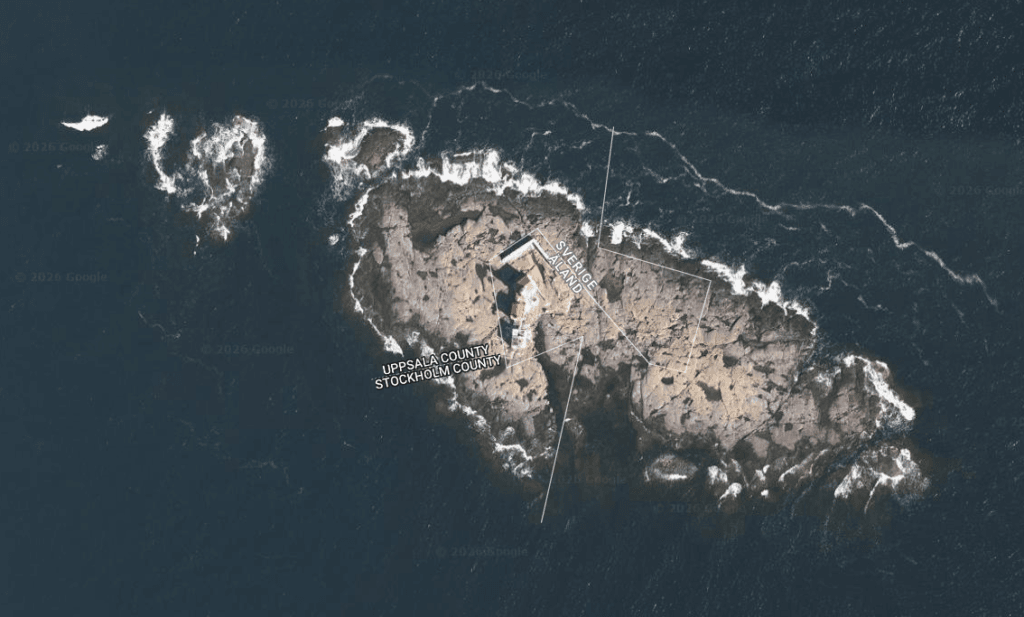
Åland (representing Finland here) being the autonomous, demilitarized region of Finland located in the Baltic Sea between Sweden and Finland. It lies just to the east of Märket and they speak Swedish there, even though it’s actually Finnish territory.

The border is regularly resurveyed every 25 years by officials representing both countries. In case… it changes?!?
The last such joint inspection took place in August 2006. The border is marked by holes drilled into the rock, because the seasonal drift ice would shear off any protruding markers.

Because of the Nordic Passport Union and the Schengen Agreement, there have been no passport checks or other border formalities at the border since 1958, so intra-Nordic/intra-Schengen visitors may visit the island freely.

I’ve still not managed to find out why there is an additional county border on the Swedish side. This seems unnecessarily bureaucratic.

Despite the name, there are no shops on Märket. In fact, there really only is the lighthouse.

But that, and the crazy border, makes this a great place to learn about for the nerds that read this blog.

And you, obviously.
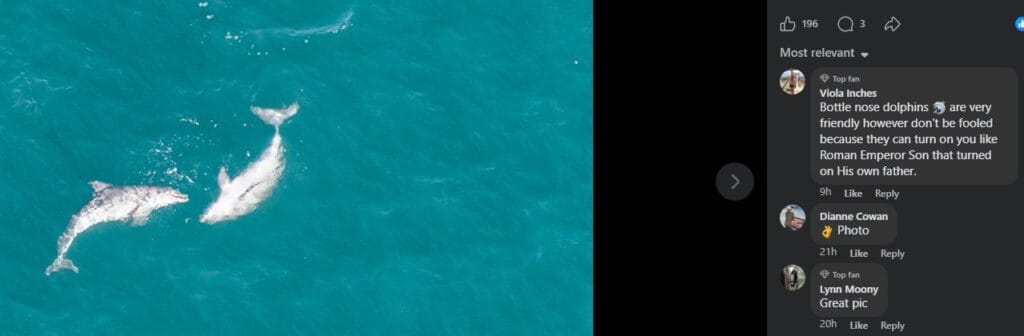
Beware of Bottlenose Dolphins

Spotted on a Facebook post earlier today: this beautiful image of two Bottlenose Dolphins (either Tursiops aduncus or Tursiops truncatus – it’s complicated) in the waters off the South coast of the Western Cape. The ‘tog call it Yin and Yang, and yeah, fair enough, you can see why.

Close enough.

But the photo isn’t the reason I’m sharing this. It’s… it’s that weirdly specific comment by Viola Inches (r/toastnames, btw) that made me want to blog it.

What?

Bottle nose dolphins are very friendly however don’t be fooled because they can turn on you like Roman Emperor Son that turned on His own father.

What?!!?

I’m no expert on Roman history (my knowledge of this period is almost entirely garnered from to watching Monty Python’s Life of Brian in the mid-1980s), and so I don’t know the particular emperor father and son combo to which Viola is referring. I guess that sort of thing was probably amongst the many risks you took as part of the hierarchy back in those turbulent, classical times.

But whoever it might be (or even if it’s just completely made up – but then, why would you?), I’m going to be very, very careful next time I encounter a Bottlenose Dolphin.

How embarrassing would it be if one of them turned on me like Roman Emperor Son that turned on His own father, after I’d read this comment?

No. Safety first.

Let’s go to Kirstenbosch (on Flying Ant Day)

I dunno. I feel like Let’s Go To Kirstenbosch (On Flying Ant Day) should be a song title. Something Britpoppy – maybe Ocean Colour Scene or Supergrass. Just an album track or a B-side, though. You’re never going to hit the heights with that sort of title. But true fans will love it.

But anyway. I digress. Often.

Flying Ant Day is an informal term for the Nuptial Flight:

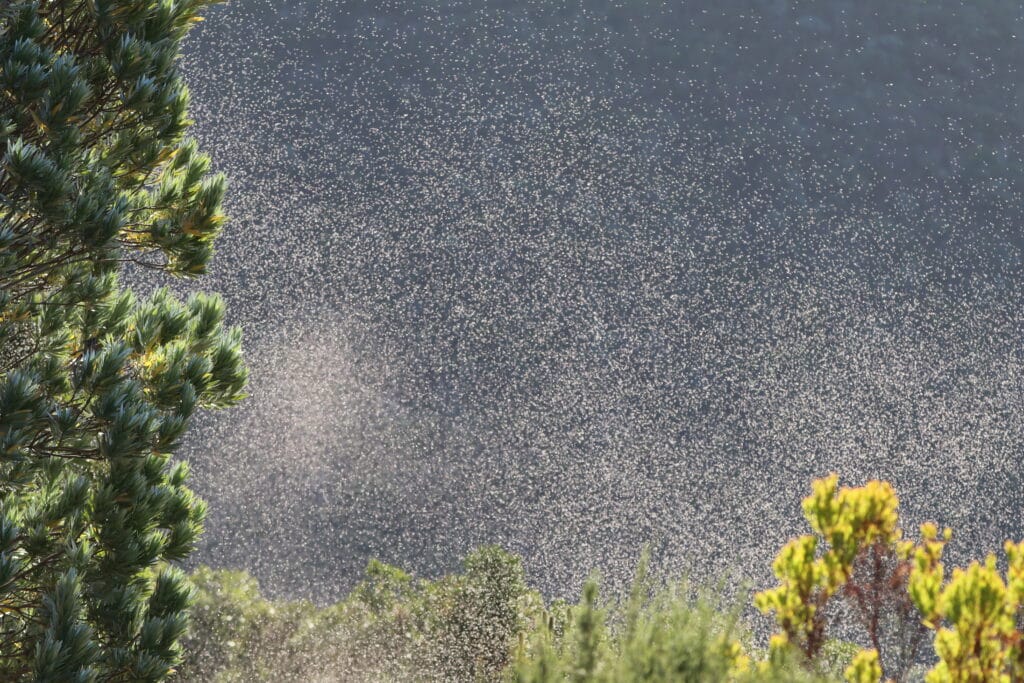
“Flying ant day” in South Africa usually occurs during warm, humid days, often in late spring or summer, following heavy rain. These swarms, often termed rain ants, are largely winged termites (alate termites) emerging to mate and establish new colonies.

Warm day? Check – a balmy 25oC.
Following heavy rain? Er… yes.

Today was the day.

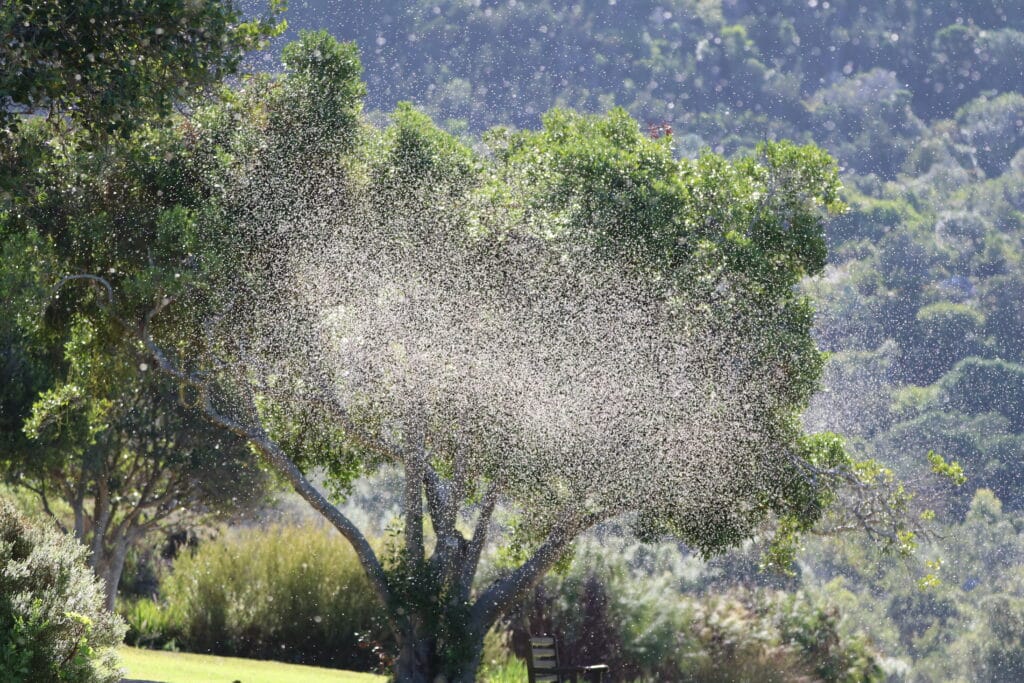
I’m not good at estimating numbers, but I’d say that there was as many as twelve or fourteen of the little buggers hovering about and bonking. Because that’s what they do.

Literally clouds of bonking insects.

The low sun made visualising them fairly easy, but it’s worth remembering that even when you couldn’t see them: they were still there, still bonking.

Of course I didn’t just take photos of flying ants – a challenge though it was with only a 150-600mm lens – but those pics can be saved for another blog post (or posted on Instagram) (or both).

Maybe there was even space for a dreamy abstract image as the sun dipped behind the mountain:

Apparently yes, there was. All still at it in the evening sunshine.

A fascinating phenomenon, and really quite incredible to witness. Still, not something I’d advise if you have any sort of phobia or if you struggle with breathing. I’ll definitely take a mask next time.

Unclogging the water

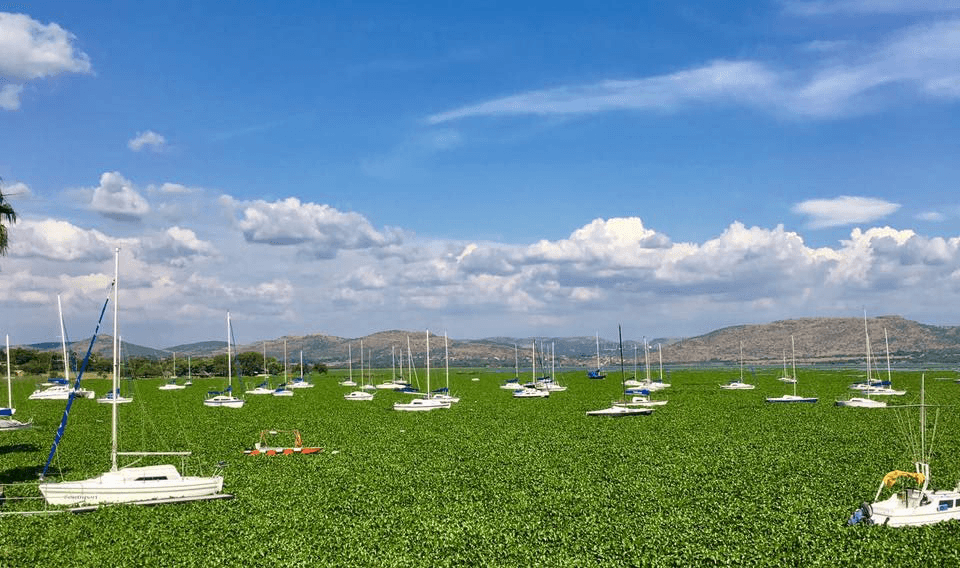
On our recent trip braving the raging waters of the Breede River (it really wasn’t that ragey, if I’m honest), one thing we did notice was a lot of Water Hyacinth (Pontederia crassipes – formerly Eichhornia crassipes). This fast-growing invasive alien is actually really bad news for the Breede and every other South African waterway that it invades. It’s categorised as NEMBA 1b:

NEMBA Category 1b invasive species are high-priority alien plants or animals in South Africa that must be controlled, and wherever possible, removed and destroyed. Landowners are legally obligated to manage these species under an invasive species management program. They cannot be planted, traded, or kept without a permit.

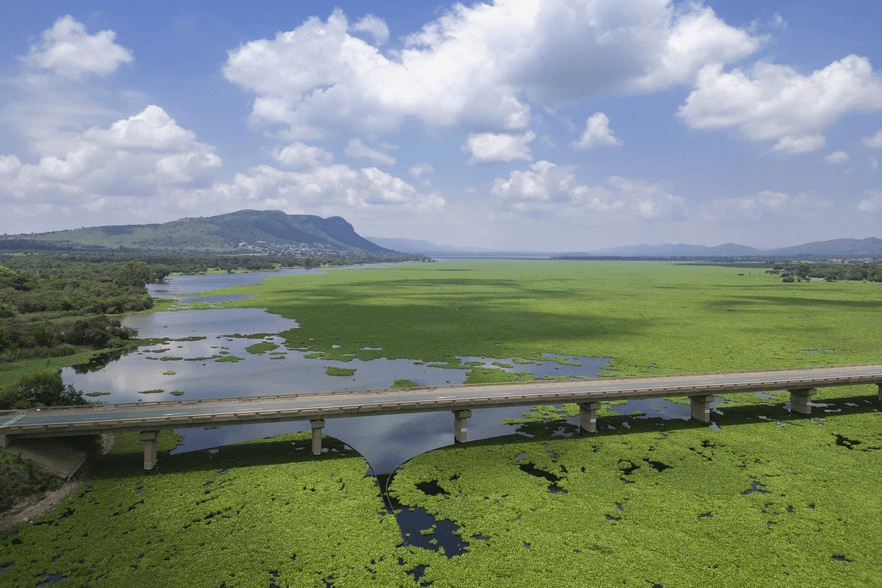
Native to the Amazon, it’s been around in South Africa since the 1960s, but hit the headlines in recent years with the huge issues that it has caused at Hartebeespoort Dam, up country.

Hypereutrophication, caused by run-off of agricultural fertilisers and wastewater treatment effluence led to an abundance of nitrogen and phosphorus, and made it an ideal environment for hyacinth to thrive. Not only did it physically choke the dam, but the effects of the water surface coverage caused “dead zones”, exacerbated by the presence of toxic cyanobacteria.

It’s nowhere near that bad on the Breede – yet – but every little crevice at the side of the river, and every little eddy behind the rocks had at least some of it making its home. And you could see how easily it spreads, with small pieces breaking off and floating downstream to find a new spot to settle, regenerate and then repeat the cycle.

So what can be done?

You can kill it with fire herbicides. After all, it’s just a plant. Of course, the problem with this approach is that everything else around gets herbicided as well. By definition, these are nasty, toxic chemicals, and not really something that you want to be chucking into your waterways, effective as they are at killing the hyacinth. It’s a far from ideal solution.

And you can dredge it out. Because it floats on the surface of the water, it’s not too hard to get underneath the plants and load them onto a barge. But the sheer scale of the problem and the speed with which the hyacinth grows and spreads make this a tall order, and the specialist equipment and time required make it very expensive.

In Kenya, they’re still using this approach, albeit by hand, and not by mechanical means. Dredging it out of the rivers and lakes, and using it as a biomass fuel to generate heat and biogas for use in the local areas, and even utilising the plants’ stringy, fibrous consistency to make packing and packaging materials as alternatives to plastic.

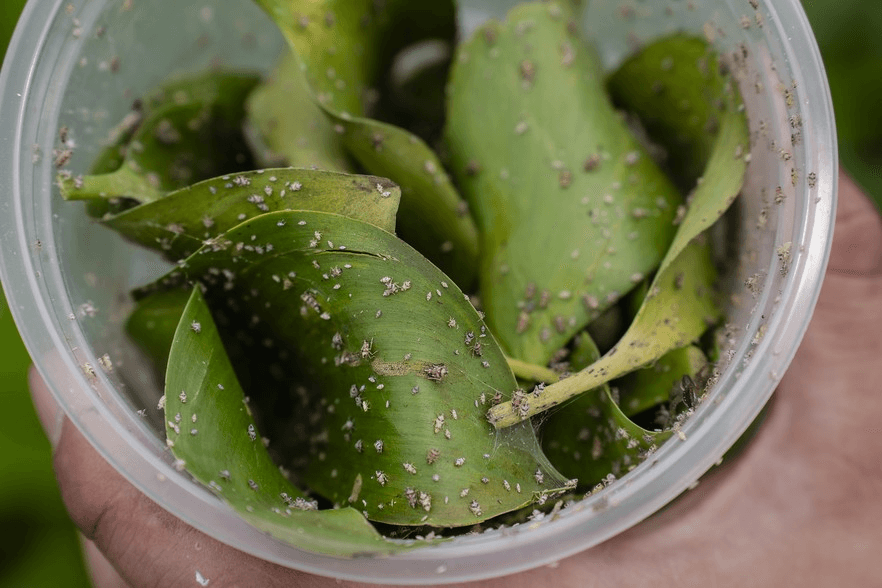
That hasn’t proven effective in South Africa. But there is good news on the Hartebeespoort issue. A team from Rhodes University has developed a biological control: the planthopper Megamelus scutellaris.

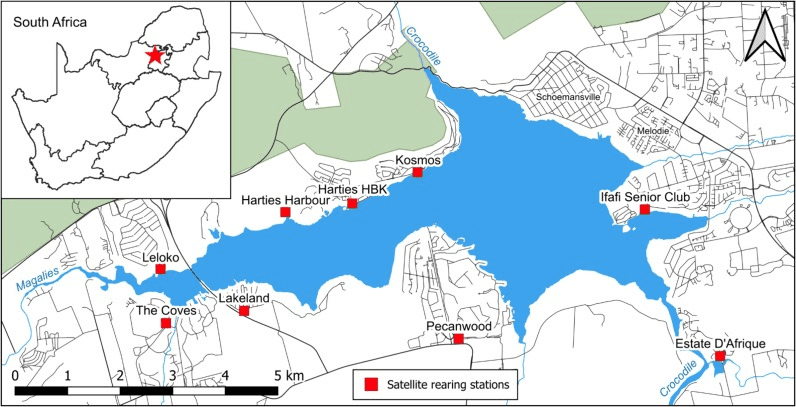
It’s been used elsewhere in the world to effectively control P. crassipes, and it’s been introduced as part of a community and stakeholder engagement programme on the Hartebeespoort, with satellite rearing and release stations dotted all around the perimeter of the dam.

And it’s slowly but surely working. Hyacinth seeds remain viable for up to 20 years, and so there is no quick fix, but the programme is lowering the seed load each year by stopping the plants from blooming.

Additionally, nanobubble technology is increasing the saturated oxygen and lowering the amounts of nitrogen and phosphorus in the water, making it a less attractive site for invasive plant growth. Every little helps.

We’re getting there: on Hartbeespoort, at least.

Hopefully, these efforts can be transferred to the Breede and other areas to stop the hyacinth before it becomes the problem that it has up North.

SUN

SUN – Stellenbosch University’s domain name.

Well, we went there today and we saw absolutely no SUN at all. In fact, it was cold, grey and wet. And maroon – everywhere.

But while the ubiquitous maroon is pretty ugly, you can’t blame the University for the weather. We had a good look around campus and sat in on a couple of interesting seminars as the various faculties took us through their offerings.

There’s another year before LM 6000 needs to apply, but it’s good to see what’s out there. And we weren’t the only ones: so many familiar faces, it was like a Southern Suburbs day out. We could have added some wine or brandy on the way home, but we chose to be good, and got back in time to watch a nice United away win.

That’s not it, though. UCT next weekend, and we’ll be heading to other institutions over the coming weeks to try and work out just what’s the best course in the best place.

Right now, it’s time for some of last night’s curry, in an effort to warm ourselves up. More rain tomorrow onto an already saturated Western Cape: the dam level figures should be worth a look on Monday.