
On our recent trip braving the raging waters of the Breede River (it really wasn’t that ragey, if I’m honest), one thing we did notice was a lot of Water Hyacinth (Pontederia crassipes – formerly Eichhornia crassipes). This fast-growing invasive alien is actually really bad news for the Breede and every other South African waterway that it invades. It’s categorised as NEMBA 1b:
NEMBA Category 1b invasive species are high-priority alien plants or animals in South Africa that must be controlled, and wherever possible, removed and destroyed. Landowners are legally obligated to manage these species under an invasive species management program. They cannot be planted, traded, or kept without a permit.
Native to the Amazon, it’s been around in South Africa since the 1960s, but hit the headlines in recent years with the huge issues that it has caused at Hartebeespoort Dam, up country.
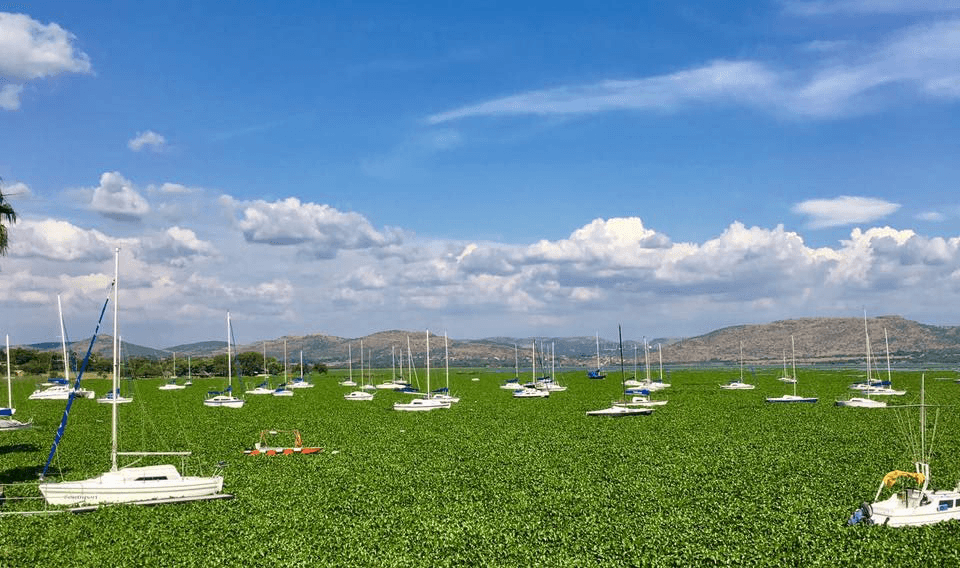
Hypereutrophication, caused by run-off of agricultural fertilisers and wastewater treatment effluence led to an abundance of nitrogen and phosphorus, and made it an ideal environment for hyacinth to thrive. Not only did it physically choke the dam, but the effects of the water surface coverage caused “dead zones”, exacerbated by the presence of toxic cyanobacteria.
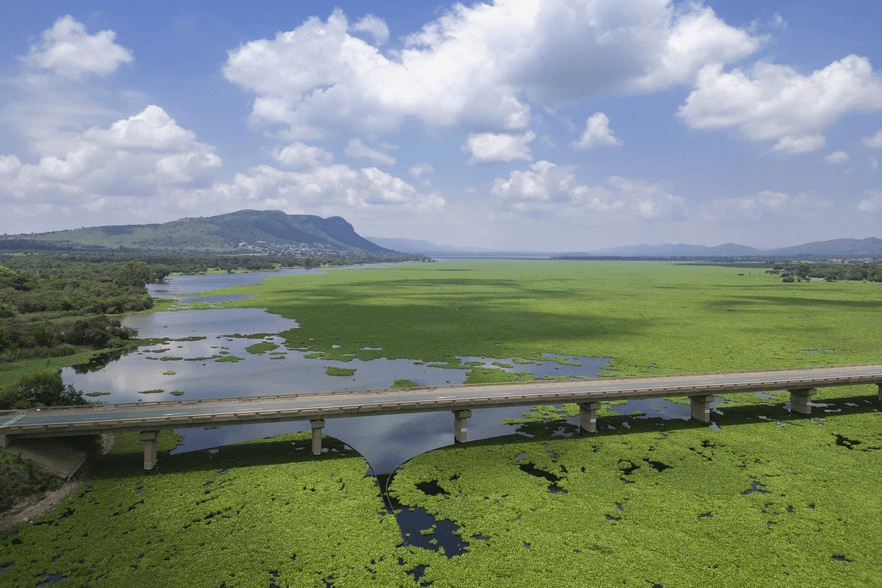
It’s nowhere near that bad on the Breede – yet – but every little crevice at the side of the river, and every little eddy behind the rocks had at least some of it making its home. And you could see how easily it spreads, with small pieces breaking off and floating downstream to find a new spot to settle, regenerate and then repeat the cycle.
So what can be done?
You can kill it with fire herbicides. After all, it’s just a plant. Of course, the problem with this approach is that everything else around gets herbicided as well. By definition, these are nasty, toxic chemicals, and not really something that you want to be chucking into your waterways, effective as they are at killing the hyacinth. It’s a far from ideal solution.
And you can dredge it out. Because it floats on the surface of the water, it’s not too hard to get underneath the plants and load them onto a barge. But the sheer scale of the problem and the speed with which the hyacinth grows and spreads make this a tall order, and the specialist equipment and time required make it very expensive.
In Kenya, they’re still using this approach, albeit by hand, and not by mechanical means. Dredging it out of the rivers and lakes, and using it as a biomass fuel to generate heat and biogas for use in the local areas, and even utilising the plants’ stringy, fibrous consistency to make packing and packaging materials as alternatives to plastic.
That hasn’t proven effective in South Africa. But there is good news on the Hartebeespoort issue. A team from Rhodes University has developed a biological control: the planthopper Megamelus scutellaris.
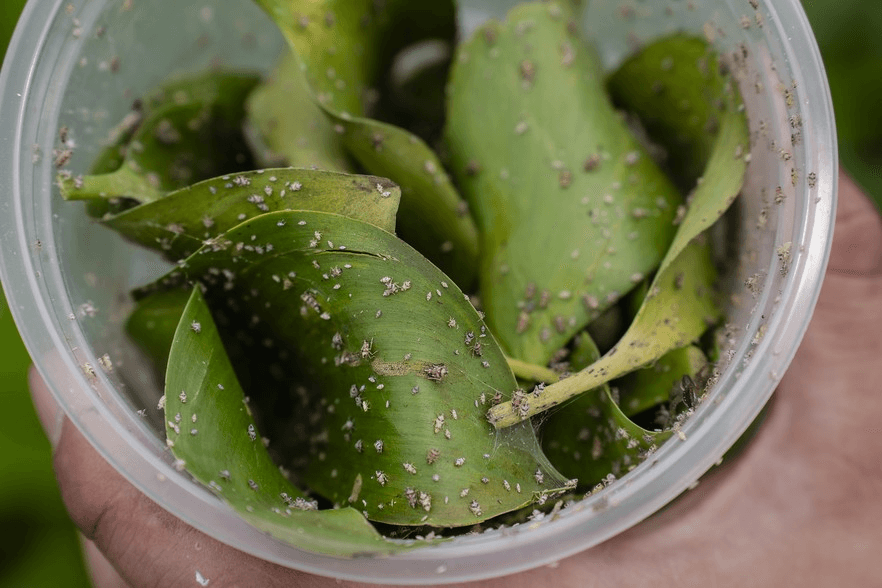
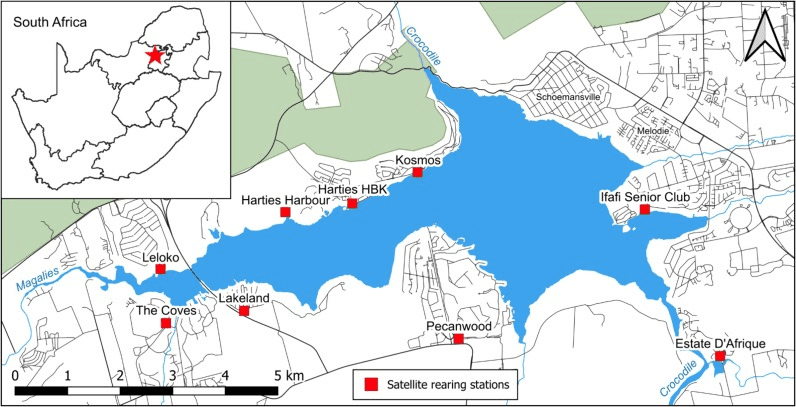
It’s been used elsewhere in the world to effectively control P. crassipes, and it’s been introduced as part of a community and stakeholder engagement programme on the Hartebeespoort, with satellite rearing and release stations dotted all around the perimeter of the dam.
And it’s slowly but surely working. Hyacinth seeds remain viable for up to 20 years, and so there is no quick fix, but the programme is lowering the seed load each year by stopping the plants from blooming.
Additionally, nanobubble technology is increasing the saturated oxygen and lowering the amounts of nitrogen and phosphorus in the water, making it a less attractive site for invasive plant growth. Every little helps.
We’re getting there: on Hartbeespoort, at least.
Hopefully, these efforts can be transferred to the Breede and other areas to stop the hyacinth before it becomes the problem that it has up North.